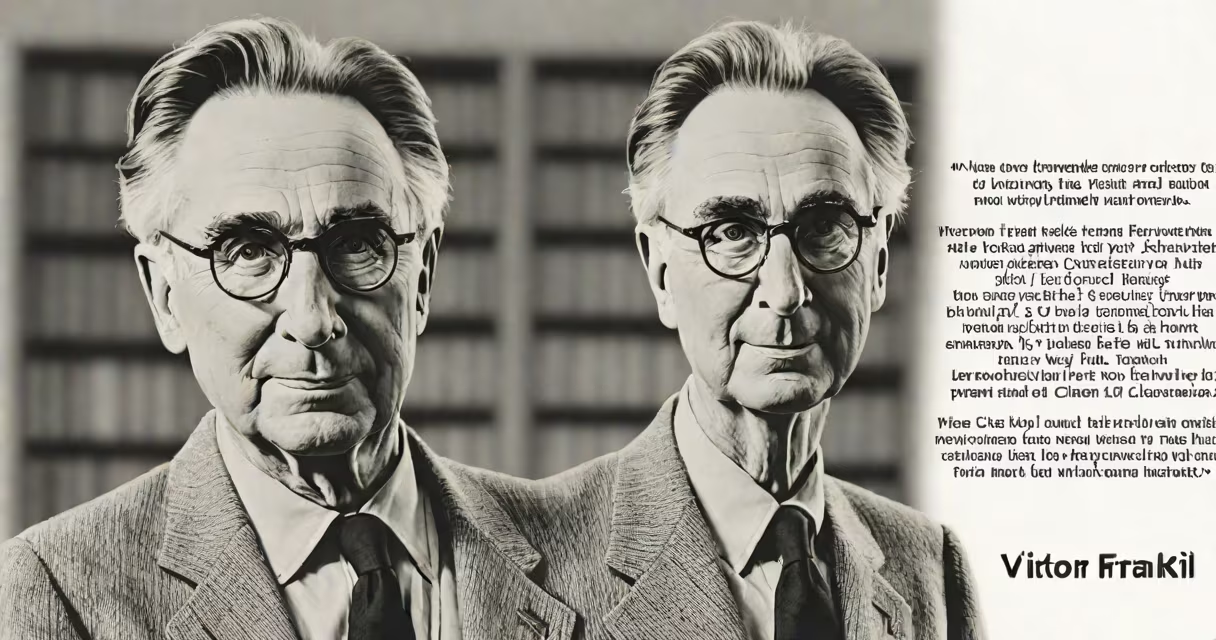
The "between stimulus and response quote" refers to Viktor Frankl's assertion that while we cannot control external events, we always retain the power to choose our internal reaction-a core principle of logotherapy and human psychology.
Frankl, a Holocaust survivor and psychiatrist, developed this idea during his time in Nazi concentration camps. He observed that even under extreme duress, individuals could maintain inner freedom by choosing their attitude toward suffering. This insight became central to his therapeutic method, which emphasizes meaning-making as the primary motivator of human behavior.
Modern research supports this structure. A 2018 study published in Frontiers in Psychology confirmed that cognitive reappraisal-the mental act of reframing a stressful event-reduces cortisol levels and improves emotional regulation. The ability to pause between stimulus and response is not metaphorical; it's neurologically measurable.
When a person encounters a stimulus-such as criticism, a setback, or a threat-the brain registers it instantly. But the response-how the person acts or feels-is not automatic. There is a gap, a moment of conscious decision-making.
Frankl described this gap as the space where freedom resides. In his 1946 book Man's Search for Meaning, he wrote: "Everything can be taken from a man but one thing: the last of the human freedoms-to choose one's attitude in any given set of circumstances."
This mental pause allows for deliberate action rather than reflexive reaction. For example, receiving a harsh email from a manager triggers stress. The stimulus is the message. The response is either a defensive reply or a calm, thoughtful one. The choice happens in the interval between reading and replying.
The concept rests on three interlocking elements: awareness, intention, and agency.
These are not abstract ideals. They are skills trained through mindfulness, journaling, and reflective practice. A 2021 study in Journal of Clinical Psychology found that participants who practiced daily reflection reduced reactive behaviors by 37% over eight weeks.
People often misinterpret the quote as suggesting that emotions are optional. That's false. You cannot stop feeling anger when insulted. But you can choose whether to act on it.
Another error is assuming this applies only to high-stakes moments. In reality, the gap matters most in small, repeated interactions-like a child's tantrum, a colleague's passive-aggressive comment, or a delayed flight. These are the daily tests of self-mastery.
Some confuse this with stoicism. While both emphasize emotional control, Frankl's view is rooted in meaning, not suppression. He didn't advocate ignoring pain-he argued that suffering gains significance when met with purposeful response.
Consider a teacher facing a student's disrespectful outburst. The stimulus is the verbal attack. The response could be punishment, withdrawal, or silence. But the teacher can choose to respond with curiosity: "I hear you're upset. Can you tell me what's going on?"
This doesn't guarantee compliance, but it shifts the changing. Research from the University of California, Berkeley, shows that teachers who use empathetic responses reduce classroom conflict by 52% compared to those who react with authority.
On a personal level, I once used this principle during a job interview when asked about a past failure. My instinct was to defend myself. Instead, I paused, acknowledged the mistake, and explained what I learned. The interviewer later said that honesty and self-awareness stood out more than technical skill.
Understanding the spectrum of possible responses helps clarify the power of choice.
| Response Type | Example | Outcome |
|---|---|---|
| Reactive | Yelling back after being cut off in traffic | Escalates tension, increases stress hormones |
| Impulsive | Texting a friend angrily after a misunderstanding | Risk of regret, damaged relationships |
| Reflective | Pausing to breathe before responding to a critical email | Clearer communication, preserved trust |
| Intentional | Choosing to apologize after realizing a mistake | Restores connection, builds credibility |
Only intentional responses require the full engagement of the space between stimulus and response. Reactive and impulsive actions bypass it entirely.
In an age of constant notifications, social media outrage cycles, and algorithmic amplification of emotion, the ability to pause is rare-and valuable.
Neuroscience confirms that the prefrontal cortex, responsible for decision-making, is suppressed under stress. Without conscious effort, people default to fight-or-flight modes. The "between stimulus and response" structure restores executive function.
Organizations like Google and Microsoft have integrated this model into leadership training. Employees are taught to identify emotional triggers and apply a 10-second pause before responding to messages or conflicts.
Frankl never claimed that choosing your response eliminates consequences. The choice affects your internal state, but not necessarily the external environment. You can still lose a job, face rejection, or endure hardship.
What changes is your relationship to the situation. As Frankl wrote: "The way in which a man accepts his fate and all the suffering inherent in it determines his destiny." The outcome may be unchanged, but your dignity and sense of self remain intact.
The "between stimulus and response quote" is not a slogan. It's a psychological tool grounded in trauma, observation, and clinical evidence. It teaches that freedom isn't the absence of constraints-it's the capacity to act with purpose despite them.
When you find yourself reacting too quickly, ask: What am I choosing? Not just how I feel, but how I want to be seen, how I want to live. That pause is where meaning begins.