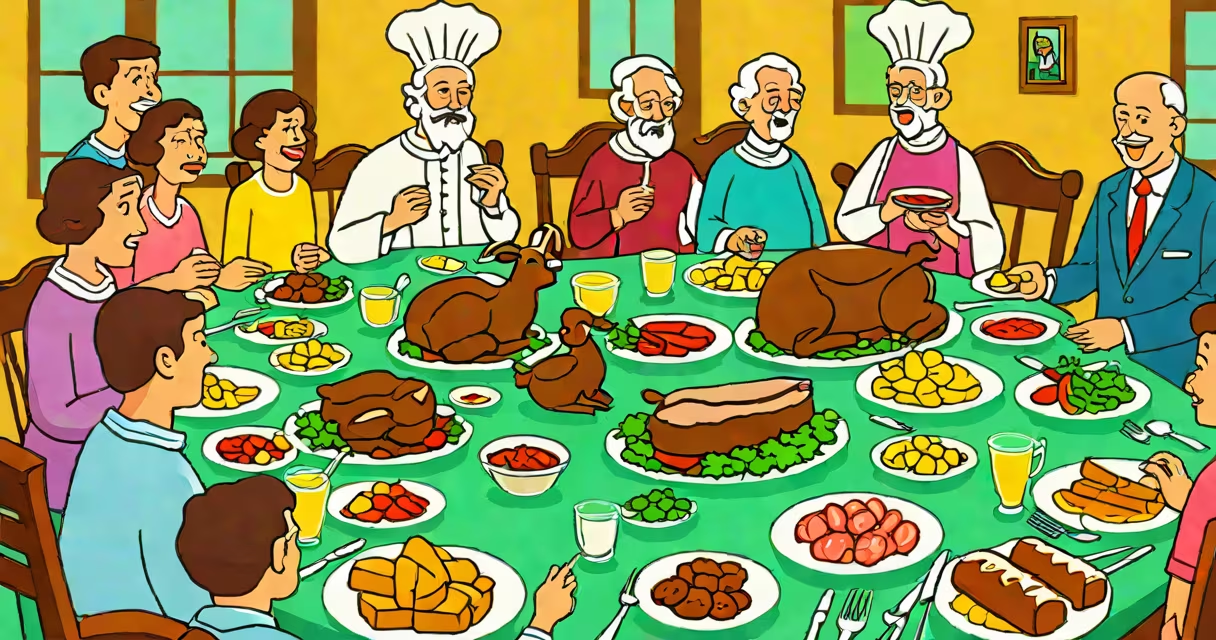
Catholics may eat meat on Easter Sunday. The Church allows it because Easter is a feast day celebrating Christ's resurrection, not a day of penance or fasting.
Easter Sunday marks the culmination of Holy Week, which begins with Palm Sunday and includes Good Friday and Holy Saturday. While the Church requires abstinence from meat on Fridays during Lent-including Ash Wednesday and Good Friday-this rule does not apply on Easter Sunday. The day is not a fast day, nor is it part of the penitential season. Instead, it is a high holy day, one of the most important in the liturgical calendar.
The Catholic Church distinguishes between days of penance and days of feasting. Fasting and abstinence are required on certain days to express sorrow for sin and to practice self-discipline. But Easter Sunday is not such a day. It is a day of joy, marked by the Easter Vigil Mass, the renewal of baptismal vows, and the lighting of the Paschal candle. The Church explicitly lifts restrictions on meat consumption on this day.
The Church's law on abstinence from meat applies only on specific days: Ash Wednesday, Good Friday, and all Fridays during Lent. These are designated days of penance. On other days, including Sundays, meat is permitted unless otherwise specified.
Easter Sunday falls on a Sunday, which is already exempt from meat abstinence under canon law. Canon 1252 of the Code of Canon Law states that abstinence from meat is required on Ash Wednesday and Good Friday and on all Fridays during Lent. It does not list Easter Sunday among them. Therefore, eating meat on Easter Sunday is not only allowed-it is encouraged as part of the celebratory nature of the day.
Some Catholics may still choose to abstain from meat out of personal devotion, especially if they are observing a private fast. But this is not required. The Church does not mandate meat abstinence on Easter Sunday, and doing so would go against the spirit of the feast.
The Church's dietary rules fall into two categories: fasting and abstinence. Fasting limits the amount of food consumed, typically to one full meal and two smaller meals. Abstinence prohibits certain foods, particularly meat from warm-blooded animals.
Abstinence from meat is not a universal rule. It applies only on specified days. For example, fish is allowed on days of abstinence because it is not considered meat in the traditional sense. This distinction dates back to early Christian practice, where fish was seen as a symbol of Christ and a food suitable for penitential days.
| Day | Meat Allowed? | Reason |
|---|---|---|
| Good Friday | No | Day of solemn penance; abstinence required |
| Ash Wednesday | No | First day of Lent; abstinence required |
| All Fridays in Lent | No | Penitential observance |
| Easter Sunday | Yes | Feast day; no abstinence required |
The rule exists to maintain spiritual discipline during Lent and to mark key moments in the liturgical year. The Church uses abstinence from meat as a way to focus attention on sacrifice and renewal. It is not about food itself but about the act of giving something up to grow closer to God.
On Easter Sunday, the opposite is true. The Church encourages joy, celebration, and abundance. Families gather for large meals. Churches often serve special foods like ham, lamb, or chicken. The Easter meal is meant to reflect the triumph of life over death. Eating meat is consistent with this theme.
A common misconception is that all religious holidays require abstinence. But Easter Sunday is not a penitential day. It is the opposite-a day of victory. The Church teaches that "the Resurrection is the foundation of our faith" (Catechism of the Catholic Church, paragraph 631). To deny meat on such a day would contradict that message.
Many people confuse Easter Sunday with Holy Saturday. Holy Saturday is the last day of Lent and the day before Easter. On Holy Saturday, Catholics are expected to abstain from meat. This is a strict rule. The Church requires abstinence on Holy Saturday because it is part of the penitential season.
Because Holy Saturday comes immediately before Easter Sunday, some Catholics assume the meat restriction continues. But the Church lifts the rule at midnight, when the Easter Vigil begins. The transition from sorrow to joy happens at the moment of the Easter proclamation: "Christ is risen!"
Another confusion arises around the term "fasting." Some think fasting means no meat. But fasting refers to limiting food intake, not avoiding meat. A person may fast on Good Friday but still eat fish. The Church allows fish on days of abstinence because it is not classified as meat.
One non-obvious fact: The Church does not require meat abstinence on all Sundays. Only on Ash Wednesday, Good Friday, and Fridays during Lent. So even though Sunday is traditionally a day of rest, meat is allowed unless the day coincides with a penitential obligation.
In 2023, Easter Sunday fell on April 9. A parish in Chicago held its annual Easter brunch at 10 a.m. The menu included scrambled eggs, bacon, sausage, waffles, and fruit. The priest, speaking during the homily, noted that "we're allowed to eat meat today because we're celebrating the resurrection, not mourning the cross."
He added, "The Church doesn't ask us to give up joy. We fast to prepare for Easter. We celebrate it with everything we have." The meal was attended by over 200 families. No one was asked to skip the bacon.
I attended my first Easter Sunday Mass at a small parish in rural Pennsylvania. After the service, the congregation gathered in the church hall for a potluck. I saw a table filled with ham, roast beef, deviled eggs, and chocolate-covered strawberries. A woman handed me a plate with a slice of ham and said, "This is what Easter is-feasting after the fast." I didn't see anyone avoid meat. Not one.
Catholics can eat meat on Easter Sunday. The Church permits it as part of the joyful celebration of Christ's resurrection. This is not a matter of personal choice-it is a clear directive in canon law and liturgical tradition. The day is not a penitential day, and meat abstinence does not apply.