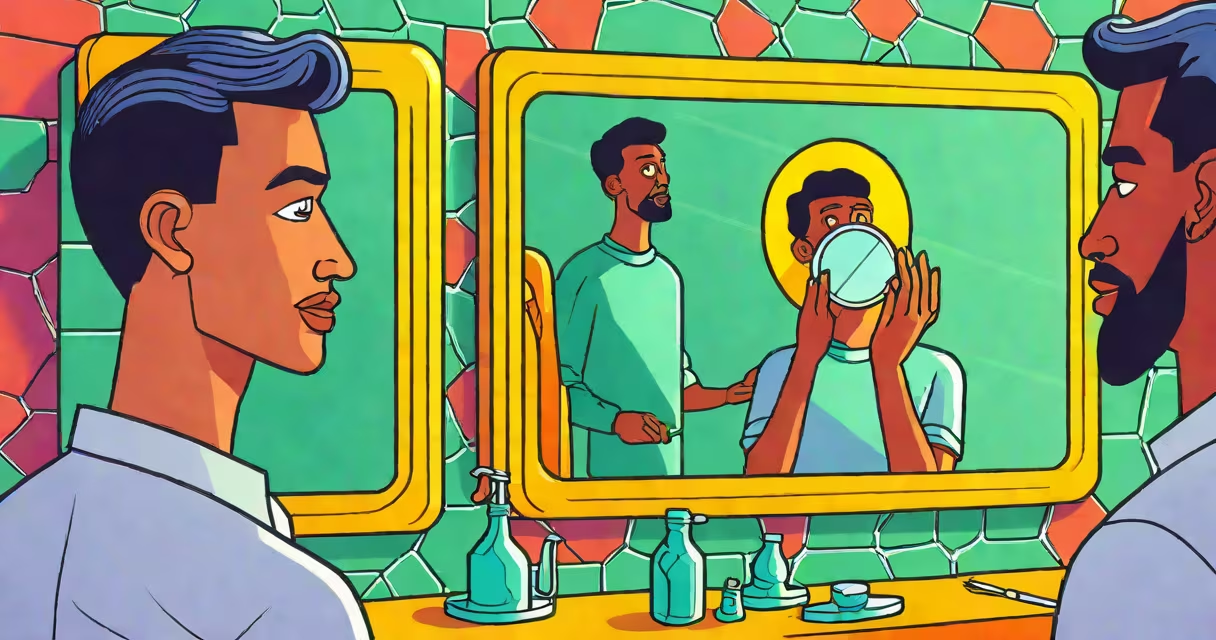
"Can I be him?" is a question about identity formation, where someone evaluates whether they can adopt another person's traits, behaviors, or life path as their own. It reflects a psychological process of self-comparison, aspiration, and internalization of external models-common during adolescence and major life transitions.
This question isn't about literal physical transformation. It's about emotional, behavioral, and cognitive alignment. A teenager asking "Can I be him?" might be referring to a musician, athlete, or public figure whose lifestyle, confidence, or success feels attainable. The inquiry centers on whether the self can evolve into a version shaped by admiration.
Research from the American Psychological Association confirms that identity development involves modeling-especially during ages 12 to 25. People don't just copy actions; they absorb values, speech patterns, and decision-making styles from those they admire. The question "Can I be him?" is a verbal marker of that phase.
When someone asks "Can I be him?", they're engaging in social learning-a concept developed by Albert Bandura. People observe others, then simulate their behavior through mental rehearsal and practice. This isn't mimicry; it's integration. The observer doesn't just copy gestures-they reframe them within their own context.
For example, a high school student who idolizes a tech entrepreneur may start coding in spare time, join robotics clubs, and adopt a minimalist wardrobe. These aren't random choices. They're deliberate steps toward embodying the model's identity. The student isn't trying to look like the entrepreneur-they're trying to think and act like them.
Neuroscience supports this. Mirror neuron systems activate when we observe others' actions. Repeated exposure strengthens neural pathways associated with imitation. Over time, behaviors that were once external become internalized. What began as "Can I be him?" becomes "I am becoming him."
Not all figures inspire the same kind of identity shift. The nature of the model shapes the outcome of the question "Can I be him?"
| Type | Characteristics | Impact on Identity |
|---|---|---|
| Public Figures | Media presence, fame, visible achievements (e.g., athletes, celebrities) | Often inspire aspirational goals but risk promoting unrealistic standards. Can lead to identity strain if unattainable. |
| Family Members | Close relationships, shared history, daily interaction (e.g., parent, sibling) | Provide accessible templates. Identity shifts tend to be gradual and grounded in lived experience. |
| Peers | Age-matched, similar environment (e.g., classmate, friend) | Drive immediate behavioral changes. Identity adoption often tied to group belonging. |
| Historical or Fictional Figures | Archetypal, symbolic, or imagined (e.g., fictional heroes, historical leaders) | Enable idealized identity construction. Less about replication, more about symbolic identification. |
Each model offers a different path. A child raised in a household with a single working parent might ask "Can I be him?" while watching their father return home late, tired but proud. The question isn't about fame-it's about endurance, responsibility, and quiet dignity. The identity being modeled is not flashy, but deeply personal.
People often misunderstand "Can I be him?" as a request for transformation into someone else. That's incorrect. The question isn't about erasing the self. It's about expansion. You don't become your role model-you become a version of yourself that includes their strengths.
A common error is equating admiration with identity loss. But research from the University of California, Berkeley, shows that healthy identification with role models enhances self-efficacy. When teens emulate positive figures, they report higher confidence and better academic performance. The key is balance-internalizing traits without losing core values.
Another mistake is assuming all identity shifts are conscious. Many people adopt behaviors from admired figures without realizing it. I once observed a college student who spoke with the cadence and pauses of a professor he respected. He didn't imitate him on purpose-he'd absorbed his mannerisms over months of lectures. The question "Can I be him?" wasn't asked aloud-it was lived.
In 2018, a 16-year-old from Detroit named Malik began studying the stage presence of Kendrick Lamar. He wasn't interested in rapping like him-he wanted to understand how Lamar used music to speak about systemic injustice, community trauma, and personal resilience.
Malkin started writing lyrics that mirrored Lamar's storytelling structure: vivid imagery, layered metaphors, rhythmic flow. He performed at local open mics, not to sound like Lamar, but to channel the same emotional honesty. After six months, he stopped asking "Can I be him?" and started saying, "I'm becoming someone who speaks like this."
His identity didn't erase his own voice. It amplified it. He wasn't Kendrick Lamar-but he was using Lamar's structure to express his own truth. The question evolved from imitation to authorship.
"Can I be him?" is not a sign of weakness. It's a signal of growth. It indicates that someone is actively engaged in shaping their identity through observation, reflection, and effort. It's part of a natural developmental arc-moving from passive admiration to active self-definition.
Psychologists at the National Institute of Mental Health note that identity exploration peaks in early adulthood. Asking "Can I be him?" during this time is normal, even necessary. Suppressing such questions leads to identity stagnation. Encouraging them fosters resilience and self-awareness.
"Can I be him?" isn't about becoming someone else. It's about asking: What parts of this person do I want to carry forward? How can I grow into a version of myself that honors both my past and my aspirations?
The answer lies not in copying, but in integrating. And that's where identity begins-not in resemblance, but in resonance.