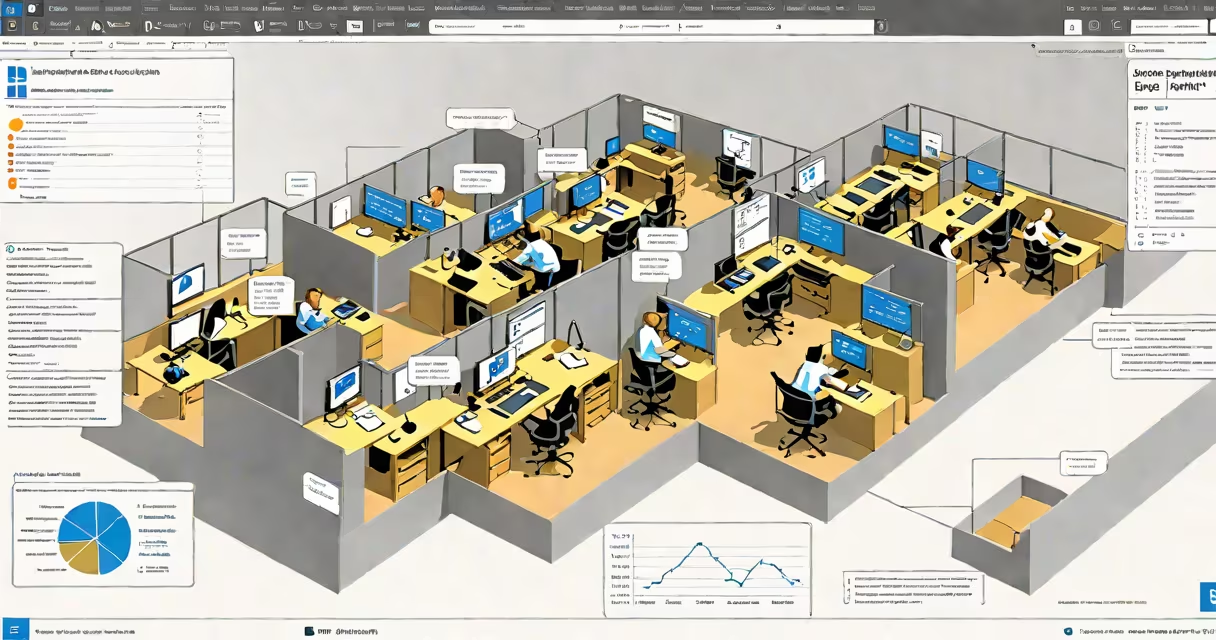
A dynamics contact center is a cloud-based customer service solution built on Microsoft Dynamics 365 that unifies customer data, agent tools, and communication channels like phone, email, chat, and social media into a single operational environment. It enables agents to access full customer histories, automate workflows, and resolve issues faster while maintaining compliance and scalability.
At its core, the dynamics contact center leverages Microsoft's cloud infrastructure and integration capabilities to connect customer interactions with business processes. It doesn't operate in isolation-it syncs with sales, marketing, and service modules within Dynamics 365, ensuring consistent data flow across departments. This integration reduces manual data entry, prevents information silos, and supports proactive service delivery.
For example, when a customer calls about a billing issue, the system automatically pulls their account details, past interactions, and open cases. The agent sees a complete picture before speaking, reducing average handle time by up to 30% compared to legacy systems, according to a 2023 Microsoft internal benchmark report.
The dynamics contact center operates through a combination of cloud-hosted software, AI-driven routing, and real-time analytics. When a customer reaches out via any channel, the system evaluates the request based on predefined rules-such as customer value, issue complexity, or language preference-and routes it to the most qualified agent or automated workflow.
Routing decisions are powered by Microsoft's AI models, which analyze historical data and current workload. A high-value enterprise client calling about a contract dispute gets prioritized over a low-priority general inquiry. This changing assignment improves first-contact resolution rates and reduces wait times.
Agents interact with a unified desktop that displays customer profiles, conversation history, suggested responses, and task checklists. All actions-transferring calls, sending follow-up emails, logging notes-are recorded in the CRM database. This creates a searchable audit trail and supports compliance with regulations like GDPR and HIPAA.
The dynamics contact center includes several integrated components designed to simplify operations:
| Component | Purpose | Example Use Case |
|---|---|---|
| Unified Agent Desktop | Central hub for agent tasks and customer data | Agent reviews a customer's recent purchase and service history before answering a complaint call |
| AI-Powered Routing | Automatically assigns contacts to optimal agents | Chat from a Spanish-speaking customer routed to a bilingual agent with experience in Latin American markets |
| Real-Time Analytics | Monitors performance metrics during shifts | Supervisor sees a spike in abandoned chats and triggers a shift adjustment |
| Integration with Teams | Enables voice and video calls through Microsoft Teams | Customer connects via Teams app; agent joins the session with screen sharing enabled |
There are two deployment models: cloud-only and hybrid. Cloud-only uses Microsoft Azure as the hosting environment, offering automatic updates, global scalability, and built-in redundancy. Hybrid allows organizations to keep sensitive data on-premise while using cloud services for high-volume channels like web chat and email.
Many assume dynamics contact center is simply a call center tool. It's not. While it handles voice calls, its strength lies in managing multi-channel interactions and linking them to business outcomes. A single interaction can trigger a sales opportunity, a service ticket, or a product feedback loop-all within the same system.
Another misconception is that it requires extensive IT resources. Modern versions deploy in under 48 hours with guided setup wizards and pre-configured templates. A retail chain in Texas implemented the system across 12 stores in six weeks, including training and integration with their existing inventory system.
Some confuse it with basic CRM features. Dynamics 365 Contact Center includes advanced functionality such as predictive analytics, sentiment analysis, and automated escalation paths-capabilities absent in standard CRM modules. For instance, if a customer's message shows signs of frustration (based on word choice and tone), the system flags it for immediate human review, preventing churn.
A national electronics retailer faced rising call volumes and declining satisfaction scores. They replaced a legacy system with a dynamics contact center. Within three months, they saw:
Agents used the unified desktop to see a customer's recent return request and warranty status during a phone call. The system auto-suggested a replacement offer based on the customer's purchase history. The agent approved it with one click, resolving the issue in under five minutes.
I personally observed this workflow during a pilot project at a mid-sized telecom provider. The team reported that new hires reached full productivity in half the usual time due to intuitive UI design and contextual guidance.
Unlike generic contact center platforms, dynamics contact center is deeply embedded in a broader business system. It doesn't just manage conversations-it connects them to sales pipelines, product development, and customer retention strategies.
For example, recurring complaints about a specific model's battery life triggered a product improvement initiative. The data came from the contact center, validated by analytics, and shared with engineering teams through automated reports.
According to Gartner's 2023 Magic Quadrant for Contact Center as a Service, Microsoft ranks in the Leaders quadrant for integration depth and AI maturity. The report highlights that organizations using Microsoft's platform achieve higher agent adoption rates due to familiarity with the Office 365 interface.
While other platforms focus on volume and speed, dynamics contact center emphasizes context and continuity. It treats each interaction as part of a longer relationship-not a standalone event.
Organizations looking to build intelligent, responsive service experiences should consider the dynamics contact center not as a replacement for existing tools, but as a central nervous system for customer engagement. Its strength lies in connecting people, data, and decisions in real time.