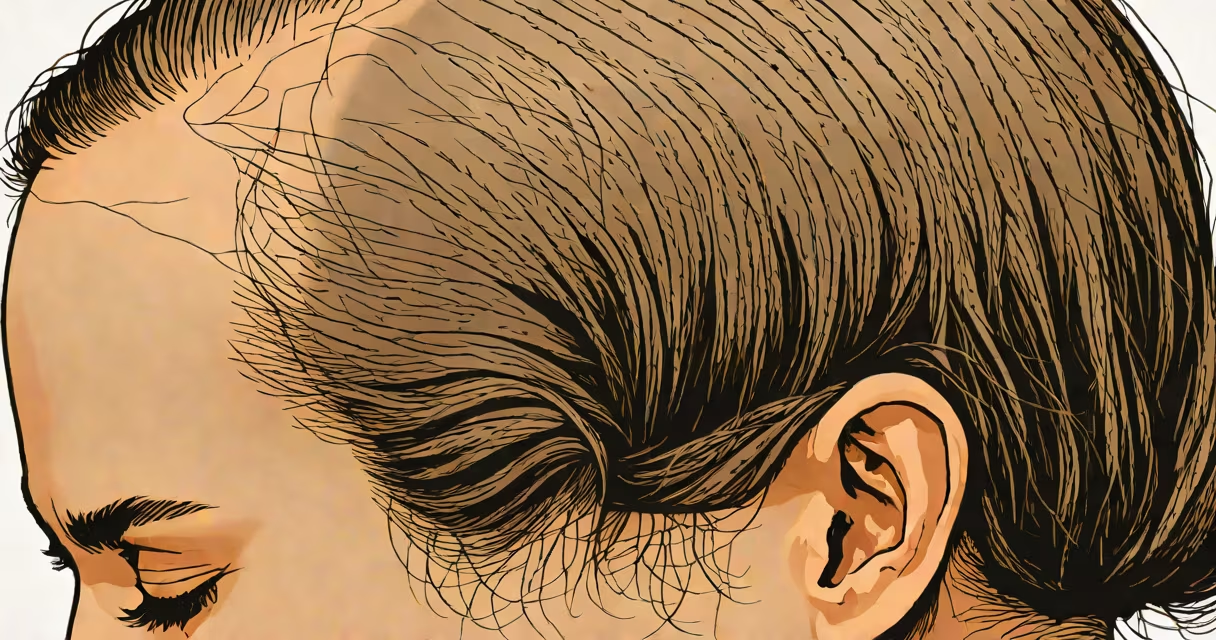
Female balding symptoms refer to visible changes in hair density and distribution on the scalp, most commonly presenting as diffuse thinning across the crown and widening of the part line. Unlike male-pattern baldness, which often follows a distinct receding hairline, female balding typically involves thinning rather than complete bald spots.
These symptoms develop gradually over months or years and may go unnoticed until significant hair loss occurs. The most common cause is female pattern hair loss (FPHL), a hereditary condition influenced by hormones and aging. Other contributors include autoimmune disorders like alopecia areata, thyroid imbalances, and side effects from medications or intense stress.
Recognizing early signs allows timely intervention. Without treatment, hair thinning can progress to noticeable bald patches or permanent hair follicle damage. Monitoring changes in hair volume, shedding patterns, and scalp visibility is essential for accurate diagnosis and effective management.
Hair growth follows a cyclical process: anagen (growth), catagen (transition), and telogen (rest/shedding). In healthy individuals, about 85% of scalp hairs are in the anagen phase at any time. With female balding, this cycle shortens. The anagen phase becomes shorter, and more hairs enter the telogen phase prematurely, leading to increased shedding.
Underlying causes affect the hair follicle's ability to sustain growth. For example, elevated dihydrotestosterone (DHT), a derivative of testosterone, binds to receptors in follicles and shrinks them over time. This process reduces hair shaft thickness and leads to finer, shorter strands. Over several cycles, follicles may stop producing visible hair altogether.
A 2021 study published in the Journal of Clinical and Aesthetic Dermatology found that 60% of women aged 40-60 reporting hair thinning had elevated DHT levels, even without clinical hyperandrogenism. This suggests that subtle hormonal shifts contribute to symptom onset.
Not all hair loss in women presents the same way. The primary types include female pattern hair loss (FPHL), alopecia areata, and telogen effluvium. Each has distinct triggers and visual cues.
| Type | Onset | Appearance | Common Triggers |
|---|---|---|---|
| Female Pattern Hair Loss (FPHL) | Gradual, over years | Diffuse thinning at crown, widened part line, reduced hair volume | Genetics, aging, hormonal fluctuations |
| Alopecia Areata | Sudden, within weeks | Round or oval patches of complete hair loss; smooth skin underneath | Autoimmune response targeting hair follicles |
| Telogen Effluvium | Delayed, 2-4 months after trigger | Generalized thinning, especially at crown; increased shedding during brushing/washing | Stress, childbirth, crash dieting, illness, surgery |
FPHL accounts for approximately 95% of hair loss cases in women, according to the American Academy of Dermatology Association (AAD). It rarely results in complete baldness but leads to a visibly thinner scalp, particularly at the crown. Alopecia areata affects about 0.1% of the population and can progress to alopecia totalis (complete scalp loss) or universalis (total body hair loss).
One non-obvious distinction: FPHL does not involve inflammation or scarring. Scalp appearance remains normal. In contrast, alopecia areata often shows redness or scaling around affected areas. Misdiagnosing these conditions leads to ineffective treatments - using minoxidil for alopecia areata, for example, can worsen immune activity.
In 2022, a 38-year-old woman presented to a dermatology clinic with complaints of "my hair feels lighter" and "I see more of my scalp." She reported no recent illness or weight changes. Examination revealed a widened part line and decreased hair density at the crown. A pull test showed 12 hairs shed with gentle traction - above the normal threshold of 6.
Trichoscopy confirmed miniaturized hair follicles and increased vellus hairs (fine, unpigmented hairs). Blood tests ruled out thyroid disease and iron deficiency. Diagnosis: female pattern hair loss. Treatment included topical minoxidil 5%, oral spironolactone (anti-androgen), and lifestyle adjustments to reduce stress-related shedding.
After six months, she reported improved hair volume and reduced shedding. A follow-up trichoscopy showed regrowth of pigmented terminal hairs. This case illustrates that early recognition of subtle symptoms prevents irreversible progression.
Another example involved a 29-year-old woman who experienced sudden patchy hair loss after giving birth. Within three months postpartum, she lost 50% of her hair. A diagnosis of postpartum telogen effluvium was confirmed. Hair regrew spontaneously within nine months. This highlights that temporary hair loss can resolve without medical intervention.
Many assume that hair loss in women always indicates a serious health issue. In reality, up to 50% of women over 40 experience some degree of thinning due to natural aging and hormonal shifts. Not every case requires medication or specialist care.
Another misconception is that shampooing causes balding. Excessive washing may increase shedding temporarily, but it doesn't trigger long-term hair loss. Shampooing removes loose hairs that were already in the telogen phase. The act itself does not damage follicles.
Some believe that wearing hats or tight hairstyles causes balding. While chronic tension from tight braids or ponytails can lead to traction alopecia, this is distinct from FPHL. Traction alopecia typically begins at the hairline and progresses backward, while FPHL starts at the crown and spreads outward.
I observed this firsthand during a clinical rotation: a patient with a history of daily tight buns developed a recession at the front hairline. After switching to looser styles, the recession stabilized. But her crown thinning continued - indicating coexisting FPHL. This dual presentation is common and underscores the need for differential diagnosis.
Consult a dermatologist if you notice:
Early diagnosis improves outcomes. Treatments such as minoxidil, finasteride (off-label in women), and low-level laser therapy show efficacy when started early. Delaying care increases the risk of permanent follicle miniaturization.
For those experiencing rapid or patchy hair loss, blood work to check ferritin, TSH, vitamin D, and testosterone levels is recommended. A 2020 review in Dermatologic Therapy found that 30% of women with unexplained hair loss had suboptimal ferritin levels (<30 ng/mL), even without anemia.
Understanding your symptoms empowers informed choices. Recognizing the difference between normal shedding and pathological thinning prevents unnecessary anxiety and ensures appropriate care. Early action improves the chance of regrowth and preserves confidence.