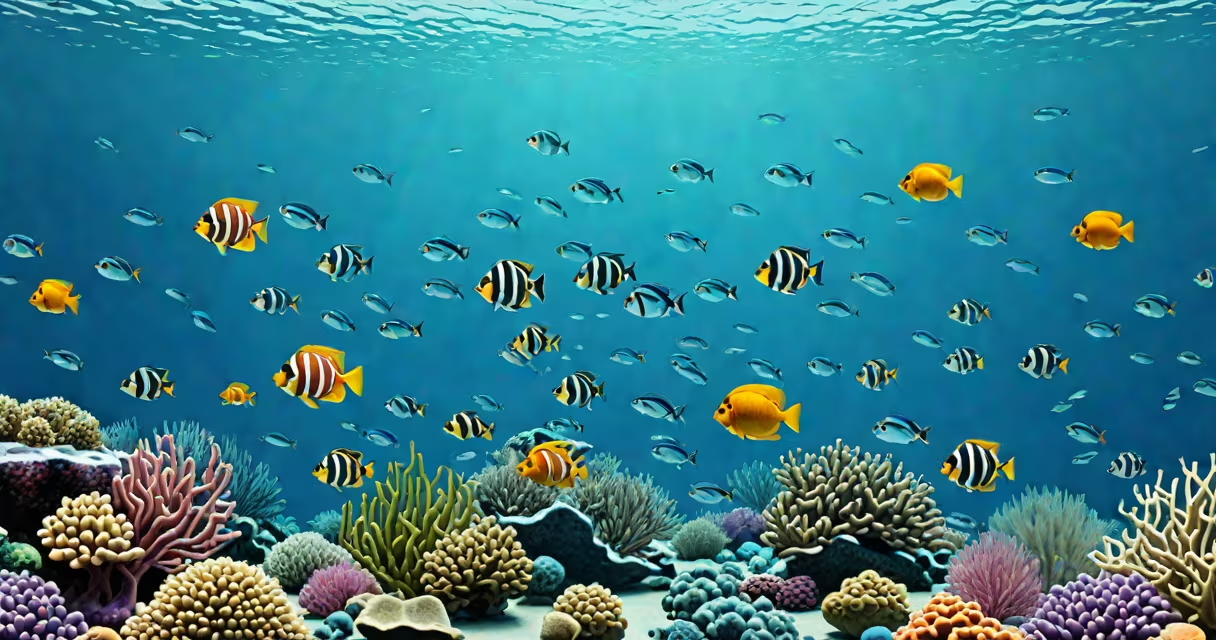
Fish in the ocean are aquatic vertebrates that live in saltwater environments, breathe through gills, and move using fins. They range from tiny planktivores like anchovies to massive predators like great white sharks, forming the core of marine ecosystems.
These animals rely on gills to extract oxygen from seawater, which flows over specialized membranes in their gill arches. Unlike land vertebrates, fish do not have lungs. Instead, they maintain buoyancy using a swim bladder-a gas-filled organ that adjusts their density in water. This allows them to hover at specific depths without expending energy.
Ocean fish inhabit every zone-from shallow coastal waters to the abyssal plains below 4,000 meters. Their adaptations vary widely: deep-sea anglerfish use bioluminescent lures to attract prey in perpetual darkness, while reef fish like parrotfish have beak-like mouths to scrape algae off coral. Some species migrate thousands of kilometers annually, such as Atlantic salmon returning to spawn in freshwater rivers where they were born.
Marine fish fall into three broad categories based on habitat and behavior:
| Type | Habitat | Examples | Key Adaptation |
|---|---|---|---|
| Demersal | Seafloor | Flounder, halibut, cod | Flat bodies, eyes on one side |
| Reef-associated | Coral reefs | Clownfish, groupers, snapper | Color-changing camouflage, symbiotic relationships |
| Open-ocean pelagic | Surface and midwater zones | Tuna, swordfish, mackerel | Streamlined bodies, high-speed swimming |
Each group occupies a distinct ecological niche. For example, parrotfish consume coral and excrete sand, contributing directly to beach formation. A single reef can host over 400 fish species, according to the National Oceanic and Atmospheric Administration (NOAA).
Fish in the ocean form the foundation of marine food webs. Small fish like krill and sardines serve as primary prey for larger species, including tuna, sharks, and whales. When populations decline due to overfishing or habitat loss, entire ecosystems destabilize. The collapse of the Atlantic cod fishery in the 1990s led to a trophic cascade: predator numbers dropped, and jellyfish populations surged in the absence of competition.
Humans depend on fish in the ocean for protein and economic livelihoods. Global catch reached 93 million metric tons in 2020, according to the Food and Agriculture Organization (FAO). In countries like Japan and Indonesia, fish provide over 50% of animal protein intake. However, unsustainable practices threaten long-term supply. The FAO estimates that 36% of global fish stocks are overexploited.
Many assume all fish in the ocean are edible or safe to eat. This is false. Some species contain high levels of mercury due to bioaccumulation. Predatory fish like shark, swordfish, and king mackerel concentrate toxins over time. The U.S. Environmental Protection Agency (EPA) recommends limiting consumption of these species, especially for pregnant women and young children.
Another misconception is that fish in the ocean are uniformly abundant. While some populations remain stable, others face extinction. The International Union for Conservation of Nature (IUCN) lists 1,085 fish species as threatened with extinction, including the Atlantic bluefin tuna and the European eel. Overfishing, pollution, and climate change drive these declines.
A lesser-known fact: many fish in the ocean reproduce via external fertilization. Female fish release eggs into the water column, and males release sperm nearby. Fertilization occurs in open water, often during seasonal spawning events. This method increases genetic diversity but exposes offspring to high predation rates. Only a small fraction of larvae survive to adulthood.
The Pacific bluefin tuna (Thunnus orientalis) is a large predatory fish found in the North Pacific Ocean. Adults grow up to 2.5 meters long and weigh over 450 kilograms. They migrate between feeding grounds off Japan and breeding areas near Baja California.
Commercial fishing targets this species for sushi and sashimi. In 2022, the average price for a single Pacific bluefin tuna sold at Tokyo's Tsukiji market reached $300,000. Despite this, the population has declined by 80% since the 1970s due to overfishing. The IUCN classifies it as endangered.
Conservation efforts include tagging programs to track migration routes and international quotas set by the Western and Central Pacific Fisheries Commission (WCPFC). These measures aim to reduce catch limits and protect spawning grounds.
Fish in the ocean face different challenges than their freshwater counterparts. Saltwater fish regulate internal ion balance through specialized cells in their gills and kidneys. Freshwater fish, conversely, constantly lose salts and gain water, requiring opposite mechanisms. This difference affects osmoregulation-the process of maintaining fluid and electrolyte balance.
Ocean fish often live in vast, open habitats with fewer physical barriers. This promotes long-distance migration and high genetic connectivity across regions. Freshwater fish are more isolated by geography, leading to greater speciation in river systems.
When I studied marine biology in Hawaii, I observed a school of yellowtail snapper near a reef. They moved in coordinated bursts, reacting instantly to changes in light and current. Their scales reflected sunlight in flashes, making them nearly invisible against the dappled seafloor. That moment confirmed how deeply adapted fish in the ocean are to their environment.
Understanding fish in the ocean is essential for preserving marine health and ensuring sustainable food systems. Research shows that protecting 30% of the ocean by 2030 could restore fish populations and improve resilience to climate change, according to a 2023 study published in Nature. Maintaining healthy fish in the ocean supports biodiversity, fisheries, and coastal communities alike.