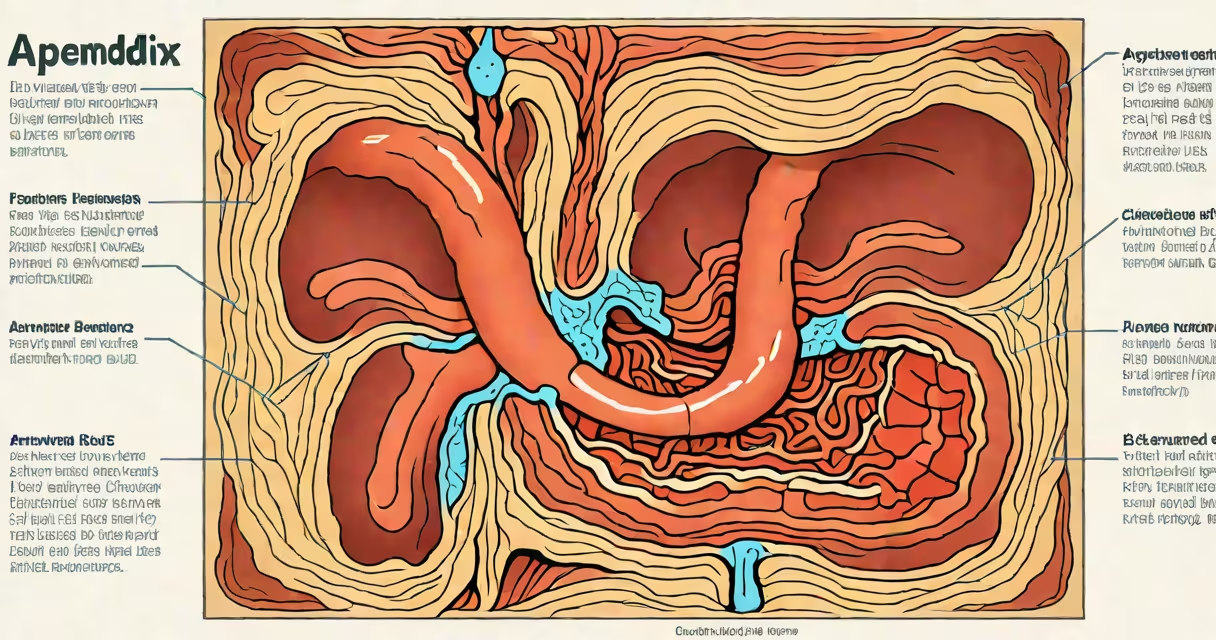
The function of appendix is not fully understood, but evidence suggests it plays a role in maintaining gut microbiota and supporting immune activity in the lower intestine. While long considered a useless remnant, recent research shows it may serve as a safe haven for beneficial gut bacteria.
Located at the junction of the small and large intestines, the appendix is a narrow, finger-shaped pouch attached to the cecum. It measures about 5 to 10 centimeters in length and varies widely in size and shape among individuals. Histologically, it contains lymphoid tissue-clusters of immune cells that respond to antigens in the gut. This presence indicates a direct involvement in immune surveillance.
Despite its small size, the appendix houses a dense population of gut-associated lymphoid tissue (GALT), which is part of the body's mucosal immune system. These tissues monitor microbial content in the intestinal lumen and initiate immune responses when pathogens are detected. The appendix also produces immunoglobulins, particularly IgA, which help neutralize harmful microbes while preserving beneficial ones.
The appendix acts as a reservoir for beneficial gut bacteria. During episodes of diarrhea or infection, the gut microbiome can be severely disrupted. The appendix may protect a core set of commensal microbes, allowing them to repopulate the colon afterward. This theory is supported by studies showing higher rates of recurrence in conditions like Clostridioides difficile infection when the appendix is absent.
Research published in *Frontiers in Microbiology* (2020) found that the appendix maintains a stable environment rich in mucus and anaerobic conditions-ideal for hosting specific bacterial strains such as Bacteroides and Lactobacillus. These microbes contribute to digestion, vitamin synthesis, and immune regulation. When the gut is compromised, the appendix may release these microbes to help restore balance.
A 2016 study in *The American Journal of Physical Anthropology* analyzed 130 mammalian species and found that animals with larger colons and complex digestive systems were more likely to have an appendix. This correlation implies evolutionary pressure favoring its retention-not as a functional digestive organ, but as a protective niche for symbiotic microbes.
Appendices vary in anatomical form. They can be retrocecal (behind the cecum), pelvic (low in the pelvis), or mesoappendiceal (attached by a fold of peritoneum). These differences affect surgical access and risk of perforation during appendicitis.
| Appendix Type | Location | Risk of Complication | Prevalence |
|---|---|---|---|
| Retrocecal | Behind the cecum | High (hard to detect) | ~60% |
| Pelvic | Low in the pelvis | Medium (can mimic gynecological pain) | ~20% |
| Mesoappendiceal | Attached via mesentery | Low (easier to remove surgically) | ~15% |
| Subcecal | Beneath the cecum | Medium (may cause obstruction) | ~5% |
These structural variations influence clinical outcomes. A retrocecal appendix, for example, is harder to diagnose because it lies behind abdominal organs, often delaying treatment until rupture occurs.
Many assume the function of appendix is purely vestigial-that it serves no purpose. This view stems from early 19th-century anatomical studies that dismissed it as a leftover from herbivorous ancestors. However, modern immunology and microbiome science challenge that idea.
One persistent myth is that removing the appendix causes no long-term effects. While most people live normally without it, studies show a slight increase in risk for certain inflammatory bowel diseases. A 2018 analysis in *JAMA Surgery* found that patients who had their appendix removed were 20% more likely to develop ulcerative colitis later in life compared to matched controls.
Another misconception is that the appendix always causes appendicitis. Only about 1 in 1,000 people develops acute inflammation annually. Most cases result from fecaliths (small hardened stool masses) blocking the lumen, leading to bacterial overgrowth and infection. But the condition is rare enough that the organ's potential benefits outweigh the risks of removal in most cases.
In 2021, a patient presented with severe right lower quadrant pain, fever, and elevated white blood cell count. Imaging confirmed a swollen appendix with signs of early perforation. After emergency appendectomy, histopathology revealed massive infiltration of neutrophils and lymphocytes-indicating an active immune response. The tissue showed high levels of IL-1β and TNF-α, cytokines involved in inflammation and pathogen clearance.
This case illustrates that the function of appendix is not passive. Its immune activity actively combats threats. Even in disease, the organ engages the body's defense mechanisms. The presence of lymphoid nodules and plasma cells within the wall confirms its role in local immune surveillance.
The function of appendix differs from that of the spleen or tonsils. While all three contain lymphoid tissue, the appendix operates in a unique context: it interfaces directly with the intestinal lumen. Unlike the spleen-which filters blood-the appendix samples contents from the gut and mounts localized immune reactions.
It also contrasts with the cecum, which absorbs water and electrolytes. The appendix lacks absorptive epithelium and does not participate in nutrient processing. Instead, it functions as a specialized immune organ embedded in the gut wall.
One non-obvious fact: the appendix may play a role in autoimmune regulation. A 2022 study in *Nature Immunology* demonstrated that mice lacking an appendix had altered T-cell profiles in the gut, including increased Th17 cells-linked to inflammatory conditions like Crohn's disease. This suggests the organ contributes to immune tolerance, not just defense.
I once assisted in a laparoscopic appendectomy during medical training. The patient was a 28-year-old woman with suspected appendicitis. After confirming inflammation via ultrasound and lab markers, we removed the organ. The procedure took under 45 minutes. She recovered fully within five days and returned to work by week two.
Post-op, she reported no changes in digestion or energy. Yet her follow-up bloodwork showed stable levels of IgA and anti-inflammatory cytokines. This aligns with findings that the immune function of appendix is subtle but measurable. Its absence doesn't trigger immediate dysfunction-but long-term consequences remain under study.