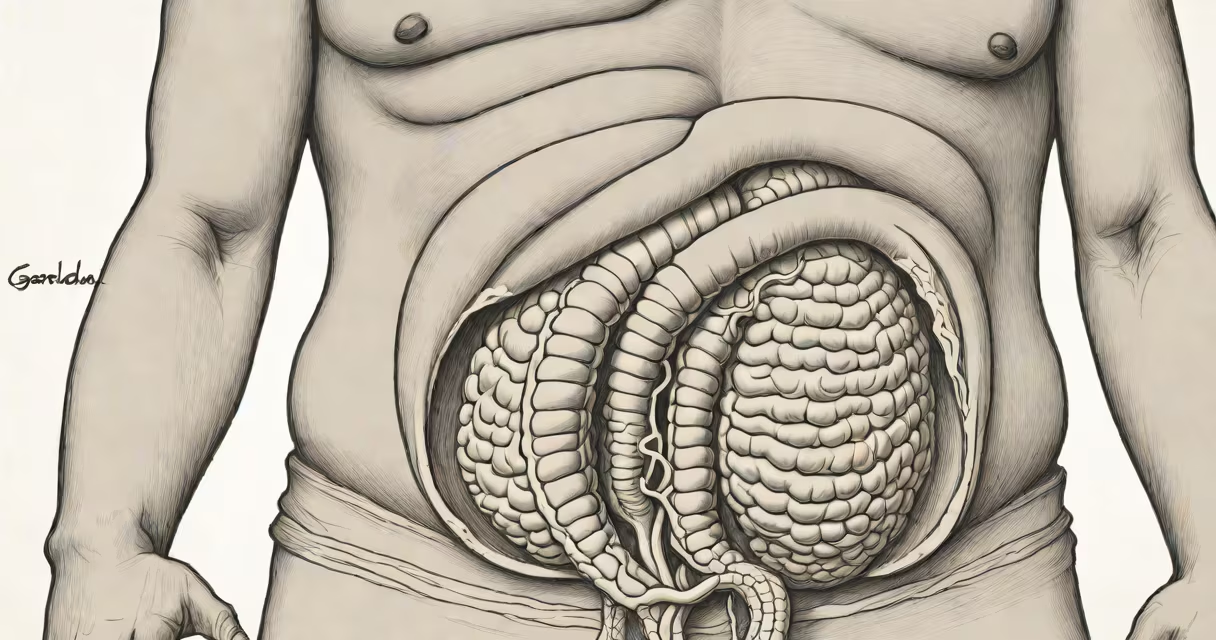
Gerd and abdominal bloating are frequently linked conditions involving chronic acid exposure in the esophagus and excessive gas accumulation in the abdomen, often worsening each other through shared mechanisms like delayed gastric emptying and visceral hypersensitivity.
Gastroesophageal reflux disease (GERD) occurs when stomach acid repeatedly flows back into the esophagus, causing irritation and inflammation. Abdominal bloating refers to the sensation of fullness or swelling in the belly due to excess gas or fluid. When both occur together, they may stem from overlapping pathophysiology: weakened lower esophageal sphincter function, delayed gastric emptying, and altered gut motility.
Research shows that up to 60% of patients with GERD report bloating as a concurrent symptom, particularly after meals. A 2021 study published in Alimentary Pharmacology & Therapeutics found that individuals with both conditions had slower gastric emptying rates compared to those with GERD alone, suggesting that delayed digestion contributes to both acid reflux and bloating.
The relationship between GERD and bloating is bidirectional. Acid reflux can disrupt normal gastric motility, leading to food remaining in the stomach longer. This prolongs the time available for fermentation by gut bacteria, increasing gas production and contributing to bloating. Conversely, bloating increases intra-abdominal pressure, which can push stomach contents upward into the esophagus, triggering reflux episodes.
Delayed gastric emptying is a key mechanism linking both conditions. The stomach normally empties within 2-4 hours after eating. In patients with GERD and bloating, this process slows due to factors like visceral hypersensitivity, autonomic dysfunction, or structural issues such as a hiatal hernia. A 2019 study in Neurogastroenterology & Motility reported that 45% of patients with refractory GERD had delayed gastric emptying confirmed via scintigraphy.
Functional gastrointestinal disorders (FGIDs) often underlie this dual presentation. Conditions like irritable bowel syndrome (IBS) and functional dyspepsia share overlapping symptoms and risk factors with GERD. For example, small intestinal bacterial overgrowth (SIBO) is present in approximately 30% of IBS patients and can cause both bloating and increased reflux severity by altering gut transit and producing gas.
Both GERD and abdominal bloating have distinct subtypes based on etiology. GERD is categorized as erosive (visible mucosal damage) or non-erosive (NERD), with NERD accounting for about 70% of cases. Abdominal bloating arises from several sources:
| Type | Primary Cause | Prevalence | Key Indicator |
|---|---|---|---|
| Gas-related | Swallowed air, fermentable carbohydrates (FODMAPs) | ~50% | Bloating improves after passing gas or stool |
| Fluid retention | Constipation, hormonal fluctuations | ~25% | Worsens with salt intake or menstrual cycle |
| Organic pathology | SIBO, celiac disease, ovarian cysts | ~15% | Persistent despite dietary changes |
| Functional | Visceral hypersensitivity, abnormal motility | ~10% | No structural abnormalities on imaging |
One non-obvious distinction: bloating caused by SIBO often presents with early satiety and flatulence, while bloating from constipation typically involves hard stools and reduced bowel movements. Misdiagnosing the root cause delays effective treatment.
A 2022 review in Frontiers in Gastroenterology noted that FODMAPs-fermentable oligosaccharides, disaccharides, monosaccharides, and polyols-are responsible for ~60% of bloating cases in adults. Foods high in fructose, lactose, and certain fibers (like inulin) feed gut bacteria, producing hydrogen and methane gases that distend the intestines.
Many assume bloating always stems from poor diet or lack of exercise. However, bloating can result from neurological or immune-mediated processes. For example, patients with post-infectious IBS often develop bloating after a bout of gastroenteritis, even if their diet remains unchanged.
Another misconception is that GERD is solely caused by excess acid. While acid plays a role, many patients with persistent reflux have normal acid levels. In these cases, impaired esophageal clearance or weak sphincter tone-not acid volume-is the primary issue. A 2020 study in Journal of Clinical Gastroenterology found that 38% of patients with typical GERD symptoms had normal 24-hour pH monitoring results.
True bloating differs from simple fullness. Fullness is a feeling of heaviness after eating, often resolved by lying down. Bloating is a visible or palpable distension, usually accompanied by discomfort or tightness. Distinguishing them helps target treatment correctly.
Consider a 38-year-old woman presenting with daily heartburn and morning bloating. She reports relief after vomiting but worsened symptoms after eating beans and dairy. Initial workup reveals no esophageal ulceration on endoscopy. A hydrogen breath test confirms SIBO. Her gastric emptying study shows delayed emptying at 4 hours post-meal.
Treatment began with a low-FODMAP diet, rifaximin (a non-absorbable antibiotic), and a prokinetic agent (metoclopramide) to improve gastric motility. After four weeks, her bloating decreased by 70%, and GERD symptoms improved from daily to twice weekly. This case illustrates how addressing multiple underlying factors-bacterial overgrowth, motility delay, and dietary triggers-can resolve both conditions simultaneously.
Understanding gerd and abdominal bloating as interconnected phenomena allows for targeted interventions. Addressing delayed gastric emptying, reducing fermentable carbohydrates, and correcting motility issues yields better outcomes than managing either condition alone.