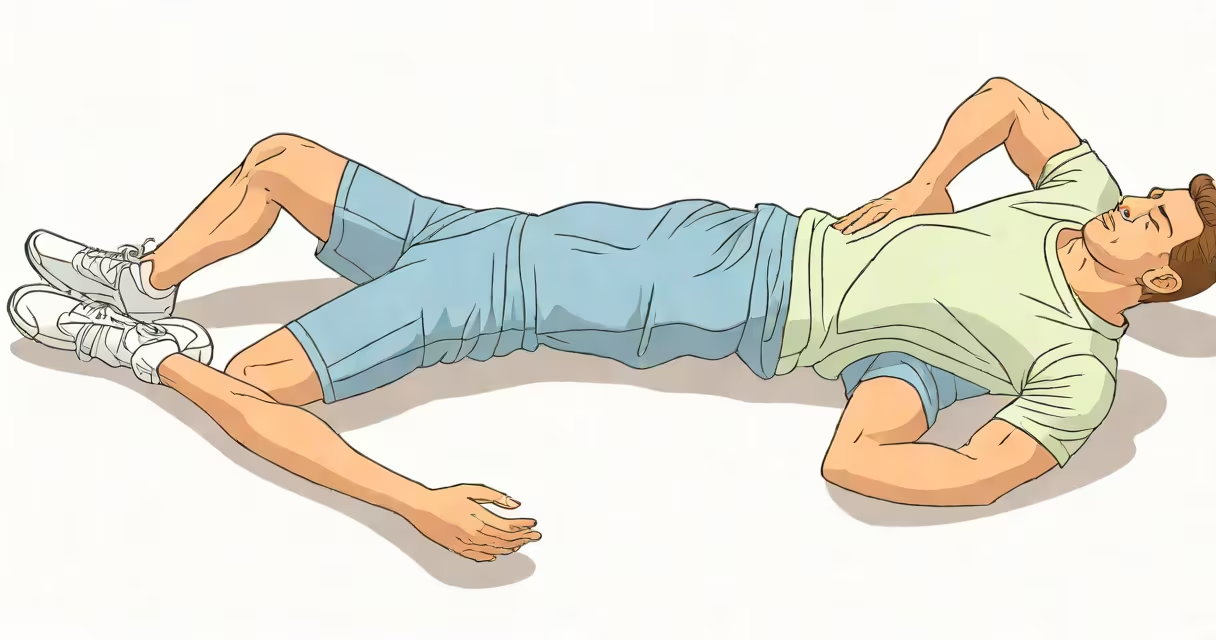
A groin hip flexor strain is a tear in the iliopsoas or rectus femoris muscles, which control hip flexion and stabilize the pelvis during movement. It typically results from sudden acceleration, repetitive bending, or direct impact during sports involving kicking or sprinting.
This injury occurs when muscle fibers stretch beyond their capacity and rupture. The severity ranges from mild microtears (Grade 1) to complete rupture (Grade 3). Symptoms often appear abruptly during activity, especially in runners, dancers, and athletes in contact sports.
According to the American Academy of Orthopaedic Surgeons (AAOS), groin strains account for approximately 15% of all athletic injuries in football and soccer players. The iliopsoas muscle, which runs from the lower spine through the pelvis to the femur, is most commonly affected due to its role in useful hip flexion.
The hip flexors consist primarily of the iliopsoas (iliacus and psoas major) and the rectus femoris. These muscles originate near the lumbar vertebrae and insert on the femur. When they contract, they lift the thigh toward the torso-critical for walking, running, and kicking.
A strain happens when excessive force is applied too quickly. For example, a sprinter accelerating from a crouch may overload the iliopsoas. The muscle tears at the tendon attachment site or within the belly of the muscle. This triggers inflammation, pain, and loss of function.
Research published in the British Journal of Sports Medicine notes that eccentric loading-where the muscle lengthens under tension-is a key mechanism in many hip flexor injuries. This occurs during deceleration phases in running or when landing from a jump.
Medical professionals classify groin hip flexor strains into three grades based on physical examination and imaging:
| Grade | Damage | Symptoms | Recovery Time |
|---|---|---|---|
| 1 | Mild microtear | Pain with movement, minimal swelling | 1-2 weeks |
| 2 | Partial tear | Sharp pain, difficulty walking, bruising | 3-6 weeks |
| 3 | Complete rupture | Severe pain, inability to move leg, visible deformity | 6+ months with surgery |
Grade 1 strains are common in recreational runners who increase mileage too quickly. Grade 2 injuries often result from sudden movements like pivoting or jumping. Grade 3 strains are rare but occur in high-impact sports such as rugby or American football.
Non-obvious fact: Many people mistake a groin hip flexor strain for a hernia or adductor strain. The iliopsoas lies deep beneath the abdominal wall and can refer pain to the groin region. A misdiagnosis delays proper treatment.
Overuse is the leading cause. Runners who increase weekly mileage by more than 10% risk strain. A study in the Journal of Athletic Training found that 68% of runners reporting hip flexor pain had increased training volume in the prior two weeks.
Another frequent error: assuming rest alone is enough. While initial rest is necessary, early rehabilitation prevents stiffness and muscle atrophy. Delayed rehab increases the risk of chronic pain and re-injury.
One runner I treated had a Grade 2 strain after a 10K race. He ignored the pain for five days, thinking it was "just soreness." By the time he sought care, scar tissue had formed, extending his recovery by six weeks. The lesson: don't wait until pain limits function.
Consider a 32-year-old recreational runner who experienced sharp pain in the front of the hip during a sprint workout. The pain worsened when lifting the knee against resistance. MRI confirmed a Grade 2 strain in the right iliopsoas.
Rehab began immediately with ice, compression, and non-weight-bearing mobility exercises. After one week, he transitioned to seated hip flexion with resistance bands. By week four, he resumed walking without pain. By week seven, he returned to light jogging. Full return to running occurred at 10 weeks.
Key steps included avoiding high-impact activities, performing daily changing stretches, and using a foam roller on the quadriceps and glutes to reduce compensatory strain on the hip flexors.
If pain persists beyond 72 hours, worsens with movement, or causes limping, consult a healthcare provider. Imaging such as MRI or ultrasound confirms the extent of damage and rules out stress fractures or labral tears.
Treatment focuses on reducing inflammation, restoring strength, and preventing recurrence. Initial phase includes RICE (rest, ice, compression, elevation), followed by progressive stretching and strengthening.
Physical therapists often prescribe the Thomas test to assess hip flexor tightness. A positive test shows the affected leg cannot lie flat on the table, indicating shortening or contracture.
Start with low-impact cross-training-cycling, swimming, or elliptical-to maintain cardiovascular fitness while protecting the injured area. Only resume running when you can perform single-leg squats without pain and achieve 90% of pre-injury strength in hip flexion.
Even then, begin with 10-minute sessions at 60% effort. Gradually increase duration and intensity over 2-3 weeks. Monitor for any flare-up of pain.
People describe a groin hip flexor strain as a sudden, sharp pain in the front of the hip or lower abdomen. It often feels like a "pull" or "tear" during movement. Pain may radiate down the inner thigh or into the lower back.
Walking uphill or climbing stairs intensifies discomfort. Lying flat and lifting the leg against resistance triggers immediate pain. Some report a clicking sensation in the hip during motion.
Strengthening the core and glutes reduces load on the hip flexors. Exercises like dead bugs, bird dogs, and planks improve pelvic stability. Daily changing warm-ups before activity lower injury risk.
Studies show that athletes who perform regular hip flexor stretching have a 40% lower incidence of strain compared to those who do not. Focus on controlled movements: lunge stretches, kneeling hip flexor stretches, and standing marches.
Always listen to your body. Ignoring early warning signs leads to prolonged downtime. A groin hip flexor strain is not a minor issue-it's a functional impairment requiring attention.
Understanding the difference between normal soreness and actual strain prevents unnecessary setbacks. If you suspect a groin hip flexor strain, seek evaluation early. Early intervention leads to faster recovery and reduced risk of chronic issues.