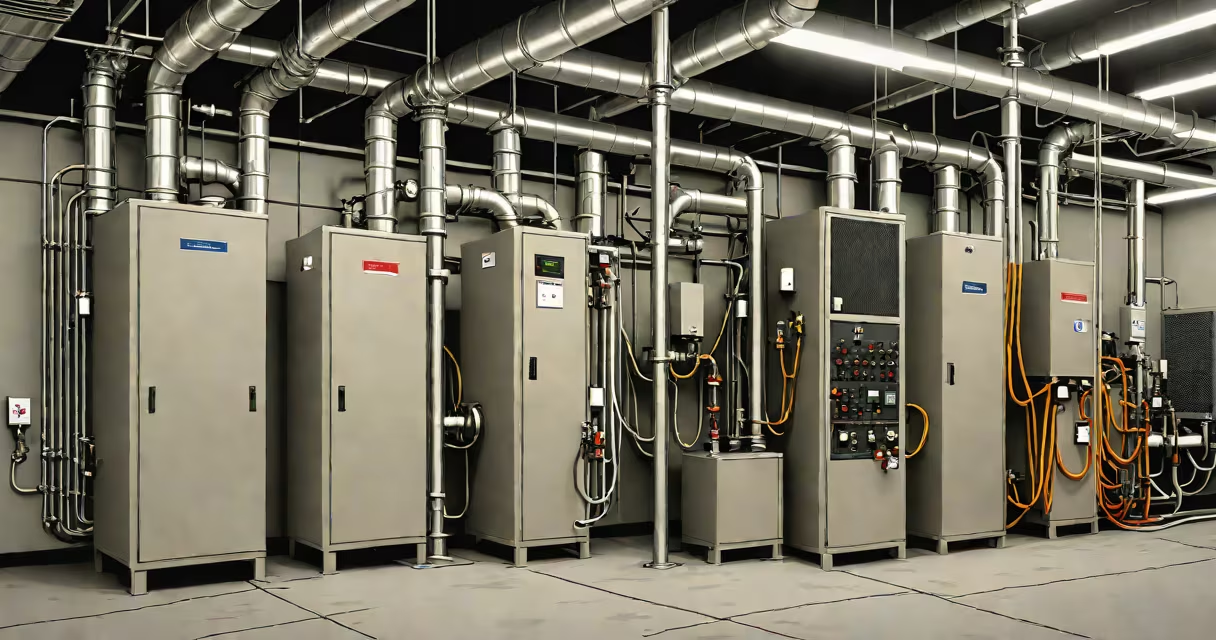
hvac what do they do? Heating, ventilation, and air conditioning (HVAC) systems regulate indoor temperature, humidity, and air quality to maintain comfortable and healthy environments in homes, offices, and industrial spaces. They provide warmth in winter, cool air in summer, and continuously circulate fresh air while filtering out pollutants.
HVAC systems operate through a network of components that work together to control environmental conditions. The core function involves removing heat from indoor air during warm months and adding heat during cold months. This process relies on refrigerants, compressors, coils, fans, and thermostats. For example, a central air conditioner uses a compressor to pressurize refrigerant, which then absorbs heat from indoor air as it evaporates in the indoor coil. The heated refrigerant travels to the outdoor condenser, where it releases heat and returns to liquid form.
Ventilation ensures fresh air replaces stale indoor air. Without proper ventilation, carbon dioxide levels rise, moisture builds up, and airborne contaminants accumulate. A typical residential system includes intake vents, return grilles, and exhaust outlets connected to ductwork. Mechanical ventilation systems such as energy recovery ventilators (ERVs) exchange indoor and outdoor air while recovering heat or coolness to reduce energy loss.
Every HVAC system follows a thermodynamic cycle based on heat transfer principles. In cooling mode, the system draws warm indoor air over cold evaporator coils. As air passes over the coils, heat transfers to the refrigerant inside, cooling the air before it's blown back into the room. The refrigerant then moves to the outdoor condenser, where it releases heat and condenses into a liquid. This cycle repeats until the thermostat signals the system to stop.
Heating occurs via reverse processes. In gas furnaces, a burner ignites natural gas or propane to heat a metal heat exchanger. A blower fan pushes air across the hot surface, warming it before distributing it through ducts. Electric heat pumps reverse the refrigeration cycle to extract heat from outside air-even below freezing-and transfer it indoors. According to the U.S. Department of Energy, heat pumps can deliver 2.5 to 3 times more heat energy than the electrical energy they consume.
Humidity control is another key function. High humidity causes mold growth and discomfort; low humidity dries out skin and mucous membranes. Modern HVAC units integrate dehumidifiers or humidifiers. A typical home system maintains relative humidity between 30% and 60%. For instance, a 2,500-square-foot home in a humid climate may require a system capable of removing 2.5 pounds of moisture per hour during peak summer.
There are several standard HVAC configurations, each suited to different building types and climates.
| System Type | Best For | Key Features | Energy Efficiency Rating |
|---|---|---|---|
| Central Air Conditioning + Furnace | Single-family homes in moderate climates | Forced-air delivery via ducts; combines heating and cooling | SEER 14-26; AFUE 80-98% |
| Split System (Indoor/Outdoor Units) | Remodeled homes or new construction without ducts | Indoor evaporator coil paired with outdoor condenser; flexible zoning | SEER 16-25 |
| Heat Pump (Air-Source) | Temperate zones with mild winters | Reversible cycle; cools and heats efficiently; lower operating costs | SEER 18-25; HSPF 8-10 |
| Variable Refrigerant Flow (VRV) | Commercial buildings, multi-zone residential units | Adjusts refrigerant flow to individual zones; precise temperature control | SEER 25+; high energy savings in variable load environments |
VRV systems, for example, use inverter-driven compressors and variable-speed fans to modulate output based on demand. Unlike traditional systems that run at full capacity or shut off completely, VRV adjusts continuously. This reduces wear and improves efficiency. A 2022 study by the American Society of Heating, Refrigerating and Air-Conditioning Engineers (ASHRAE) found that VRV installations in office buildings reduced annual energy consumption by 28% compared to conventional split systems.
Many people assume HVAC systems only cool or heat. In reality, they manage multiple environmental factors simultaneously. A system may cool the air but fail to remove moisture, leading to dampness and potential mold. Conversely, a furnace may blow dry air, increasing static electricity and respiratory irritation. Proper system sizing and maintenance prevent these issues.
Another misconception is that higher SEER ratings always mean better performance. While higher SEER indicates greater cooling efficiency, improper installation or mismatched components can negate gains. A 2021 report from the National Institute of Standards and Technology (NIST) showed that 40% of high-SEER systems underperformed due to poor duct sealing or incorrect refrigerant charge.
Some believe that turning off the HVAC system overnight saves significant energy. However, restarting a system after extended shutdown requires more energy to reach setpoint than continuous low-power operation. A smart thermostat with adaptive learning can reduce energy use by up to 15% by adjusting startup timing based on occupancy patterns.
Consider a 3,000 sq ft home in Atlanta, Georgia, with a 4-ton central AC and gas furnace. On a 90°F day, the thermostat calls for cooling. The air handler turns on, drawing warm indoor air through return grilles. The air passes over the cold evaporator coil, dropping from 80°F to 55°F. Moisture condenses on the coil surface-about 1.8 gallons of water removed daily during peak season. The cooled air enters supply ducts and flows into rooms via diffusers.
Simultaneously, the outdoor condenser runs. Refrigerant at 100 psi and 120°F enters the condenser coil, where ambient air cools it. The refrigerant condenses into a liquid, releasing heat to the outdoors. A fan blows air across the coil, transferring heat away. After 15 minutes, the thermostat detects the indoor temperature has reached 72°F, and the system shuts down. The cycle resumes when temperature rises above 73°F.
I once observed a homeowner replace a 15-year-old furnace with a new model boasting 95% AFUE. Despite the upgrade, their heating bills increased. Upon inspection, we found the ductwork had gaps totaling 12 square inches-equivalent to a 2-inch hole. Leaks caused the furnace to run longer to compensate. Sealing the ducts reduced runtime by 30%, lowering fuel use and improving comfort.