Locomotor disability meaning refers to a condition that limits a person's ability to walk, stand, or move through space due to impairments in muscles, nerves, bones, or joints. It is not simply about weakness-it involves measurable difficulty in performing basic movements essential for independent travel and daily tasks.
This condition arises from neurological disorders, congenital anomalies, injuries, or degenerative diseases affecting motor control. The impact extends beyond mobility-it influences access to education, employment, healthcare, and social participation. According to the World Health Organization, approximately 15% of the global population lives with some form of disability, with locomotor impairments being among the most prevalent.
For example, a person with spina bifida may have limited leg strength and coordination, making walking without assistive devices impossible. Another individual with multiple sclerosis may experience progressive fatigue and muscle spasms that disrupt gait stability. These are not choices-they are medical realities rooted in physiology.
Locomotion requires coordinated input from the brain, spinal cord, peripheral nerves, muscles, and skeleton. When any component fails or functions abnormally, movement becomes inefficient or unsafe. The central nervous system sends signals through motor neurons to activate muscles in sequence. Disruptions at any stage-such as nerve damage, muscle atrophy, joint stiffness, or balance deficits-can result in locomotor disability.
Neurological causes include stroke, cerebral palsy, Parkinson's disease, and traumatic brain injury. Musculoskeletal causes involve arthritis, limb deformities, or amputations. Degenerative conditions like muscular dystrophy lead to progressive loss of muscle function over time. Each path leads to reduced mobility, but the underlying mechanisms differ.
A 2021 study published in *The Lancet Neurology* found that nearly 60% of individuals with acquired brain injury developed long-term gait disturbances. This highlights that even temporary neural disruption can produce lasting locomotor challenges, underscoring the need for early intervention and rehabilitation.
Classification systems vary by region and purpose. In India, the Rights of Persons with Disabilities Act, 2016 defines locomotor disability as "a condition affecting the ability to walk or move independently." It includes conditions such as polio, muscular dystrophy, and spinal cord injuries.
The International Classification of Functioning, Disability and Health (ICF), developed by the WHO, categorizes locomotor limitations under "bodily functions" and "activities." It distinguishes between impaired muscle power (e.g., lower limb weakness), impaired coordination (e.g., ataxia), and impaired mobility (e.g., inability to walk 100 meters).
| Type | Underlying Cause | Functional Impact | Example Condition |
|---|---|---|---|
| Muscular | Genetic or inflammatory muscle disorders | Reduced strength, fatigue during movement | Duchenne muscular dystrophy |
| Neuromuscular | Nerve-muscle signal failure | Weakness, paralysis, poor coordination | Spinal muscular atrophy |
| Skeletal | Bone deformity or joint instability | Limited range of motion, pain during movement | Congenital hip dysplasia |
| Neurological | Brain or spinal cord dysfunction | Unsteady gait, tremors, spasticity | Multiple sclerosis, stroke |
Locomotor disability is not always visible. A person may appear able to walk but struggle with endurance, balance, or speed. The absence of obvious physical signs does not negate functional limitations.
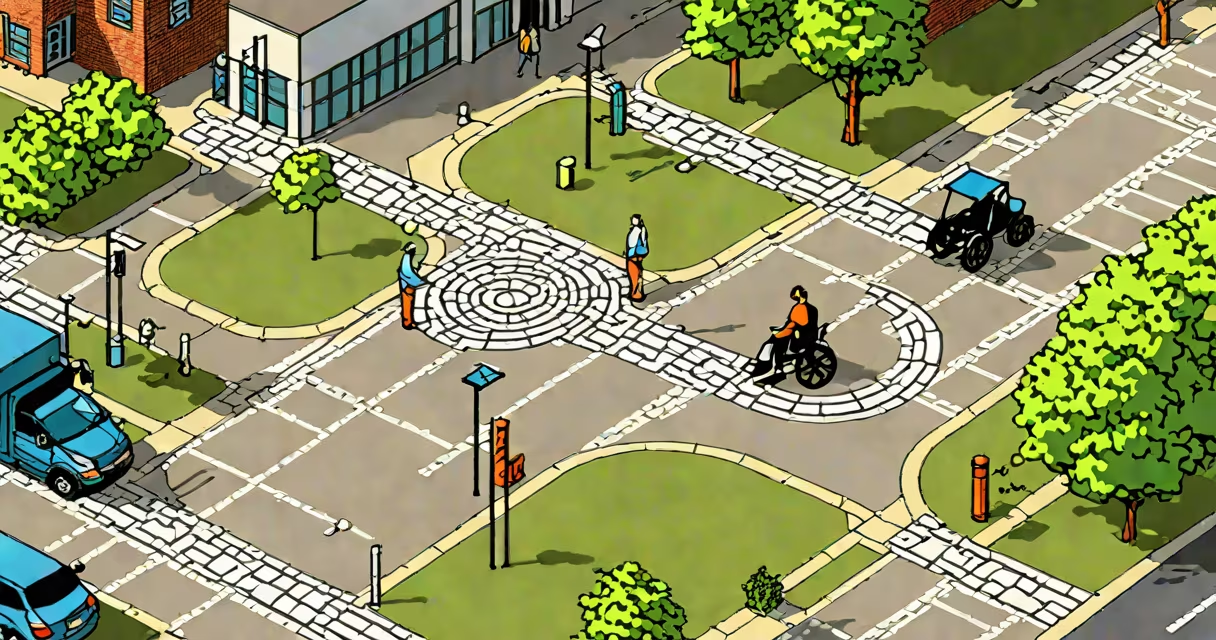
Understanding locomotor disability meaning is critical for inclusive infrastructure. Public spaces, transportation systems, and digital platforms must accommodate diverse movement patterns. For instance, curb cuts-ramps at sidewalk edges-are standard in urban planning to allow wheelchair users and people with unstable gait to cross streets safely.
Buildings designed under the Americans with Disabilities Act (ADA) require door widths of at least 32 inches, clear floor space around fixtures, and accessible restrooms. These specifications stem from research showing that 80% of people with locomotor disabilities rely on mobility aids like walkers, crutches, or wheelchairs.
In digital design, screen readers and keyboard navigation support users who cannot operate touchscreens or mice. The Web Content Accessibility Guidelines (WCAG) 2.1 mandate that interactive elements be operable via keyboard alone-a direct response to locomotor impairments affecting hand dexterity and fine motor control.
One widespread error is equating locomotor disability with intellectual disability. They are unrelated. A person with a locomotor condition may have full cognitive capacity and high academic achievement. Misjudging someone's abilities based on mobility status leads to exclusion and stigma.
Another myth is that all individuals with locomotor disability use wheelchairs. In reality, many rely on canes, crutches, orthotics, or adaptive footwear. A 2020 survey by the National Center for Health Statistics showed that only 38% of adults with mobility limitations reported using a wheelchair as their primary aid.
There's also confusion between locomotor disability and temporary injury. While a sprained ankle may limit movement short-term, locomotor disability implies persistent or permanent impairment. The distinction affects eligibility for benefits, accommodations, and legal protections.
Consider Maya, a 34-year-old with Friedreich's ataxia, a rare inherited disorder causing progressive loss of coordination. She uses a motorized wheelchair for longer distances but walks short distances with a walker. Her morning routine includes waking up, transferring from bed to chair (requiring a transfer board), and going through her apartment's narrow hallways.
When she goes to work, she faces barriers: a building entrance lacks a ramp, and the elevator has a narrow door that won't fit her chair. She must wait 20 minutes for a colleague to bring a portable ramp. At lunch, the café's tables are too high for her to reach comfortably. These aren't minor inconveniences-they are systemic failures rooted in ignoring locomotor disability meaning.
Maya's experience reflects data from the U.S. Census Bureau: 54% of working-age adults with mobility disabilities face unemployment, often due to inaccessible workplaces. This shows that understanding locomotor disability meaning isn't theoretical-it drives equity and inclusion.
I once assisted a friend with cerebral palsy during a city visit. He used a powered wheelchair but struggled with uneven sidewalks and sudden drops at crosswalks. We spent over an hour trying to find a route that avoided stairs and gaps. That experience revealed how much planning and effort go into something most people take for granted: moving freely through public space.
Similarly, be up to describes a state of readiness or capability. In accessibility contexts, saying someone is "be up to" managing a task implies they have the necessary tools and support. For example, a student with a locomotor disability is "be up to" attending class only if classrooms are physically accessible and staff are trained in inclusive practices.
These terms don't replace locomotor disability meaning-but they expand how we think about inclusion, responsibility, and design.
Locomotor disability meaning is not a label. It is a lived reality shaped by biology, environment, and policy. Recognizing it accurately helps people are not left behind-not because they lack ability, but because systems fail to adapt.