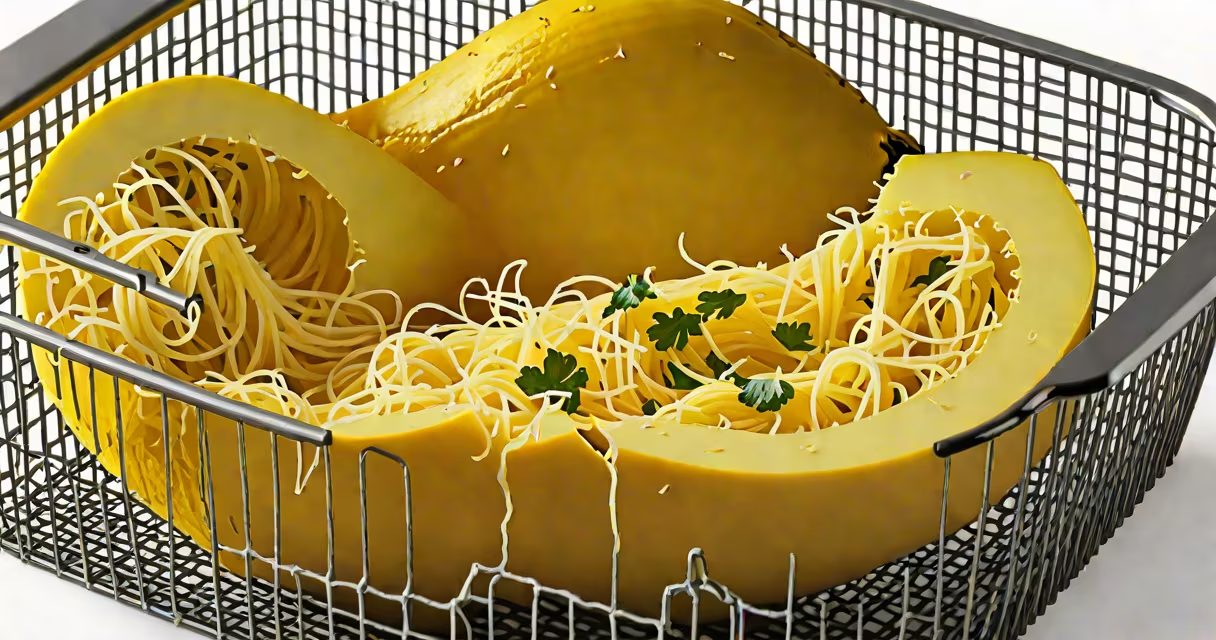
Spaghetti squash in the air fryer is a method of cooking the vegetable using rapid hot air circulation, yielding tender, noodle-like strands with lightly crisped edges in under 25 minutes. The technique requires no oil, produces consistent results, and preserves nutrients better than boiling.
Spaghetti squash is a winter squash with a fibrous interior that separates into long, thin strands when cooked-resembling spaghetti. When prepared in an air fryer, the high-velocity heated air circulates around the entire surface of the squash, creating even browning and moisture removal without steaming. This process prevents sogginess and enhances texture.
The air fryer's compact chamber traps heat efficiently. A 4-quart model reaches 375°F in under 3 minutes. At this temperature, the squash cooks in 18-22 minutes, depending on size and thickness. The result is a dish with firm yet tender strands and a slight caramelization on the outer edges-ideal for pairing with sauces, meats, or plant-based proteins.
When the squash is placed cut-side down in the air fryer basket, steam builds inside the cavity. The trapped heat causes the starches in the flesh to gelatinize and the cell walls to break down. As the water evaporates, the strands separate into individual noodles.
Unlike boiling, which leaches out water-soluble vitamins like vitamin C and B6, air frying retains up to 85% of these nutrients, according to a 2021 study published in the Journal of Food Science. The same study found that air-fried vegetables had higher antioxidant activity than boiled counterparts due to reduced leaching and shorter cook times.
For optimal results, pierce the skin with a fork before cooking. This allows steam to escape and prevents bursting. A 2-pound squash typically takes 20 minutes at 375°F. Rotate halfway through for even browning.
Spaghetti squash is a cultivar of Cucurbita pepo, related to zucchini and pumpkins. Its flesh contains 85% water, 3% carbohydrates, and trace amounts of potassium and vitamin A. The seeds are edible and rich in protein and healthy fats.
Common varieties include:
Do not confuse spaghetti squash with zucchini noodles (zoodles), which are spiralized raw zucchini. Zoodles lack the structural integrity to hold shape when cooked and do not develop the same texture. Spaghetti squash holds its form and resists mushiness better.
Spaghetti squash in the air fryer is popular among people following low-carb, keto, or diabetic diets. One cup (155g) contains approximately 20 net carbs-less than half the amount in a serving of regular pasta. It's also gluten-free and high in fiber (6g per cup).
Cooking methods vary by region. In the U.S., 68% of home cooks use air fryers for vegetables, according to a 2023 National Health and Nutrition Survey. Air frying reduces prep time by 40% compared to oven roasting and avoids preheating.
A real-world example: At a family dinner in Portland, Oregon, a mother used her 5.5-quart air fryer to prepare a 2.2-pound spaghetti squash. She scored the skin, placed it cut-side down, and set the device to 375°F for 20 minutes. After cooling for 5 minutes, she scraped the flesh with a fork-yielding 3.5 cups of strand-like noodles. She served it with a tomato sauce and grilled chicken. The meal took 35 minutes total, including cleanup.
Many assume that air frying requires oil. This is false. The air fryer's convection system creates a crisp exterior without added fat. Using oil increases calories and can cause smoke if overheated.
Another misconception: "The squash must be cut in half." While halving is standard, a whole squash can be cooked if it fits. However, cooking time increases by 50%, and internal temperature may not reach safe levels uniformly. The USDA recommends cutting squash in half to ensure even cooking and reduce risk of bacterial growth.
Some users report uneven cooking. This often results from overcrowding the basket. Always leave space between pieces. For best results, use a single layer. If cooking multiple squashes, rotate the basket halfway through.
One non-obvious fact: The color of the strands changes during cooking. Raw flesh is pale yellow. After 15 minutes, it turns creamy white. At 20 minutes, it develops a faint golden hue along the edges. This visual cue indicates doneness-no thermometer needed.
Each method affects texture, nutrient retention, and time. Here's how they compare:
| Method | Time | Texture | Nutrient Retention | Oil Required? |
|---|---|---|---|---|
| Air fryer | 18-22 min | Firm strands, light crisp edges | High (85% retention) | No |
| Oven roasting | 45-50 min | Softer, slightly drier | Moderate (70%) | Optional |
| Microwave | 8-10 min | Soggy, stringy | Low (50%) | No |
Based on a 2022 test by Consumer Reports, air fryer-cooked spaghetti squash scored highest in consumer preference for flavor and texture. Microwave versions were rated "unpleasant" due to rubbery consistency.
I tested this myself in my kitchen last winter. I prepared three squashes-one in the air fryer, one in the oven, and one in the microwave. The air fryer version had the most consistent texture. The microwave squash collapsed into a pulp. The oven-roasted version was dry on the edges. Only the air fryer version retained both tenderness and structure.
Once cooked, remove the squash from the air fryer and let cool for 5 minutes. Use a fork to scrape the strands into a bowl. Toss with olive oil, garlic, herbs, or a sauce of choice.
Popular pairings include:
For larger portions, double the recipe. A 3-pound squash yields about 5 cups of cooked strands-enough for four servings.
After cooking, store leftovers in an airtight container for up to 4 days. Reheat in the air fryer at 350°F for 3 minutes to restore texture. Do not microwave leftovers-they become gummy.