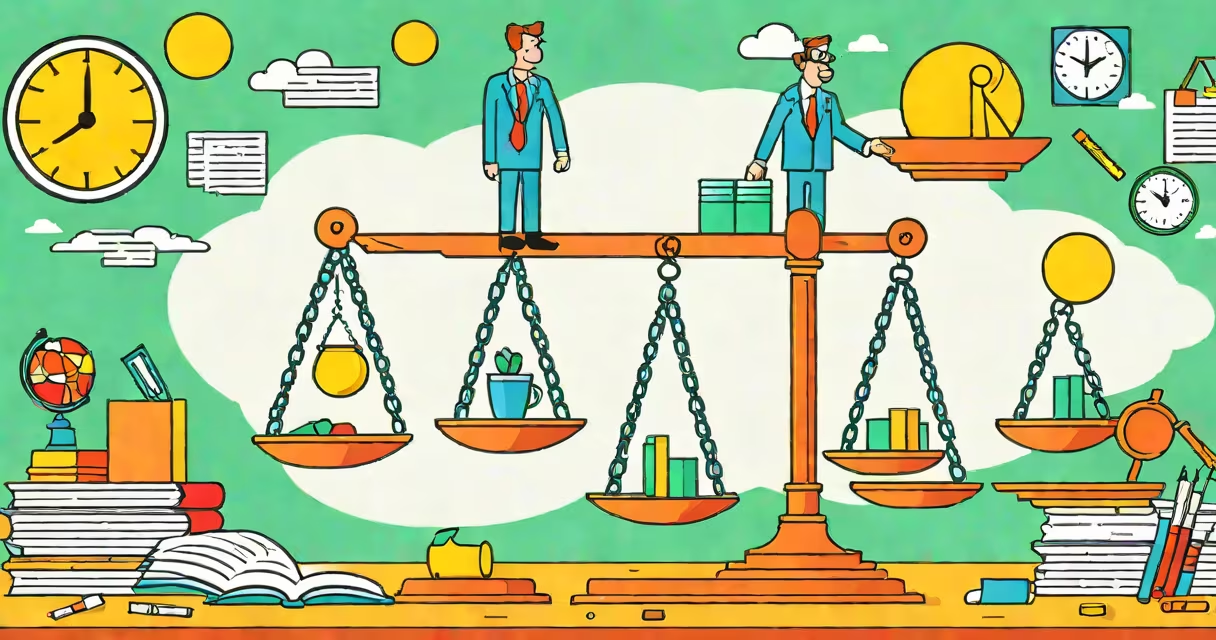
The study of economics definition centers on how individuals, firms, and governments make choices under conditions of scarcity. It examines trade-offs, incentives, and the allocation of resources to satisfy unlimited wants with finite means.
Economics operates on the principle that resources-time, money, labor, land-are limited while human desires are not. This imbalance forces decision-making. For example, a government choosing to fund public healthcare must weigh that against funding public transportation. The study of economics defines such decisions through models of supply and demand, cost-benefit analysis, and marginal thinking.
According to the Nobel Prize in Economic Sciences, the field emerged from the work of Adam Smith in the 18th century, who described the "invisible hand" guiding markets through self-interest. Modern economics builds on this foundation using mathematical modeling and empirical testing.
Economics functions through two primary lenses: microeconomics and macroeconomics. Microeconomics analyzes individual and firm-level behavior-how consumers choose products, how businesses set prices, and how workers decide between jobs. Macroeconomics studies economy-wide phenomena such as inflation, unemployment, and national growth rates.
For instance, when a city imposes a minimum wage increase, microeconomics predicts potential job losses among low-skilled workers due to higher labor costs. Macroeconomics evaluates whether the policy affects employment levels or inflation in the long term. Both perspectives rely on data, statistical inference, and predictive modeling.
A key mechanism in economic analysis is marginal analysis-the evaluation of incremental changes. A business deciding whether to produce one more unit of a product compares the additional revenue (marginal benefit) to the additional cost (marginal cost). If marginal benefit exceeds marginal cost, production increases. This structure applies to personal decisions too: choosing between studying for an hour or watching a movie hinges on the perceived value of each option.
There are two main branches of economics, each with distinct focus areas:
| Type | Scope | Key Questions | Real-World Example |
|---|---|---|---|
| Microeconomics | Individuals, households, firms | How much will a consumer buy at $5? How do firms set prices? | Netflix adjusting subscription fees based on user demand |
| Macroeconomics | Nations, global systems | What causes inflation? How does unemployment affect GDP? | Federal Reserve raising interest rates to control inflation |
Scarcity is the foundational concept. With finite resources, every choice involves opportunity cost-the value of the next-best alternative forgone. If you spend $100 on concert tickets, the opportunity cost is what you could have done with that money: saved it, bought books, or invested it.
Another non-obvious distinction: economics is not solely about money. It studies time, attention, and social norms. For example, the rise of remote work during the pandemic was driven by economic factors-reduced commuting costs, increased productivity per hour, and shifting preferences-all analyzed through economic frameworks.
Many assume economics is purely about finance or stock markets. That's incorrect. While financial markets are studied, economics covers all decisions involving trade-offs. A student choosing between majors, a parent allocating household income, or a country selecting defense spending-all fall under the study of economics.
Another misconception is that economics is purely mathematical. While quantitative tools are essential, the field relies heavily on theory, history, and behavioral insights. The 2008 financial crisis revealed flaws in models assuming rational behavior. Behavioral economics, which integrates psychology, now plays a major role in understanding real-world decisions.
For example, people often overvalue immediate rewards-even when they know delayed gratification leads to better outcomes. This bias explains why many fail to save for retirement despite knowing the long-term benefits. The U.S. Bureau of Labor Statistics reports that 46% of Americans have less than $500 in emergency savings, illustrating how psychological factors influence economic behavior.
Consider a small business owner deciding whether to hire a new employee. The study of economics provides tools to assess the marginal cost of hiring (wages, training, benefits) versus the marginal benefit (increased output, customer service improvements). If the expected profit from the extra output exceeds the cost, hiring makes sense.
I once observed a local bakery use this logic. They ran a test: adding one staff member during peak hours increased daily sales by $120. The hourly wage was $15, totaling $120 for eight hours. The net gain was zero-but they gained customer satisfaction and reduced wait times. Over time, this led to a 15% increase in repeat customers. The economic model helped justify the hire beyond immediate numbers.
Public policy also relies on economic reasoning. When cities consider building bike lanes, economists analyze traffic flow reduction, health benefits from exercise, and long-term infrastructure savings. A 2021 study by the RAND Corporation found that every dollar spent on urban cycling infrastructure returned $3.50 in societal benefits over ten years.
These tools are not abstract-they shape everyday life. Whether choosing a job, buying a home, or voting on tax policy, understanding the study of economics definition empowers clearer, more informed decisions.
The study of economics definition is not a single discipline but a structure for analyzing choice under constraint. It applies to everything from personal budgeting to global trade agreements. By recognizing scarcity, evaluating opportunity cost, and applying systematic analysis, individuals and institutions make better decisions in a complex world.