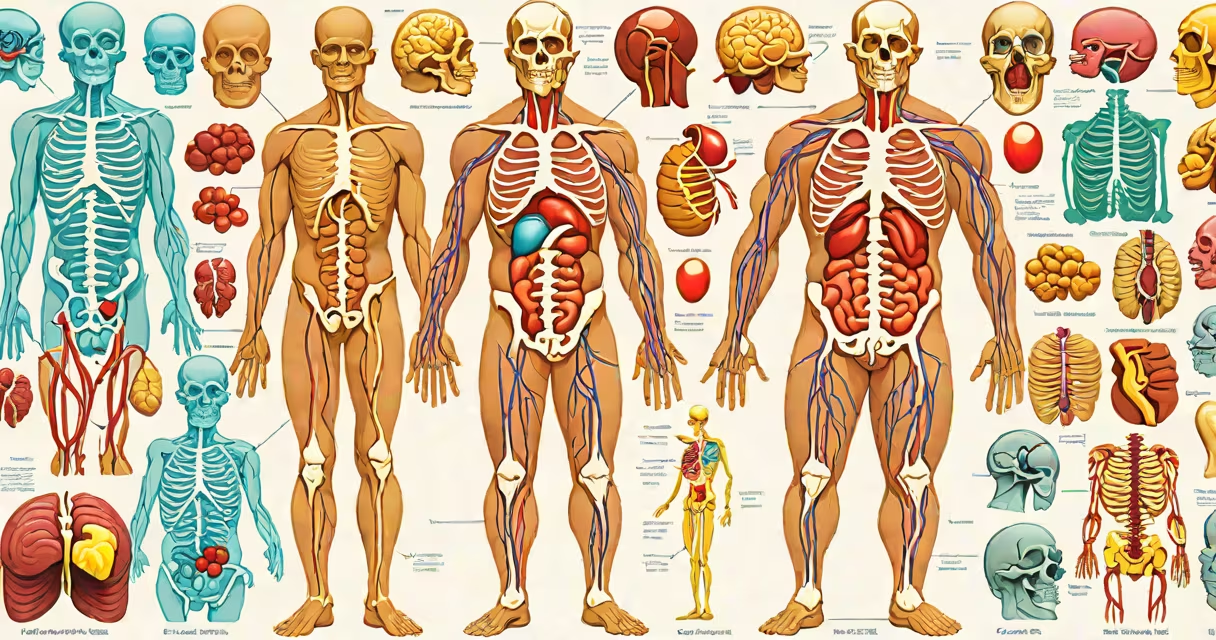
The 12 body systems are integrated networks of organs and tissues that perform essential life-sustaining functions in the human body. They maintain homeostasis, enable movement, process nutrients, defend against pathogens, and support cognition. Each system operates with specialized tasks yet relies on coordination with others.
These systems evolved to manage complex internal environments. For example, the circulatory system transports oxygen from the respiratory system to cells, while the nervous system signals muscles to contract. Disruption in one system often triggers compensatory changes in another-such as increased heart rate during low blood oxygen levels.
Understanding the 12 body systems provides a structure for diagnosing illness, interpreting symptoms, and designing medical treatments. Clinicians assess function across multiple systems to determine root causes of disease rather than focusing on isolated symptoms.
Each system performs distinct roles but depends on others for stability. The endocrine system releases hormones that regulate metabolism via the digestive system's nutrient absorption. The urinary system removes waste products generated by cellular respiration, which occurs in mitochondria powered by oxygen delivered through the cardiovascular system.
For instance, when blood glucose rises after eating, the pancreas (endocrine system) secretes insulin. This hormone signals muscle and liver cells (muscular and digestive systems) to absorb glucose. Excess glucose is stored as glycogen or converted to fat. If insulin signaling fails, blood sugar remains high-a condition known as diabetes.
System interactions are not one-way. The nervous system influences heart rate, breathing, and digestion through autonomic pathways. Stress activates the sympathetic nervous system, increasing cortisol release from the adrenal glands (endocrine system), which raises blood pressure and redirects energy to muscles.
Below is a breakdown of the 12 primary body systems, their core components, and key functions. All are essential for survival and interdependent in daily operations.
| System | Primary Organs/Tissues | Main Function |
|---|---|---|
| Integumentary | Skin, hair, nails | Protection from pathogens, temperature regulation, sensory input |
| Muscular | Skeletal, smooth, cardiac muscle | Movement, posture, heat production |
| Skeletal | Bones, cartilage, ligaments | Support, protection, mineral storage, blood cell formation |
| Nervous | Brain, spinal cord, nerves | Information processing, control of voluntary/involuntary actions |
| Circulatory | Heart, blood vessels, blood | Oxygen/nutrient delivery, waste removal, immune defense |
| Respiratory | Lungs, trachea, diaphragm | Oxygen intake, carbon dioxide expulsion |
| Digestive | Mouth, esophagus, stomach, intestines, liver, pancreas | Food breakdown, nutrient absorption, waste elimination |
| Endocrine | Pituitary, thyroid, adrenal, pancreas, gonads | Hormone production for growth, metabolism, reproduction |
| Urinary | Kidneys, ureters, bladder, urethra | Fluid balance, electrolyte regulation, toxin filtration |
| Immune | White blood cells, lymph nodes, spleen, thymus | Pathogen detection and destruction, tissue repair |
| Reproductive | Testes, ovaries, uterus, penis, vagina | Genetic transmission, sex hormone production, gamete formation |
| Excretory | Large intestine, skin, lungs | Elimination of metabolic waste beyond urine (e.g., CO₂, feces) |
Some sources list 11 systems, merging excretory with urinary. Others combine integumentary and immune due to shared barrier functions. The standard model recognizes 12 for clarity in teaching and clinical practice.
A common misconception is that the reproductive system is optional for survival. While individuals can live without functioning reproductive organs, the system is important for species continuity. Its hormones also influence bone density, mood, and metabolism-functions critical to health.
Many assume the lymphatic system is separate from the circulatory system. In reality, it's a subset of the circulatory network, responsible for fluid balance and immune surveillance. Lymph nodes filter pathogens and activate immune responses-functionally linked to both circulatory and immune systems.
Another error is treating the nervous system as purely voluntary. The autonomic nervous system controls involuntary processes like digestion, heart rate, and pupil dilation. Over 60% of neural activity occurs below conscious awareness, managing homeostasis without effort.
There is no single "master" system. The hypothalamus in the brain integrates inputs from nearly all systems-regulating hunger, thirst, sleep, and body temperature. Yet even it cannot override systemic failure. A person with severe kidney failure may survive weeks without dialysis, but irreversible brain damage occurs within minutes of oxygen deprivation.
Sepsis illustrates how dysfunction in one system cascades across others. It begins with infection-often bacterial-triggering the immune system to release inflammatory mediators. When uncontrolled, this response damages blood vessels, leading to widespread clotting and leakage.
As capillaries leak fluid, blood volume drops. The circulatory system responds by increasing heart rate and constricting vessels. But if blood pressure falls too low, organs receive inadequate perfusion. The kidneys fail first-urine output drops to less than 0.5 mL/kg/hour. Liver enzymes rise due to poor oxygenation. Brain fog sets in as cerebral blood flow declines.
By the time sepsis reaches the stage of septic shock, multiple systems collapse. Mortality exceeds 40% in intensive care units despite treatment. This shows that the 12 body systems do not operate independently-they form a tightly coupled network where failure in one spreads rapidly.
I observed this in a hospital setting during a rotation. A patient developed pneumonia, then sepsis. Within 12 hours, his blood pressure dropped to 80/50 mmHg, creatinine rose to 3.2 mg/dL (indicating renal failure), and he became confused. His body was failing not because of one broken system, but because all were overwhelmed by the initial infection.
Healthcare professionals use the 12-system model to diagnose and treat patients. A fever may stem from immune activation, but if accompanied by rapid breathing and confusion, it suggests respiratory or neurological involvement. Understanding system relationships prevents misdiagnosis.
Students of biology, medicine, and fitness benefit from knowing how systems interact. For example, strength training stimulates muscular and skeletal systems, but also increases demand on the circulatory and respiratory systems. Recovery requires adequate nutrition-digestive and endocrine systems at work.
For deeper exploration of how these systems connect, learn about the relationships between body systems. To see how lifestyle choices affect specific systems, this guide.
The 12 body systems are not abstract concepts-they are the foundation of human life. Their coordinated function enables everything from walking to thinking. When one system falters, others compensate until failure becomes inevitable. Recognizing their roles is essential for maintaining health and responding to illness.