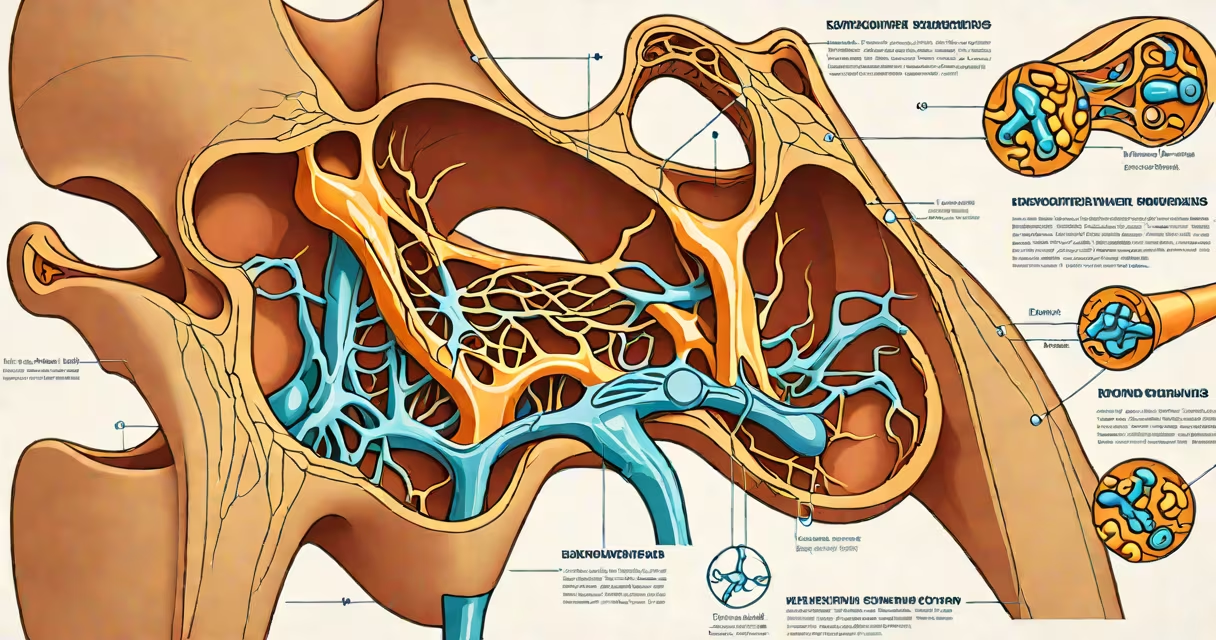
Endometriosis grows because misplaced endometrial-like tissue responds to estrogen, evades immune detection, and thrives in a pro-inflammatory environment. This tissue behaves like uterine lining but exists outside the uterus, leading to pain, scarring, and fertility issues.
Endometriosis lesions grow through a combination of hormonal stimulation, immune system failure, and local inflammation. Estrogen fuels the survival and proliferation of these cells, which can implant and thrive in areas such as the ovaries, fallopian tubes, and pelvic lining. The condition is not simply a misplacement of tissue-it's an active, hormone-responsive disease process.
Research shows that women with endometriosis have higher levels of circulating estrogen and increased local production of estrogen within lesions themselves. This creates a self-sustaining cycle: more estrogen leads to more tissue growth, which produces even more estrogen. The condition is not static-it progresses over time in many individuals, especially during reproductive years.
Endometriosis begins when endometrial-like cells travel backward through the fallopian tubes during menstruation-a process called retrograde menstruation. While this happens in most women, only about 10% develop symptoms. That suggests the key factor isn't the presence of displaced cells, but their ability to survive and grow.
Once implanted, these cells respond to ovarian hormones, particularly estrogen. They undergo cyclic bleeding similar to the uterine lining, triggering localized inflammation. This inflammation damages surrounding tissues and attracts immune cells. But in endometriosis, immune cells fail to clear the abnormal tissue. Instead, they release cytokines and growth factors that further stimulate lesion growth.
A 2022 study published in Nature Reviews Endocrinology confirmed that immune cell dysfunction-especially reduced activity of natural killer (NK) cells-is linked to disease progression. NK cells normally destroy abnormal cells, but in endometriosis patients, their function is impaired. This allows ectopic tissue to persist and expand.
Three core mechanisms drive endometriosis growth: hormonal signaling, immune evasion, and angiogenesis (new blood vessel formation).
| Factor | Role in Growth | Evidence Source |
|---|---|---|
| Estrogen | Stimulates cell division and suppresses apoptosis (programmed cell death) | NIH Study, 2019 |
| Immune Dysfunction | Reduced NK cell activity allows lesion persistence | Nature Reviews Endocrinology, 2022 |
| Angiogenesis | New blood vessels supply nutrients to growing lesions | Journal of Clinical Endocrinology & Metabolism, 2004 |
Lesions also secrete vascular endothelial growth factor (VEGF), which promotes blood vessel formation. Without new blood vessels, tissue cannot grow beyond a few millimeters. Angiogenesis enables lesions to expand and become more invasive over time.
One non-obvious fact: endometriosis lesions can behave like cancerous tumors in their ability to invade nearby structures. They don't metastasize like cancer, but they do infiltrate the peritoneum, bowel, and bladder. A 2021 study in Human Reproduction found that deep infiltrating endometriosis lesions express genes associated with tissue invasion-similar to those seen in early-stage malignancies.
Many assume endometriosis is purely a hormonal disorder. While estrogen plays a central role, it's not the sole driver. A woman with low estrogen levels can still develop progressive disease. This indicates that other biological systems-particularly immunity and inflammation-are critical.
Another misconception is that endometriosis stops growing after menopause. It doesn't. Some women report worsening symptoms after menopause, especially if they're on hormone replacement therapy (HRT). Estrogen in HRT can reactivate dormant lesions. A 2020 case series in Fertility and Sterility documented four postmenopausal women whose endometriosis progressed after starting estrogen-only HRT.
Some believe surgery cures endometriosis. It removes visible lesions but does not eliminate microscopic disease. Recurrence rates are high-up to 50% within five years, according to a 2018 review in Obstetrics & Gynecology. This underscores that growth is driven by systemic factors, not just visible tissue.
Consider a 32-year-old woman diagnosed with stage III endometriosis. She reports severe menstrual pain and infertility. Imaging shows multiple ovarian endometriomas (chocolate cysts) and adhesions between the uterus and bowel. Her estradiol levels are elevated during the follicular phase, and her peritoneal fluid contains high levels of interleukin-6 (IL-6), a marker of inflammation.
Over the next two years, she experiences worsening pain and develops constipation. A follow-up laparoscopy reveals new lesions on the rectovaginal septum and thickened adhesions. Biopsies show increased VEGF expression and reduced NK cell infiltration. These findings confirm ongoing growth driven by estrogen, inflammation, and poor immune surveillance.
She begins treatment with a gonadotropin-releasing hormone (GnRH) agonist, which suppresses ovarian estrogen production. After six months, her pain improves, and imaging shows stabilization of lesions. This illustrates how targeting hormonal drivers halts progression-but does not reverse existing damage.
Endometriosis grows due to a complex interplay of estrogen exposure, immune system failure, and chronic inflammation. It is not a passive condition. Lesions actively invade tissues, form new blood vessels, and resist clearance. Understanding this explains why treatments like hormonal suppression and immunomodulation are effective.
For women with persistent pain or infertility, early diagnosis and targeted management are essential. Ignoring symptoms allows growth to advance, increasing surgical complexity and reducing fertility outcomes. Research continues into drugs that block VEGF or restore NK cell function-potential future therapies.
While endometriosis is not caused by lifestyle choices, managing stress and avoiding environmental estrogens (like BPA in plastics) may reduce symptom severity. However, these do not stop lesion growth at the cellular level. The root cause lies in biology, not behavior.
Understanding what causes endometriosis to grow is key to effective treatment. Estrogen drives proliferation, immune dysfunction allows survival, and inflammation fuels expansion. Recognizing this triad prevents oversimplification and guides better clinical decisions.
For insights into another neurodegenerative condition with overlapping inflammatory pathways, explore the role of immune dysregulation in ALS.