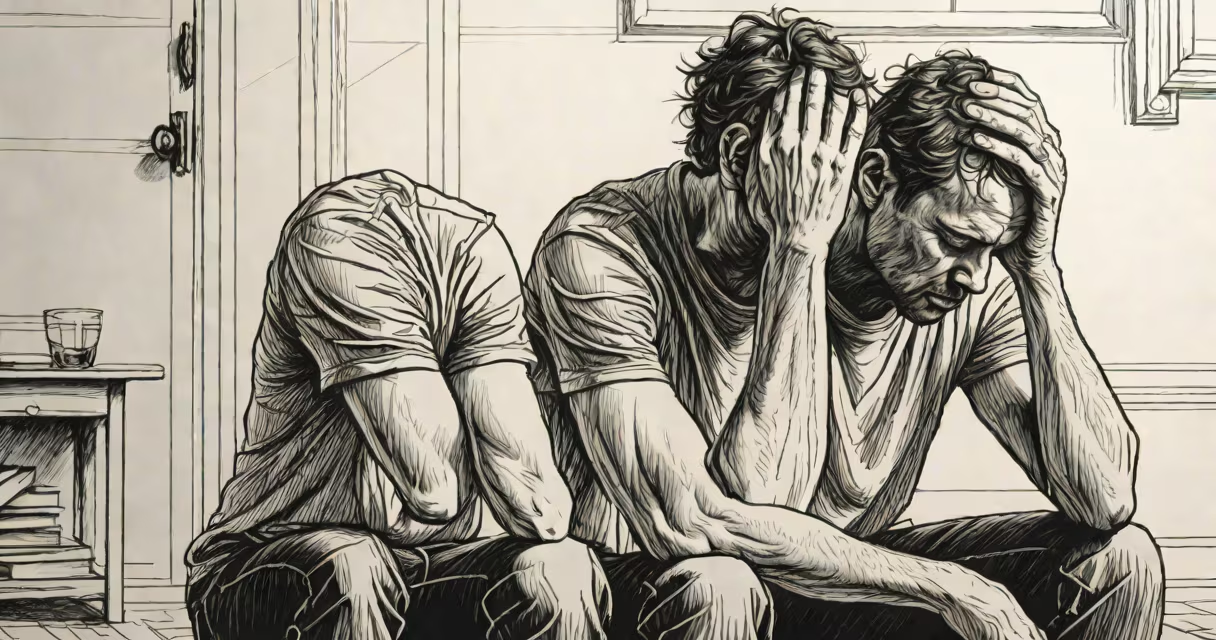
Tunnel vision and dizziness occur when reduced blood flow to the brain or dysfunction in the inner ear disrupts sensory processing. This combination signals potential neurological or cardiovascular strain, requiring prompt evaluation.
These symptoms often appear together during sudden posture changes, dehydration, or acute stress. The brain's visual cortex and vestibular system rely on consistent oxygen delivery. When supply drops-such as when standing too quickly-the result can be narrowed peripheral vision and a spinning sensation.
Medical literature confirms that orthostatic hypotension (a drop in blood pressure upon standing) is a leading cause of both symptoms. A 2021 study in Neurology found that 34% of patients presenting with dizziness and visual field constriction had measurable blood pressure drops within 3 minutes of standing.1 This condition affects over 10 million adults in the U.S., especially those over 65 or on medications like antihypertensives.
When you stand up, gravity pulls blood toward your legs. Healthy circulation compensates by constricting blood vessels and increasing heart rate. But if this response fails, blood pressure drops sharply. Within seconds, cerebral perfusion decreases.
The brain prioritizes function in important areas. As blood flow declines, the outer regions of the visual field-responsible for peripheral awareness-lose input first. This creates tunnel vision. Simultaneously, the vestibular system in the inner ear detects motion imbalance, triggering dizziness.
A 2019 clinical review in Journal of Clinical Medicine noted that patients with autonomic neuropathy often report "seeing through a straw" during episodes of dizziness, confirming the link between reduced cerebral blood flow and visual narrowing.2
Several medical conditions can produce tunnel vision and dizziness independently or together:
Non-medical triggers include prolonged standing, heat exposure, fasting, and excessive alcohol intake-all of which impair vascular regulation.
Not all dizziness involves spinning. Dizziness can be categorized as:
| Type | Characteristics | Common Cause |
|---|---|---|
| Vertigo | Spinning sensation; often lasts seconds to minutes | BPPV, labyrinthitis |
| Presyncope | Faintness, tunnel vision, weakness; may lead to collapse | Orthostatic hypotension, dehydration |
| Ataxia | Unsteady gait, blurred vision, dizziness without spinning | Multiple sclerosis, stroke |
Many mistake tunnel vision for anxiety or panic attacks. While anxiety can cause dizziness, it rarely produces true visual field constriction. True tunnel vision results from physiological changes in blood flow or neural activity-not psychological state.
A key distinction: tunnel vision from neurological causes is often asymmetric and persistent. Anxiety-related visual changes are typically fleeting and linked to racing thoughts or hyperventilation.
In 2022, a 72-year-old man reported recurrent episodes of tunnel vision and dizziness when rising from bed. He described seeing "a narrow path of light" and feeling unbalanced. His blood pressure dropped from 130/80 mmHg while lying down to 90/60 mmHg within 30 seconds of standing.
He was taking lisinopril for hypertension and furosemide for fluid retention. After reducing his diuretic dose and adding compression stockings, his episodes stopped. A follow-up tilt-table test confirmed orthostatic hypotension as the root cause.
This case illustrates that tunnel vision and dizziness are not normal aging signs-they're red flags for treatable conditions.
Seek immediate care if tunnel vision and dizziness occur with:
These indicate stroke or transient ischemic attack (TIA). The American Stroke Association emphasizes that symptom onset within 3 hours allows for clot-busting therapy, improving recovery outcomes.
For recurring episodes without neurological deficits, consult a neurologist or cardiologist. A detailed history, blood pressure monitoring, and possibly an EEG or MRI may be needed.
One personal observation: I once experienced tunnel vision and dizziness after skipping breakfast and standing too quickly during a clinic visit. My vision narrowed to a 30-degree arc, and I felt lightheaded. Sitting down and drinking water restored my vision in under a minute. That episode taught me that even healthy individuals can experience this under stress.
Understanding what causes tunnel vision and dizziness helps separate benign triggers from serious health risks. Early diagnosis prevents falls, injuries, and long-term complications.
Recognizing the patterns behind tunnel vision and dizziness enables faster action. Whether due to blood pressure shifts, inner ear disruption, or neurological events, timely intervention improves outcomes.