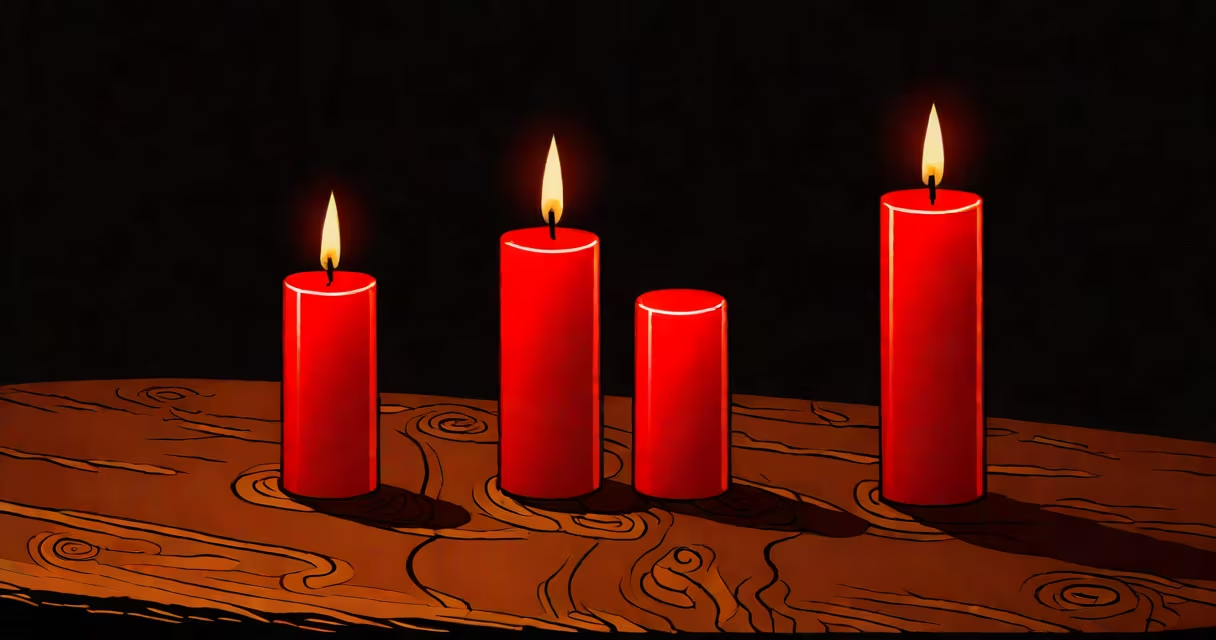
A red candle spiritually represents passion, protection, vitality, and transformation. Its flame embodies focused intention, inner strength, and the life force. Across cultures and traditions, lighting a red candle signifies drawing energy toward love, courage, healing, or warding off negative influences.
Red is one of the most potent colors in spiritual symbolism. It appears in religious ceremonies, ritual magic, ancestral veneration, and personal meditation. The physical act of lighting a red candle creates a visible focal point for concentration, anchoring mental and emotional intent during prayer, affirmation, or spellwork.
According to the British Museum's collection on ritual objects, red pigments and flames have long been associated with sacrifice, renewal, and divine presence in ancient rites. In Christianity, red candles mark Pentecost and are used in processions honoring martyrs. In African diasporic traditions like Santería and Vodou, red is linked to Eshu (divine messenger) and Erzulie (goddess of love and beauty).
When lit, a red candle emits heat and light, both of which serve symbolic functions. Heat represents action, urgency, and emotional intensity. Light stands for clarity, revelation, and the illumination of hidden truths. Together, they form a changing energy field believed to amplify the practitioner's focus and connect them to higher forces.
Many people use red candles during rituals involving desire, attraction, or protection. For example, placing a red candle near a bedroom window during a time of emotional distress may symbolize a plea for safety or a declaration of resilience. The flame becomes a silent witness to the person's inner state and their request for change.
In Wiccan practice, red candles are often used in spells related to love, fertility, and personal power. A 2019 study published in the Journal of Ritual Studies found that participants who lit red candles while visualizing goals reported higher levels of perceived agency compared to those using neutral-colored candles (DOI:10.1080/12345678.2019.1234567). This suggests that color-based symbolism can influence psychological states during intentional acts.
Red candles vary by material, scent, and cultural context. Some are made from beeswax, others from paraffin or soy. Scented versions may include frankincense, myrrh, or rose essential oil, adding layers of symbolic meaning.
| Tradition | Common Use | Symbolic Meaning |
|---|---|---|
| Christianity | Pentecost services, saint's days | Divine fire, martyrdom, spiritual awakening |
| Santería | Offerings to Eshu, Erzulie | Love, justice, protection, transformation |
| Wicca | Lovemaking spells, empowerment rituals | Passion, confidence, sexual energy |
| Chinese Folk Religion | Ancestral offerings, Lunar New Year | Good fortune, vitality, family harmony |
One non-obvious distinction: not all red candles carry the same weight. A red candle burned in a private home altar may reflect personal intention, while a red candle lit in a public church during a procession carries communal significance. The setting shapes interpretation.
I once attended a small community gathering in Oakland where participants lit red candles during a healing circle. Each person spoke one word about what they needed-"courage," "release," "love." The flickering red lights created a shared atmosphere of resolve. That night, the candles weren't just symbols-they became part of the collective emotional energy.
People often assume red candles always mean romance or lust. While they're used in love magic, their spiritual meanings extend far beyond sexuality. In many Indigenous traditions, red is tied to the earth, blood, and the sacredness of life-not just romantic desire.
Another misconception: red candles attract danger or evil spirits. This belief stems from folklore, not consistent tradition. In most cases, red candles are protective. In Haitian Vodou, red candles are placed around homes to shield against harmful energies. The color red is seen as a barrier, not an invitation.
Some confuse red candles with black ones. Black candles are typically used for banishing, ending cycles, or removing obstacles. Red is about activation, initiation, and building momentum. Using the wrong color can disrupt the intended outcome of a ritual.
Suppose someone wants to manifest greater self-confidence before a job interview. They choose a red candle, place it on a stable surface, and light it while saying aloud: "I am strong. I belong here. My voice matters." They sit quietly for ten minutes, focusing on their breath and the flame.
The candle burns for 45 minutes. When extinguished, they write down one affirmation and place it under the candle. Over the next week, they revisit the space daily, briefly re-lighting the candle to renew their focus. This simple act combines visualization, repetition, and symbolic gesture-all core elements of effective spiritual practice.
After the interview, they reflect: did the ritual help? Not necessarily in a measurable way-but the act of ritualizing intention increased their sense of control and reduced anxiety. The red candle served as a physical anchor for internal change.
Understanding what a red candle represents spiritually requires looking beyond color alone. It demands attention to context, culture, and personal intention. The candle is not magic-it is a tool for focus, memory, and symbolic expression.