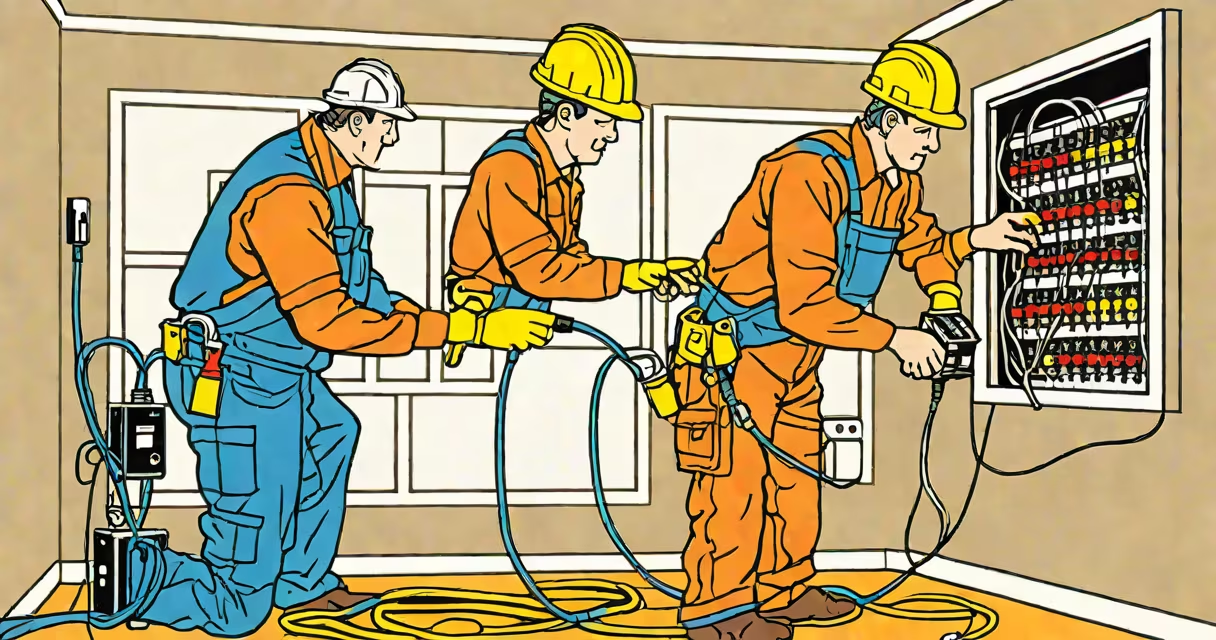
A good trade to learn is a skilled occupation requiring hands-on training and certification, offering steady employment, competitive pay, and strong demand in construction, maintenance, and repair sectors. These roles typically don't require a four-year degree but do involve apprenticeships, technical school, or on-the-job instruction.
The U.S. Bureau of Labor Statistics reports that median annual earnings for tradespeople exceed $50,000, with many earning over $70,000 in metropolitan areas. Demand remains high due to aging infrastructure, housing growth, and increasing complexity in building systems. Electricians, plumbers, HVAC technicians, and welders consistently rank among the most in-demand skilled trades.
Unlike many college paths, trades offer direct entry into the workforce within 1-3 years. Apprenticeships blend classroom learning with paid on-site work, allowing trainees to earn while they learn. The National Center for Construction Education and Research confirms that over 70% of apprentices complete their programs and secure full-time jobs.
Each trade follows a structured path: enrollment in a technical program or union-sponsored apprenticeship, completion of required hours of supervised work, and passing a licensing exam. For example, becoming a licensed electrician requires 8,000 hours of field experience and 576 hours of classroom instruction, culminating in a state exam.
Apprenticeships often last 3-5 years and pay between 50% and 75% of a journeyworker's wage during training. Employers cover tuition and provide tools. After certification, workers qualify for higher pay and project leadership roles. Many trades also offer opportunities for specialization-such as solar panel installation or industrial automation-increasing long-term value.
Electricians install and maintain wiring systems in homes, offices, and factories. They read blueprints, troubleshoot circuits, and ensure compliance with the National Electrical Code. Plumbers fix water supply lines, drainage systems, and heating equipment. HVAC technicians regulate indoor climate using refrigeration systems and ductwork. All three fields report job growth above the national average through 2032.
Not all trades carry equal weight in job stability or pay. The following table compares key trades based on median salary, projected job growth, and typical training duration.
| Trade | Median Annual Pay (2023) | Projected Growth (2022-2032) | Training Duration |
|---|---|---|---|
| Electrician | $61,000 | 8% | 4 years (apprenticeship) |
| Plumber | $61,000 | 6% | 4 years (apprenticeship) |
| HVAC Technician | $53,000 | 11% | 2-3 years (technical school + on-the-job) |
| Welder | $49,000 | 6% | 1 year (certification program) |
| Carpenter | $53,000 | 5% | 3-4 years (apprenticeship) |
Data sourced from the U.S. Bureau of Labor Statistics, Occupational Outlook Handbook, 2023 edition. Growth rates reflect national projections through 2032.
Some trades grow faster due to technological shifts. For example, HVAC technicians specializing in energy-efficient systems or geothermal installations see 15% growth in regions with green building mandates. Similarly, electricians trained in solar panel integration are in rising demand, especially in states like California and New York.
Trades are essential in both urban and rural economies. A single-family home requires at least five distinct trades during construction: carpentry, roofing, plumbing, electrical, and HVAC. Maintenance of existing buildings continues to drive demand-U.S. homes average 23 years old, and older structures frequently need system upgrades.
Commercial projects such as hospitals, schools, and data centers rely heavily on specialized trades. Hospitals, for instance, require sterile environments maintained by HVAC systems designed to prevent airborne pathogens. This demands certified technicians who understand air filtration standards and pressure differentials.
Non-traditional settings also create opportunity. Remote work has increased demand for home office renovations, including electrical upgrades for multiple devices and fiber-optic cable installation. In 2023, 38% of U.S. households reported upgrading their home internet setup, leading to a spike in demand for network cabling specialists-a niche within the broader electrical trade.
Many assume trades are low-skill or temporary work. This is incorrect. Modern trades require advanced problem-solving, reading technical schematics, and understanding complex safety codes. A licensed electrician must interpret NEC Article 250 for grounding requirements, while a plumber must calculate flow rates and pressure drops in multi-story buildings.
Another misconception is that trades lack career mobility. In reality, many skilled workers advance to supervisory roles, start their own businesses, or move into project management. A 2022 study by the National Association of Home Builders found that 42% of master plumbers owned their own contracting firms, with average annual revenues exceeding $200,000.
Not all vocational training leads to the same outcome. Some programs lack accreditation or employer partnerships, resulting in poor job placement. The U.S. Department of Labor recommends selecting programs accredited by the Accrediting Commission of Career Schools and Colleges (ACCSC) or those endorsed by local unions.
Consider Marcus, a 22-year-old from Denver who completed a 12-month certificate program at a community college. He entered a union apprenticeship with a local HVAC contractor, working 3,000 hours over three years. During training, he studied refrigerant handling, duct design, and energy efficiency standards.
After passing the EPA Section 608 certification exam and a state licensing test, Marcus earned $58,000 annually. Within two years, he was promoted to lead technician on commercial projects. His ability to diagnose system inefficiencies saved clients up to 20% on energy costs-an added value that boosted his reputation and client retention.
This path mirrors the trajectory of thousands. According to the U.S. Department of Labor, HVAC technicians with proper certifications have a 94% job placement rate after completing formal training.
I once visited a trade show in Nashville where a group of high school students participated in a live wiring challenge. One student, aged 17, successfully installed a GFCI outlet in under 12 minutes, correctly connecting hot, neutral, and ground wires. He later told me he'd chosen electrical work because "my dad did it, and I liked fixing things." He's now enrolled in a dual-enrollment program with a local community college and plans to enter an apprenticeship in fall 2024.
This moment confirmed what research shows: early exposure to practical skills builds confidence and direction. Students who engage in hands-on learning are 3.5 times more likely to pursue skilled trades than peers who only take academic courses, according to a 2021 study by the National Center for Education Statistics.
A good trade to learn combines market demand, clear advancement paths, and tangible skill development. Electricians, plumbers, HVAC technicians, and welders meet all three criteria. These roles offer financial stability, physical autonomy, and long-term relevance in a changing economy.