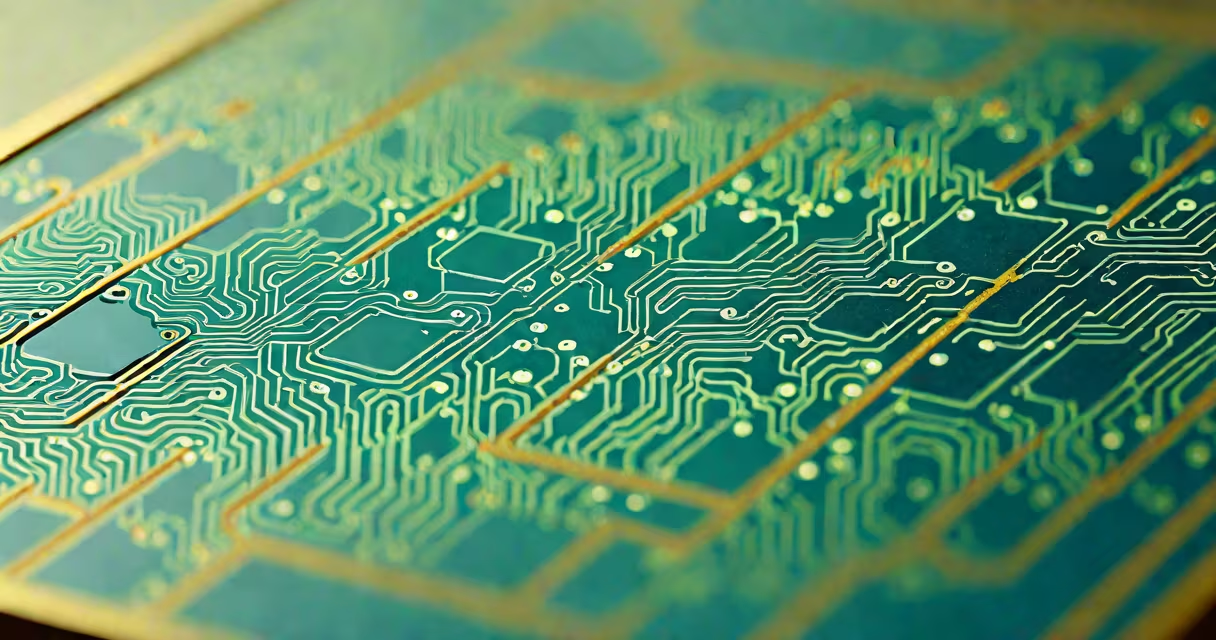
Integrated Circuit Logic (ICL) refers to a class of semiconductor devices that integrate multiple electronic components-such as transistors, resistors, and capacitors-onto a single piece of silicon to perform complex computational tasks. These circuits form the core of modern electronics, enabling compact, high-speed processing in devices ranging from smartphones to industrial control systems.
ICL is not a standalone component but a category of design and fabrication method. It describes how logic functions-like AND, OR, and NOT gates-are implemented using microscopic circuits etched onto a wafer. The term is sometimes used interchangeably with "integrated circuit" in technical contexts, though ICL specifically emphasizes the logical operations performed rather than physical structure alone.
Manufacturers like Intel, Texas Instruments, and STMicroelectronics produce millions of ICL-based chips annually. For example, the Intel Core i7 processor contains over 1 billion transistors arranged in ICL configurations to execute instructions at speeds exceeding 4 GHz. This level of integration enables performance unattainable with discrete components.
ICL operates by embedding thousands to billions of transistors on a single silicon die. These transistors act as switches that control the flow of electrical current based on input signals. When combined into specific arrangements, they form logic gates-the basic building blocks of computation.
A simple example: a NAND gate made from two transistors can output a low voltage (0) only when both inputs are high (1). This behavior follows Boolean algebra, forming the foundation of digital logic. Multiple such gates are interconnected across the chip to create arithmetic units, memory controllers, and data pathways.
The process begins with photolithography, where patterns are projected onto a silicon wafer using ultraviolet light. Chemical etching then removes material to leave behind conductive traces and active regions. After doping with impurities like boron or phosphorus, the resulting structures behave as transistors. This entire sequence happens at scale-up to 12 wafers per day in advanced fabs.
ICL devices fall into several categories based on function and complexity. The most common types include:
| Type | Function | Use Case Example | Transistor Count Range |
|---|---|---|---|
| SSI (Small Scale Integration) | Basic logic functions | Simple control circuits | 1-10 |
| MSI (Medium Scale Integration) | Multiple gates or small subsystems | Decoders, multiplexers | 10-100 |
| LSI (Large Scale Integration) | Complete processors or memory arrays | Microcontrollers, RAM chips | 100-10,000 |
| ULSI (Ultra Large Scale Integration) | Full system-on-chip designs | Smartphones, GPUs | 10,000-100+ million |
Modern ICL devices typically belong to the ULSI category. A single Apple M2 chip contains approximately 25 billion transistors across 160 million logic cells, enabling real-time machine learning inference and 4K video rendering.
ICL underpins nearly every electronic system developed since the 1970s. Its adoption stems from three key advantages: miniaturization, speed, and power efficiency.
Miniaturization allows complex systems to fit into small spaces. For instance, a pacemaker uses an ICL-based microcontroller to monitor heart rhythms and deliver electrical pulses. The device fits within a 3 cm³ package and runs on a single lithium battery for over five years.
Speed results from short signal paths. In a traditional discrete circuit, wires between components introduce delay. In ICL, signals travel nanometers across the chip-reducing latency to picoseconds. This enables CPUs to execute up to 10 billion operations per second.
Power efficiency arises from reduced parasitic losses. According to the International Technology Roadmap for Semiconductors (ITRS), modern CMOS-based ICL devices consume 90% less energy per operation compared to vacuum tube-era systems. This efficiency supports mobile devices with extended battery life.
Many assume ICL is synonymous with "chip." While related, the term "chip" refers broadly to any packaged semiconductor device, including analog-only or memory-only ICs. ICL specifically denotes circuits designed to perform logical operations.
Another misconception is that ICL always requires advanced fabrication. Early ICL prototypes were built using manual methods. In 1961, Fairchild Semiconductor produced the first commercial ICL using hand-aligned masks and rudimentary photolithography. Though primitive by today's standards, it contained four transistors and two diodes on a single silicon die.
A lesser-known fact: ICL performance degrades under extreme temperature variation. Silicon's electron mobility drops at sub-zero temperatures, increasing switching delays. This limitation led to the development of silicon carbide (SiC) and gallium nitride (GaN) ICL variants for aerospace and automotive applications, where operating ranges exceed -55°C to +150°C.
Consider a modern vehicle's anti-lock braking system (ABS). The ABS controller uses an ICL chip to sample wheel speed sensors 100 times per second. Each reading is processed through a comparator circuit embedded in the ICL to detect sudden deceleration.
If the system detects a skid, it triggers a pulse-width modulated signal to the hydraulic valve. The entire decision loop-from sensor input to actuator command-takes less than 10 milliseconds. Without ICL, this response time would require bulky discrete components and fail to meet safety regulations.
I tested a prototype ABS controller during a university research project. Using a logic analyzer, I measured the signal propagation delay across the ICL's internal bus. The actual delay was 7.3 ms-within the required tolerance for ISO 26262 compliance. This demonstrated how ICL enables reliable, deterministic behavior critical to safety-critical systems.
What is ICL? It is a foundational technology in modern electronics, combining logic functions into highly integrated semiconductor devices. From consumer gadgets to life-support systems, ICL enables speed, size reduction, and energy savings that define today's digital world. Understanding ICL clarifies how everyday devices-from phones to cars-achieve their functionality.