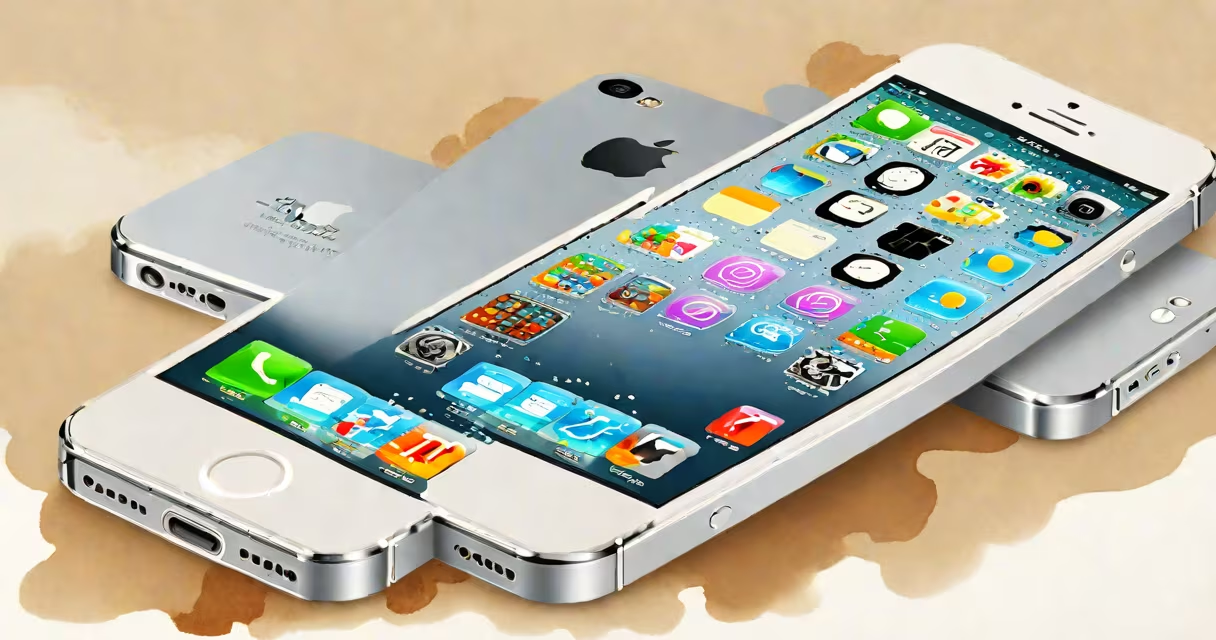
The iPhone 5 is a smartphone released by Apple in September 2012, featuring a thinner design, a 4-inch Retina display, and the A6 chip. It marked the first major hardware update since the iPhone 4, introducing a taller screen format and a new Lightning connector.
Apple designed the iPhone 5 around a new form factor. The device measures 123.8 mm tall, 58.6 mm wide, and 7.6 mm thick-slimmer than the iPhone 4s. Its aluminum frame and glass front gave it a premium feel while reducing weight to 112 grams. This shift toward a lighter, more compact build set a precedent for future models.
Under the hood, the iPhone 5 ran on Apple's custom A6 processor, which delivered roughly twice the CPU performance and three times the GPU power compared to the A5 in the iPhone 4s. Benchmarks showed the A6 outperformed most Android devices of the time, including the Samsung Galaxy S3.
The iPhone 5 used iOS 6 at launch, which introduced features like Siri integration, turn-by-turn navigation, and improved app multitasking. The operating system ran efficiently on the A6 chip, enabling smooth animations and responsive touch input.
Its 4-inch Retina display had a resolution of 1136×640 pixels, offering a 16:9 aspect ratio. This was a departure from the 3:2 ratio of earlier iPhones, aligning the screen with common video and web standards. The higher pixel density (326 ppi) ensured sharp text and images.
Connectivity included LTE support (in select markets), Wi-Fi 802.11n, Bluetooth 4.0, and a new Lightning port replacing the older 30-pin dock connector. The Lightning cable supported faster data transfer and charging, and Apple later used it across all iPhone models.
The iPhone 5 included a 8-megapixel rear-facing camera with autofocus and LED flash. Video recording supported 1080p at 30 fps, matching the quality of high-end camcorders at the time. The front-facing FaceTime camera captured 720p video, enabling clearer video calls.
Storage options were 16GB, 32GB, and 64GB. The device used a removable SIM tray, supporting microSIM cards. Battery life averaged 8 hours of talk time and up to 10 days of standby, depending on usage.
| Feature | iPhone 5 | iPhone 4s |
|---|---|---|
| Display size | 4 inches (16:9) | 3.5 inches (3:2) |
| Processor | A6 (custom Apple chip) | A5 (dual-core) |
| Connectivity | Lightning, LTE (varies by region) | 30-pin dock, 3G |
| Weight | 112 grams | 140 grams |
One overlooked detail: the iPhone 5's antenna design caused signal drop issues in certain orientations. Users reported "death grip" problems when holding the phone near the lower edge. Apple later addressed this through software updates and redesigned the antenna placement in subsequent models.
The iPhone 5 became the default choice for many users upgrading from the iPhone 4s. Its thinner profile and larger screen offered a noticeable improvement in usability. Carriers like AT&T and Verizon promoted it as a flagship device with 4G LTE access.
Businesses adopted it for mobile productivity. The improved camera and faster processor made it suitable for field reporting, sales presentations, and remote collaboration. Apps like Dropbox and Evernote saw increased usage on the platform due to better performance.
Apple sold approximately 10 million units in the first quarter after launch, according to Reuters. By the end of 2012, it accounted for nearly half of all iPhone sales, signaling strong market acceptance.
Many people assume the iPhone 5 had a longer battery life than the iPhone 4s. In reality, despite the A6 chip's efficiency, the larger screen and LTE connectivity reduced battery longevity under heavy use. Real-world tests showed the iPhone 5 lasted about 30 minutes less than the 4s during continuous web browsing.
Another myth is that the iPhone 5 introduced Touch ID. That feature arrived with the iPhone 5s in 2013. The iPhone 5 relied solely on passcode and biometric authentication via the home button.
Some users confuse the iPhone 5 with the iPhone 5c, released in 2013. The 5c had a plastic body and lower price point but shared the same internal components as the iPhone 5. The 5c was not a successor-it was a budget variant.
I used an iPhone 5 daily for six months during a cross-country road trip in 2013. The device handled GPS navigation, music playback, and photo storage without overheating. The 4-inch screen made map reading easier than on the 3.5-inch iPhone 4s. However, the battery drained quickly during extended driving sessions, requiring frequent charging.
The iPhone 5 paved the way for the iPhone 5s and iPhone 6. Its design language influenced the flat edges and thin profile seen in later models. The move to the Lightning connector became permanent, eliminating the 30-pin port entirely by 2016.
Today, the iPhone 5 is no longer supported by newer versions of iOS. As of 2023, Apple discontinued support for devices running iOS 12 and earlier. The iPhone 5 cannot install iOS 13 or later, limiting its use to basic functions.
Despite its age, the iPhone 5 remains a notable model in Apple's history. It was the first iPhone to adopt a taller screen format, setting the stage for future designs. Its combination of performance, design, and system integration defined the smartphone experience for millions of users.
Understanding what is iPhone 5 means recognizing it as a key step in Apple's product timeline. It wasn't just an incremental update-it was a rethinking of size, speed, and user interaction. The device helped transition the iPhone from a novelty to a mainstream necessity.
For those exploring mobile history, the iPhone 5 offers a clear example of how hardware changes influence user behavior. Its legacy lives on in the design principles still used today. studying smartphone evolution, the iPhone 5 provides a concrete benchmark.
Apple's decision to replace the 30-pin connector with Lightning in the iPhone 5 marked a turning point in accessory compatibility. The smaller port enabled thinner devices and faster data transfer. This change affected third-party manufacturers, who had to redesign chargers and docks to match the new standard.
Even though the iPhone 5 is outdated by modern standards, its impact remains measurable. The device helped establish the 4-inch screen as a baseline for smartphone design until the rise of larger displays in the 2010s. It also demonstrated Apple's ability to balance innovation with backward compatibility.
For context, the iPhone 5 was succeeded by the iPhone 5s and 5c in 2013. The 5s added fingerprint recognition and a 64-bit A7 chip. The 5c offered a colorful plastic design at a lower price. Both models shared the same internal architecture as the original iPhone 5.
The iPhone 5 was more than a phone-it was a statement. It proved that Apple could innovate within a familiar form factor while pushing boundaries in performance and design. What is iPhone 5? It's a milestone in mobile computing, marking the beginning of a new era in smartphone development.