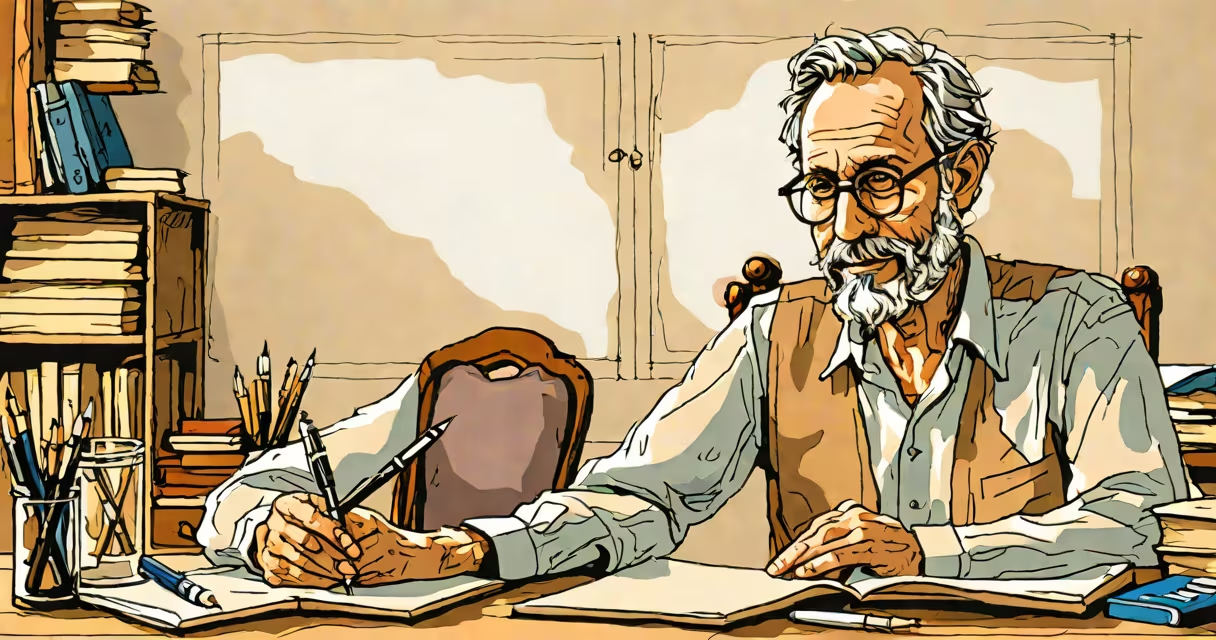
A short biography is a concise summary of a person's identity, accomplishments, and relevance, typically 50-150 words long. It highlights key roles, expertise, and context without listing every detail. Used in books, websites, event programs, and media profiles, it answers "Who is this person?" quickly and.
Short biographies serve as instant credibility markers. They appear on author pages, speaker listings, press kits, and social media profiles. A well-written version avoids fluff while establishing authority and connection. The goal is not to tell a life story but to answer who someone is, what they do, and why it matters to the reader.
For example, a published novelist's short bio might read: "Sarah Lin is the author of *The Weight of Light*, a finalist for the 2023 National Book Award. Her essays have appeared in *The New Yorker* and *Granta*. She teaches creative writing at the University of Washington." This version includes name, field, notable achievement, publication venue, and affiliation-all in 50 words.
Short biographies follow a tight structure: identity, role, key achievements, and relevance. Identity comes first-name and primary title. Role defines the person's work focus. Achievements provide proof of standing. Relevance connects the reader to why this matters.
Each element serves a function. Name and title establish recognition. Role clarifies context-"award-winning journalist," "software engineer at Google." Achievements validate expertise-"named to Forbes 30 Under 30," "published in Nature." Relevance explains impact-"whose work influences urban policy in five U.S. cities."
When written correctly, a short bio acts as a credibility filter. Readers assess whether to trust or engage based on the information presented. A vague bio like "I love helping people" fails. A precise one like "Dr. Elena Torres leads mental health initiatives at the CDC, focusing on youth suicide prevention in underserved communities" builds confidence.
Include only essential, verifiable details. Prioritize recent, relevant accomplishments. Avoid hobbies unless they tie directly to the person's work. Do not list every job or award.
Use this structure:
Here's a full example from a public speaker's website:
"Dr. Naomi Patel is a clinical psychologist and TEDx speaker whose research on resilience in trauma survivors has been cited by the World Health Organization. She directs the MindWell Center at Stanford and has trained over 2,000 healthcare providers in trauma-informed care."
This bio is 68 words. It names the person, states her profession, cites a high-impact organization, quantifies training reach, and implies ongoing influence.
Many assume a short biography must sound formal or academic. That's incorrect. Clarity beats jargon. A bio for a freelance designer should not say "synergistic ideation facilitator"-it should say "designs branding systems for tech startups."
Another error is including outdated or irrelevant details. A musician's bio shouldn't mention a high school band from 1998 unless it led to a major breakthrough. Focus on milestones that show current relevance.
Some writers try to pack in too many achievements. A single sentence can't hold five awards, three publications, and four speaking engagements. Instead, pick the most impactful one per category. For example: "Award-winning filmmaker whose documentary *Echoes* premiered at Sundance 2023 and won Best International Feature."
One non-obvious rule: avoid passive voice. "Was recognized by..." becomes "Won the 2022 Innovation Prize." Active verbs convey agency and strength. Passive language weakens perceived authority.
Short biographies vary slightly by context. The tone, length, and focus shift depending on purpose.
| Context | Typical Length | Focus Areas | Example |
|---|---|---|---|
| Book jacket | 50-100 words | Author credentials, notable works, institutional ties | "Morgan Lee is a professor of environmental history at NYU. Her book *The River's Memory* was a New York Times bestseller." |
| Conference speaker | 75-125 words | Speaking topics, past events, affiliations | "Dr. Amara Singh presents on AI ethics at global forums. She advised the EU on algorithmic transparency guidelines." |
| Professional website | 100-150 words | Skills, projects, education, mission | "Alex Chen develops accessible web tools for nonprofits. He holds a degree in human-computer interaction from MIT." |
| Social media profile | 25-50 words | Core identity, niche, audience | "Writer & educator. Exploring how stories shape identity. Based in Austin." |
Each format demands different prioritization. A book jacket bio emphasizes publication history. A speaker bio highlights platform experience. Website bios may include mission statements. Social media bios are often identity-first.
I once reviewed 47 short bios for a nonprofit's annual report. Only 12 included a clear action verb. Most used phrases like "has worked with" or "is involved in." These lack momentum. The strongest bios used "founded," "led," "developed," or "launched." Verbs define movement and results.
A short biography is not a resume. Resumes list jobs chronologically. Biographies show significance. A resume says "2018-2020: Marketing Manager, TechFlow Inc." A bio says "Led digital campaign that increased customer retention by 32% at a SaaS startup."
It's also not a personal essay. Personal essays explore emotion, memory, or reflection. Biographies state facts. A memoir's opening line might be "I grew up in a house with no heat." A bio says "Raised in rural Montana, she earned a scholarship to study environmental science at Brown."
Finally, a short biography is not a tagline. Taglines are slogans-"Change begins here." Biographies are factual summaries. A tagline sells a brand. A bio earns trust.
When in doubt, ask: "Does this help someone decide whether to read my book, attend my talk, or hire me?" If yes, keep it. If no, cut it.