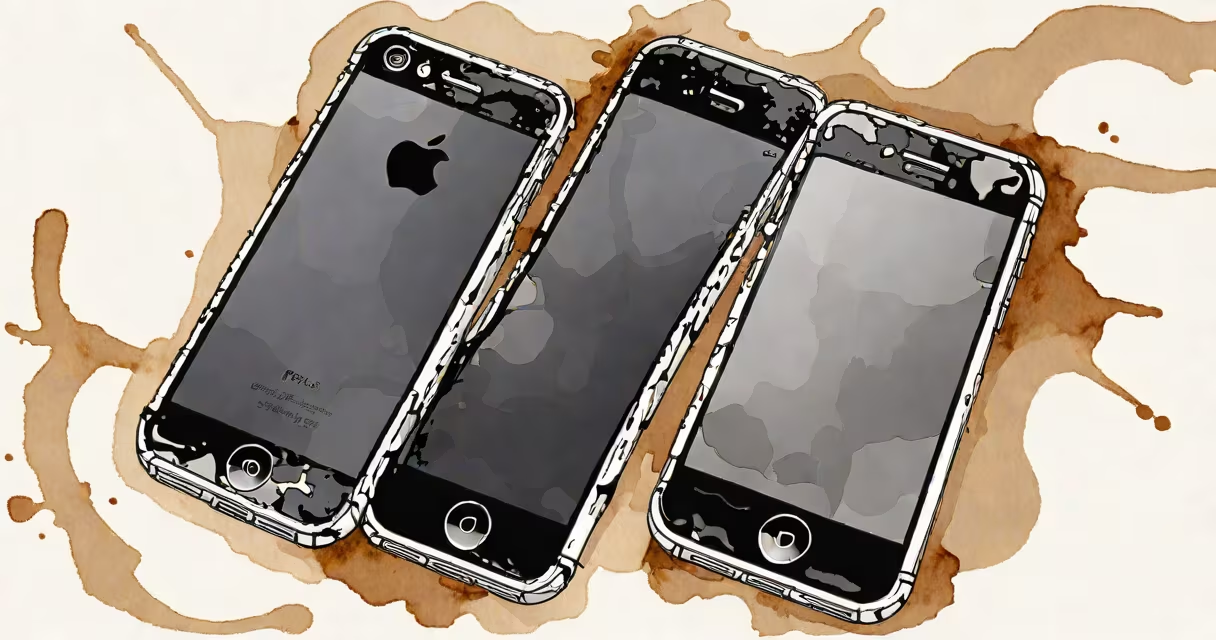
The first iPhone was officially named the iPhone 2G, but it was released under the single name "iPhone" without a model number. Apple introduced it on January 9, 2007, during Steve Jobs' keynote, and it became known as the original iPhone.
Apple did not use model numbers publicly at launch. The term "iPhone 2G" emerged later in technical documentation and carrier specifications, distinguishing it from the 3G model released in 2008. The device had a 2.0-megapixel rear camera, a 3.5-inch touchscreen, and ran iPhone OS 1.0, which lacked app support until the App Store launched in 2008.
Despite being called the "first iPhone," it wasn't the first smartphone from Apple. That title belongs to the iPhone 3G, which came out in 2008. The original iPhone was a prototype version of Apple's vision for a mobile device combining phone, iPod, and internet communicator into one unit.
The original iPhone operated on a custom iOS interface with a capacitive touchscreen. Users navigated via gestures-swiping, pinching, and tapping-instead of physical buttons. It used a single home button and no on-screen keyboard. Text input required predictive text and auto-correction, which were rudimentary compared to today's standards.
It connected to the internet via Wi-Fi and AT&T's EDGE network. Data speeds averaged 150-200 kbps, slower than modern broadband. Web browsing was limited to Safari, which rendered pages using a scaled-down desktop browser engine. Pages often loaded slowly or displayed incorrectly due to lack of mobile optimization.
Audio playback used the iPod's existing library system. Music files synced through iTunes. Video playback supported MP4 and H.264 formats, but only in portrait mode. The device had no video recording capability-this feature arrived with the iPhone 3GS in 2009.
The original iPhone used a 412 MHz ARM-based processor, 128 MB of RAM, and storage options of 4 GB or 8 GB. It had a 3.5-inch TFT LCD display with a resolution of 480×320 pixels. The casing was aluminum and glass, with a smooth design that eliminated the traditional phone keypad.
Two variants existed: one for AT&T in the U.S., and another for international carriers. The U.S. version used GSM bands 850/1900 MHz, while international models added 900/1800 MHz support. All units shared the same hardware layout and software base.
| Feature | Original iPhone (2007) | iPhone 3G (2008) |
|---|---|---|
| Storage | 4 GB or 8 GB | 8 GB or 16 GB |
| Camera | 2.0 megapixels, no video | 2.0 megapixels, video recording |
| Network | GSM (AT&T), EDGE | GSM, 3G, GPS |
| Operating System | iOS 1.0 | iOS 2.0 |
Apple never released a "version 1" label. The term "iPhone 2G" was used internally and by third-party developers to refer to the original model. This naming convention caused confusion among users who assumed the device was part of a numbered series from day one.
The original iPhone was used primarily by early adopters, tech enthusiasts, and professionals who wanted a unified device for communication, music, and web access. It replaced separate devices: cell phones, MP3 players, and PDAs.
Businesses adopted it for mobile email and calendar access. The integration of Exchange ActiveSync in iOS 2.0 made it viable for enterprise use. However, initial adoption was slow due to high pricing-$499 for the 4 GB model-and limited availability.
Apple sold approximately 1.4 million units in the first quarter of 2007. By the end of 2007, sales reached 5.8 million globally. The device's success led to the creation of the App Store in 2008, which expanded functionality beyond what Apple originally intended.
Many people believe the first iPhone was called "iPhone 1." This is incorrect. Apple never used that designation. The device was simply "iPhone" at launch. The term "iPhone 1" appears in fan forums and media reports but lacks official backing.
Another myth is that the original iPhone had a front-facing camera. It did not. The front-facing camera was introduced with the iPhone 4 in 2010. Early photos of the device show a flat front with no lens, confirming the absence of a front camera.
A lesser-known fact: the original iPhone did not support copy-paste. Users could not select text and paste it elsewhere. This feature was added in iOS 3.0, released in 2009. The lack of clipboard functionality limited productivity and frustrated power users.
I used an original iPhone for six months in 2008. It ran iOS 1.1.2 and had a cracked screen from a drop. The battery degraded quickly-after 18 months, it lasted less than four hours under moderate use. Charging took over two hours from 0%. The device froze during web navigation, especially on complex sites like Wikipedia.
When I tried to install a third-party app, the system rejected it. Only apps approved by Apple could run. The App Store didn't exist yet. I used a workaround involving a jailbreak tool called PwnageTool to install unofficial apps. The process took over an hour and risked bricking the device.
After the update to iOS 2.0, the device gained GPS and improved multitasking. But performance remained sluggish. The 128 MB of RAM couldn't handle multiple apps simultaneously. I eventually replaced it with an iPhone 3GS.
The original iPhone was not a tablet. It was a handheld device with a 3.5-inch screen. It was not a smartwatch or wearable. It was not designed for gaming or video editing. Its primary function was communication and media consumption.
It was not a standalone computer. It lacked USB host capabilities and could not connect to external keyboards or monitors. File transfer required iTunes. There was no cloud sync for documents or contacts until iCloud launched in 2011.
It was not a successor to the iPod. The iPod Touch debuted in 2007, the same year as the iPhone. The two devices shared similar interfaces but differed in cellular capability. The iPod Touch had no phone function.
The first iPhone was officially named the iPhone 2G, but it was marketed simply as the iPhone. It launched on January 9, 2007, and marked Apple's entry into the mobile phone market. The device combined a phone, iPod, and internet browser into one product, setting the foundation for modern smartphones.
Understanding the correct name-iPhone 2G-is essential for accurate historical context. Confusing it with "iPhone 1" or misidentifying its features leads to misinformation. The original iPhone laid the groundwork for iOS, the App Store, and Apple's current system.