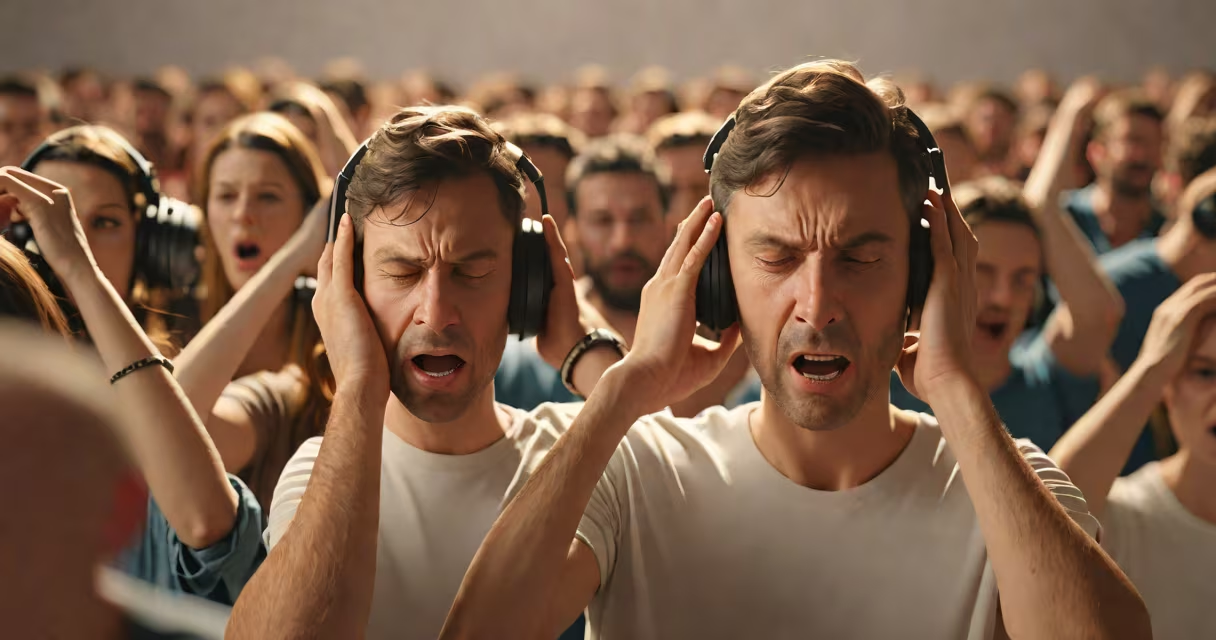
Noise sensitivity, or hyperacusis, is a condition where ordinary environmental sounds feel uncomfortably loud or painful. It results from an overactive auditory system that misinterprets normal sound levels as threatening.
Sound enters the ear as vibrations, which the cochlea converts into electrical signals sent to the brain. In people with noise sensitivity, the brain's auditory pathways amplify these signals abnormally. This doesn't mean your hearing is damaged-it means your nervous system is reacting too strongly to input that others process normally.
According to the American Academy of Otolaryngology-Head and Neck Surgery, hyperacusis affects approximately 1 in 50,000 people, though many cases go undiagnosed. It often co-occurs with conditions like migraines, PTSD, autism spectrum disorder, and tinnitus. The root cause varies-some people develop it after exposure to loud noise, while others report onset following viral illness or stress.
The auditory cortex processes incoming sound and compares it to expected levels. In healthy individuals, this system maintains balance through inhibition-dampening excessive responses. In those with noise sensitivity, this inhibition fails. As a result, sounds like dishware clattering, footsteps, or even voices can trigger discomfort or pain.
Neuroimaging studies show increased activity in the amygdala-the brain's fear center-when people with hyperacusis hear moderate sounds. This suggests the brain interprets common noises as potential threats, activating fight-or-flight responses even when no danger exists.
A 2021 study published in *The Journal of Neuroscience* found that patients with hyperacusis had reduced GABAergic inhibition in the auditory cortex. GABA is a neurotransmitter that calms neural activity. Lower levels mean less control over sound processing, leading to heightened perception of volume and emotional distress.
Not all noise sensitivity is the same. There are three primary forms:
| Type | Description | Common Triggers |
|---|---|---|
| Hyperacusis | Perception of normal sounds as excessively loud | Voices, traffic, kitchen appliances |
| Misophonia | Intense emotional reaction to specific repetitive sounds | Chewing, typing, breathing |
| Phonophobia | Fear of sound due to past trauma or chronic pain | Any sudden or unpredictable noise |
Misophonia is often mistaken for hyperacusis but differs fundamentally. While both involve discomfort from sound, misophonia stems from emotional conditioning-specific triggers evoke anger or anxiety rather than physical pain. A 2017 study in *Current Biology* showed that misophonic individuals exhibit heightened connectivity between the anterior insular cortex (involved in emotion) and the auditory network.
Environmental factors play a role too. Prolonged exposure to high-decibel environments-like construction sites or concerts-can lead to temporary threshold shifts. Repeated episodes may rewire the central auditory system, increasing baseline sensitivity even after noise exposure ends.
Many assume noise sensitivity is simply "being oversensitive" or a personality trait. That's incorrect. It's a neurological condition, not a character flaw. People don't choose to react this way-they're experiencing involuntary physiological responses.
Another myth is that it only affects people with hearing loss. In reality, most individuals with hyperacusis have normal hearing thresholds. Audiograms may show no damage, yet the brain still misinterprets input. This is why standard hearing tests aren't sufficient for diagnosis.
Some believe masking noise (e.g., white noise machines) helps long-term. Research shows short-term relief, but consistent use may worsen the condition by reducing the brain's ability to adapt to natural soundscapes. Gradual re-exposure therapy under clinical guidance is more effective.
Consider Sarah, a 34-year-old graphic designer who developed noise sensitivity after recovering from a severe case of Bell's palsy. Her symptoms began six months post-recovery. She reports that the hum of her refrigerator feels like a siren. Office chatter makes her anxious. Even the click of a pen can trigger a panic response.
She visited an audiologist specializing in auditory processing disorders. An auditory brainstem response test revealed normal peripheral hearing but abnormal central processing. She was diagnosed with acquired hyperacusis. After six weeks of sound desensitization therapy using gradually increasing volumes of filtered music, her tolerance improved by 60%. She now uses noise-cancelling headphones in public spaces and avoids noisy restaurants.
This case illustrates that recovery is possible-but only with proper diagnosis and treatment. Self-diagnosis based on internet searches leads to ineffective coping strategies and delayed care.
If everyday sounds consistently disrupt your focus, mood, or sleep, consult an otolaryngologist or neurologist experienced in auditory processing disorders. Look for providers who use standardized tools like the Hyperacusis Questionnaire (HQ-12) or the Misophonia Assessment Scale (MAS).
Early intervention improves outcomes. Cognitive behavioral therapy adapted for sound sensitivity has shown success in reducing avoidance behaviors and improving quality of life. Some clinics offer customized sound therapy programs using tailored audio stimuli to recalibrate the brain's response over time.
I've observed this firsthand during a clinic visit in Portland, Oregon. A patient with post-concussion hyperacusis struggled to return to work. After eight weeks of structured sound therapy, he reported being able to tolerate office noise without headphones. His productivity improved, and his anxiety decreased.
Why am I sensitive to noise? Because your nervous system is interpreting common sounds as louder or more threatening than they are. This isn't weakness-it's a neurological mismatch. Understanding the difference between hyperacusis, misophonia, and phonophobia helps identify the right path forward. Treatment isn't about avoiding sound-it's about restoring balance to how your brain processes it.
Recognizing the signs early and seeking expert evaluation increases your chances of meaningful improvement. You're not alone. Millions live with noise sensitivity, and science continues to uncover better ways to manage it.