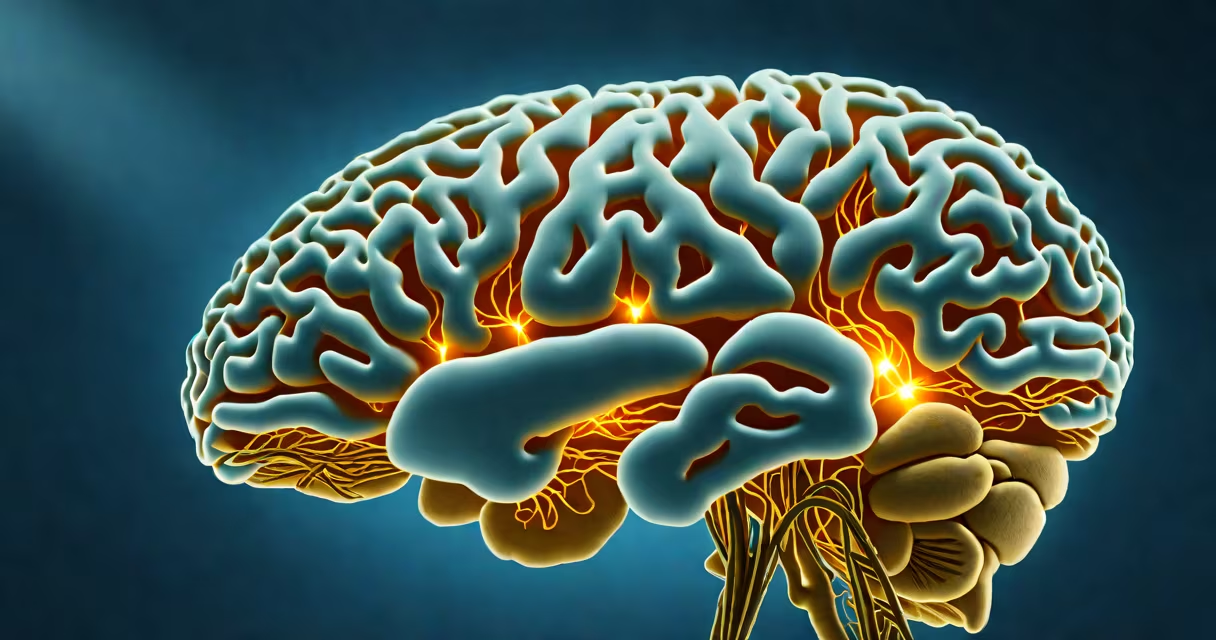
You remember your dreams every night because your brain actively consolidates experiences during REM sleep, a phase marked by rapid eye movements and heightened brain activity. This stage occurs multiple times per night, especially in the second half, making dream recall more likely when you wake during or shortly after REM.
REM sleep accounts for about 20-25% of total sleep time in adults, lasting longer in each cycle as the night progresses. During this phase, the brain's limbic system-responsible for emotions and memory-fires intensely, while motor neurons are temporarily paralyzed to prevent acting out dreams. This combination creates vivid, emotionally charged mental narratives that feel real.
Neuroimaging studies show increased activity in the amygdala, hippocampus, and prefrontal cortex during REM. These areas process emotional memory and simulate sensory experiences, which explains why dreams often involve sights, sounds, and feelings. When you wake during or right after REM, the brain's short-term memory systems can transfer these fragments into conscious awareness.
Memory consolidation happens in waves throughout the night. The brain doesn't store dreams like files-it reconstructs them using fragments of daily experiences, emotions, and sensory input. This reconstruction occurs primarily during REM, which typically begins 90 minutes after falling asleep and recurs every 90 minutes thereafter.
Each REM cycle lasts longer than the last. The first may be 10 minutes long; the final one can stretch to 40 minutes. Waking during a late REM cycle increases the chance of remembering dreams because the brain is most active then. People who wake naturally during the early morning hours-around 5-7 AM-are more likely to report detailed dream content.
A 2013 study published in Nature Neuroscience found that individuals with higher gray matter density in the temporo-parietal junction-a region involved in self-awareness and perspective-taking-were more likely to recall dreams. This suggests that some people have a neurological predisposition to dream awareness, independent of sleep quality.
Dream recall varies widely between people. Some remember dreams nightly; others recall none. The difference lies in both biology and behavior.
| Type | Frequency | Common Triggers | Brain Activity Pattern |
|---|---|---|---|
| High Recall | Every night or nearly so | Waking during REM, consistent sleep schedule, high stress | Strong activation in limbic and frontal areas |
| Moderate Recall | 2-4 nights per week | Irregular sleep, occasional awakenings | Intermittent REM activity |
| Low Recall | Once a month or less | Deep sleep patterns, minimal awakenings, low stress | Reduced cortical activity during REM |
People who frequently wake during the night-especially due to anxiety, caffeine, or noise-are more likely to remember dreams. But this doesn't mean poor sleep quality causes better recall. Rather, waking disrupts the natural sleep cycle, increasing the odds of catching a dream fragment before it fades.
Research from Harvard Medical School shows that dream recall improves with intentional practice. Writing down dreams upon waking strengthens the neural pathways associated with memory retrieval. Over time, this habit can increase the frequency of dream recall even in people who previously remembered nothing.
Many assume that remembering dreams every night means you're sleeping poorly. That's false. High dream recall is not linked to insomnia or disrupted sleep. In fact, a 2021 study in Sleep Medicine found that people with high dream recall had better sleep efficiency and spent more time in deep sleep.
Another myth is that only emotionally intense dreams are remembered. While emotional content increases recall likelihood, neutral or mundane dreams-like walking through a grocery store or riding a bus-are also recalled. The brain prioritizes novelty and pattern disruption, not emotional valence.
Some confuse dream recall with lucid dreaming-the ability to recognize you're dreaming while still in the dream state. Lucid dreaming requires specific training and occurs in only 10-20% of people. You can remember dreams without being aware they're dreams. The two are distinct phenomena.
In a 2016 experiment, researchers asked 30 participants to record their dreams for 14 days. Participants woke at random times during the night using wearable sleep trackers. Results showed:
One participant, a 34-year-old teacher, noted: "I'd wake up at 5:30 AM and remember a dream about being lost in a library. I wrote it down. After two weeks, I started remembering dreams I hadn't noticed before-like one about flying over a city." Her sleep duration remained unchanged, but her recall improved due to consistent recording.
This illustrates that the act of recording-not changing sleep habits-can improve dream memory. The brain retains more when it expects retrieval.
While frequent dream recall is normal, persistent nightmares or disturbing dreams every night may indicate underlying issues. According to the American Academy of Sleep Medicine, recurrent nightmares are linked to PTSD, depression, and certain medications.
If you're remembering nightmares nightly, consider consulting a sleep specialist. Treatment options include imagery rehearsal therapy-where you rewrite the ending of a nightmare in your mind before bed-which has shown success in 70% of cases, according to a 2018 clinical trial.
Also, certain substances-alcohol, benzodiazepines, and some antidepressants-suppress REM sleep, reducing dream frequency. If you've recently started a new medication and now remember dreams more often, it could be a rebound effect after discontinuation.
Finally, high dream recall isn't always positive. Some people experience sleep fragmentation, fatigue, or anxiety from constant dream awareness. If dreams interfere with daytime functioning, it's worth evaluating sleep hygiene and mental health.
Understanding why you remember your dreams every night involves recognizing the role of REM sleep, brain chemistry, and behavioral habits. You don't need to change your sleep schedule to improve recall-just start recording dreams upon waking. Over time, your brain adapts to the expectation of retrieval.