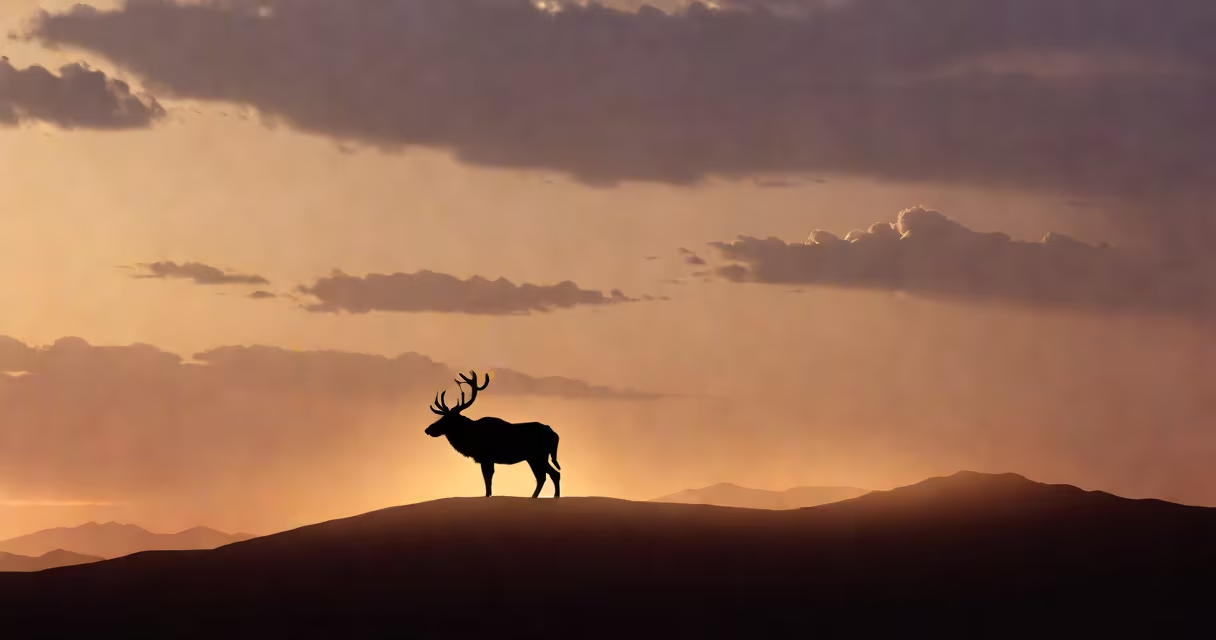
"Adapt or die" is a principle stating that organisms, organizations, or systems must change in response to environmental pressures or risk extinction. It reflects the core mechanism of natural selection and applies equally to evolutionary biology, business strategy, and societal transformation.
The phrase captures a fundamental reality: persistence requires adjustment. When conditions shift-climate change, resource scarcity, technological disruption-those unable to modify their behavior, structure, or form do not survive. This is not metaphorical; it is observable in fossil records, corporate histories, and cultural shifts.
Biological evolution provides the original context. Species that fail to adapt to new predators, altered habitats, or changing food sources disappear. The dodo's extinction illustrates this: it evolved in isolation on Mauritius without natural predators, then died out rapidly after humans introduced rats, cats, and dogs. It did not adapt quickly enough.
Adaptation occurs through variation, selection, and inheritance. Within a population, individuals differ slightly in traits. Some traits confer better survival in new environments. Those individuals live longer and reproduce more, passing advantageous traits to offspring. Over generations, the population changes.
For example, peppered moths in 19th-century England shifted from light-colored to dark-colored forms during the Industrial Revolution. Soot darkened tree bark, making light moths more visible to birds. Dark moths survived better and became dominant-a documented case of natural selection in action.
This process isn't conscious. Organisms don't "decide" to adapt. Instead, random mutations that improve fitness in a given environment spread through populations. The outcome is change driven by pressure-not intention.
Adaptation can be behavioral, physiological, or morphological. Behavioral changes involve learned or instinctive actions. Physiological changes affect internal processes. Morphological changes alter physical structure.
| Type | Definition | Example |
|---|---|---|
| Behavioral | Changes in action patterns to respond to new conditions | Beetles avoiding heat by burrowing during daytime in deserts |
| Physiological | Internal bodily adjustments | Humans producing more red blood cells at high altitudes |
| Morphological | Alterations in body shape or size | Finches evolving larger beaks during droughts to crack tough seeds |
Organizations face similar pressures. A company that fails to innovate in response to market shifts often collapses. Blockbuster's failure to adapt to streaming services led to bankruptcy in 2010. Netflix, which began as a DVD-by-mail service, evolved into a global content producer and platform. Its survival depended on recognizing changes in consumer habits and infrastructure.
Cultural systems also adapt. Indigenous groups in the Arctic have long adjusted hunting methods as sea ice patterns changed. Modern Inuit communities now combine traditional knowledge with satellite data and GPS to track safe travel routes-an adaptive fusion of old and new.
Many assume "adapt or die" implies constant struggle or inevitable collapse. That's incorrect. Adaptation is not always dramatic. It can be gradual, incremental, and even unnoticed until a crisis reveals its absence.
Another misconception is that adaptation equals improvement. Not all adaptations increase fitness. Some are neutral or even harmful in new contexts. For example, sickle cell trait offers resistance to malaria in tropical regions but causes severe health issues when inherited from both parents. It persists because the benefit outweighs the cost in certain environments.
Some confuse adaptation with evolution. Adaptation is a result of evolution, not synonymous with it. Evolution is the change in gene frequency over time. Adaptation is the process by which traits become better suited to an environment. A trait may be adaptive in one setting but maladaptive in another.
A key correction: adaptation doesn't require foresight. Populations don't plan for future threats. They respond to current pressures. The idea that species "anticipate" change is a myth. Natural selection acts on existing variation, not future needs.
Failure happens when change occurs too fast for genetic or cultural mechanisms to keep pace. Climate change is accelerating at a rate beyond most species' ability to adapt. Coral reefs bleach and die within months of temperature spikes, even though they've existed for millions of years. Their symbiotic algae cannot adjust quickly enough.
In human systems, failure often stems from institutional inertia. A 2020 study published in Nature Sustainability found that 68% of major corporations failed to implement meaningful climate adaptation strategies despite public warnings since the 1990s. Many delayed action due to short-term profit motives, leading to long-term vulnerability.
I once observed a small-town library in rural Oregon close after five decades. The community had relied on it for education and access to information. But as internet use rose, the library didn't shift to digital literacy programs or remote services. It remained focused on physical books. By the time leadership recognized the shift, funding and patronage had vanished. The institution couldn't adapt in time.
"Adapt or die" is not just about survival-it's about relevance. In a world of rapid technological change, demographic shifts, and ecological stress, the ability to adjust determines whether institutions endure.
Climate resilience planning, for instance, relies on this principle. Cities like Miami and Jakarta are redesigning infrastructure to handle rising sea levels. They're not waiting for disasters-they're adapting now. Miami's 2025 Climate Resilience Strategy includes elevated roads, improved drainage, and updated building codes based on projected flood zones.
On a personal level, career longevity depends on adaptability. Workers who update skills, embrace automation, and pivot between roles are more likely to remain employed. According to the World Economic Forum's 2023 Future of Jobs Report, 44% of workers' core skills will be disrupted by 2027. Those who adapt through continuous learning are less likely to face job loss.
Understanding "adapt or die" isn't about fear-it's about agency. Recognizing pressure early allows for proactive change. Delaying adaptation increases risk. The difference between survival and collapse often lies in timing, not ability.
Even in biology, not all species go extinct. Some adapt. Others don't. The ones that persist are those that changed when the environment changed. That's the enduring lesson of "adapt or die."