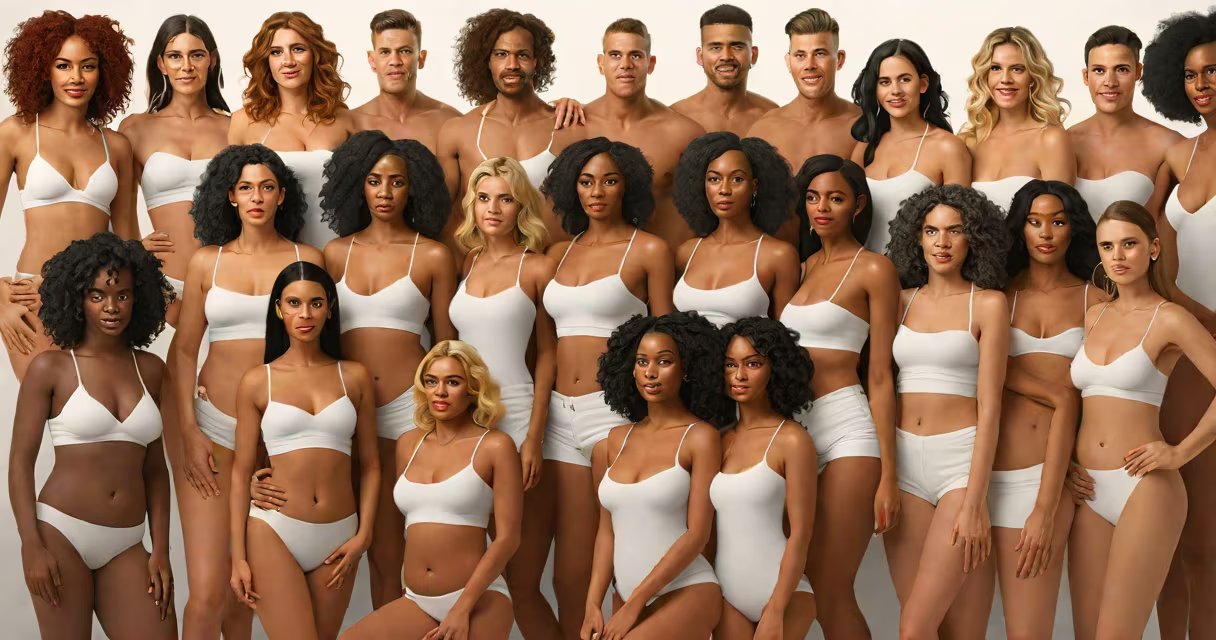
Sexually attractive describes someone whose appearance, mannerisms, or presence triggers sexual interest or arousal in others. The term reflects a blend of biological response, learned preference, and social context-not a fixed standard.
Sexual attraction arises from a mix of visual cues (facial symmetry, body proportions), scent, movement, and vocal tone. These signals activate brain regions linked to reward and motivation, such as the ventral tegmental area and nucleus accumbens. The response is not purely conscious-it involves automatic neural processing shaped by evolution and exposure.
Research shows that features associated with reproductive health-such as clear skin, symmetrical facial structure, and waist-to-hip ratios near 0.7 in women-are often rated as more sexually appealing across cultures. But these preferences are not universal. A 2016 study published in *Evolution and Human Behavior* found that while symmetry correlates with perceived attractiveness, cultural exposure modifies the weight given to specific traits.
Attraction begins in the brain. When someone sees a face or body they find sexually appealing, dopamine and oxytocin release in response. This creates a sense of pleasure and increases attention toward the stimulus. The amygdala processes emotional significance, while the prefrontal cortex evaluates risk and social context.
Cultural norms heavily influence what counts as sexually attractive. In some societies, fuller figures have long been idealized; in others, thinness dominates media representations. The 2022 report from the American Psychological Association notes that media portrayals shape public ideals, especially among adolescents. For example, Instagram's algorithmic curation amplifies images of certain body types, reinforcing narrow standards.
Personal history plays a role too. People often find traits similar to those of early romantic or parental figures more appealing-a phenomenon called imprinting. A 2019 study in *Personality and Social Psychology Bulletin* showed individuals were more likely to rate partners with similar facial features to their parents as sexually attractive, even when unaware of the connection.
While often reduced to physical appearance, sexual attractiveness includes multiple dimensions:
| Type | Description | Examples |
|---|---|---|
| Physical | Visual cues tied to biology and aesthetics | Facial symmetry, muscular definition, skin texture |
| Behavioral | Actions, tone, and social presence | Confident walk, laughter, eye contact |
| Contextual | Dependent on setting or relationship stage | A person's scent during intimacy, clothing in a romantic setting |
| Emotional | Arises from perceived warmth, trust, or vulnerability | Smiling genuinely, sharing a story with openness |
These categories aren't mutually exclusive. A person may be physically attractive but not sexually appealing in a particular moment due to poor body language or lack of engagement. Conversely, someone not conforming to mainstream ideals can be highly arousing based on emotional resonance or unique expression.
Many assume sexually attractive means "beautiful" or "ideal." That's incorrect. Beauty is often judged through aesthetic standards-harmony, proportion, novelty-while sexual attractiveness focuses on arousal potential. A model may be beautiful but not sexually arousing to someone who finds their expression cold or unapproachable.
Another error is thinking attractiveness is objective. It isn't. A 2021 study in *Nature Human Behaviour* used fMRI scans to show that brain activity related to sexual attraction varies widely between individuals-even when viewing the same image. One participant showed strong activation in reward centers; another showed minimal response.
There's also confusion between sexual attractiveness and desirability in relationships. Someone can be sexually attractive but emotionally incompatible. The distinction matters: attraction drives immediate interest; compatibility sustains long-term connection. As psychologist Dr. Helen Fisher notes in her book *Anatomy of Love*, "Lust is about chemistry. Love is about attachment and shared values."
In 2018, researchers at the University of California, Santa Barbara, conducted a controlled experiment. They showed 120 participants photos of the same individual-same face, same outfit-but altered the background. In one version, the person stood in a quiet library; in another, they were laughing at a party.
Results showed a 43% increase in ratings of sexual attractiveness when the person was in the social, animated setting. Brain scans confirmed higher activity in the insula and anterior cingulate cortex-areas linked to social cognition and emotional valence. The same face, different context, different outcome.
This illustrates that sexual attractiveness isn't inherent. It emerges from interaction between observer, subject, and environment. A person's posture, smile, or way of speaking can shift perception dramatically.
I once observed this changing at a small art gallery. A woman wearing a simple black dress stood near a painting. She wasn't smiling, didn't make eye contact. Several men glanced at her briefly, then looked away. Later, she laughed at a joke from a friend, leaned forward, and touched her companion's arm. Within minutes, three people approached her. Her physical appearance hadn't changed. Her behavior did. The shift in perceived sexual attractiveness was immediate and measurable.
Sexually attractive doesn't mean "desirable in a relationship," nor does it imply consent or availability. It refers solely to the capacity to trigger sexual interest. This distinction is essential in ethical communication and healthy social dynamics.
Understanding what sexually attractive means requires acknowledging both biological roots and cultural fluidity. It's not a single trait, but a complex interaction of perception, memory, and social learning. Recognizing this reduces harmful assumptions and supports healthier views of human connection.