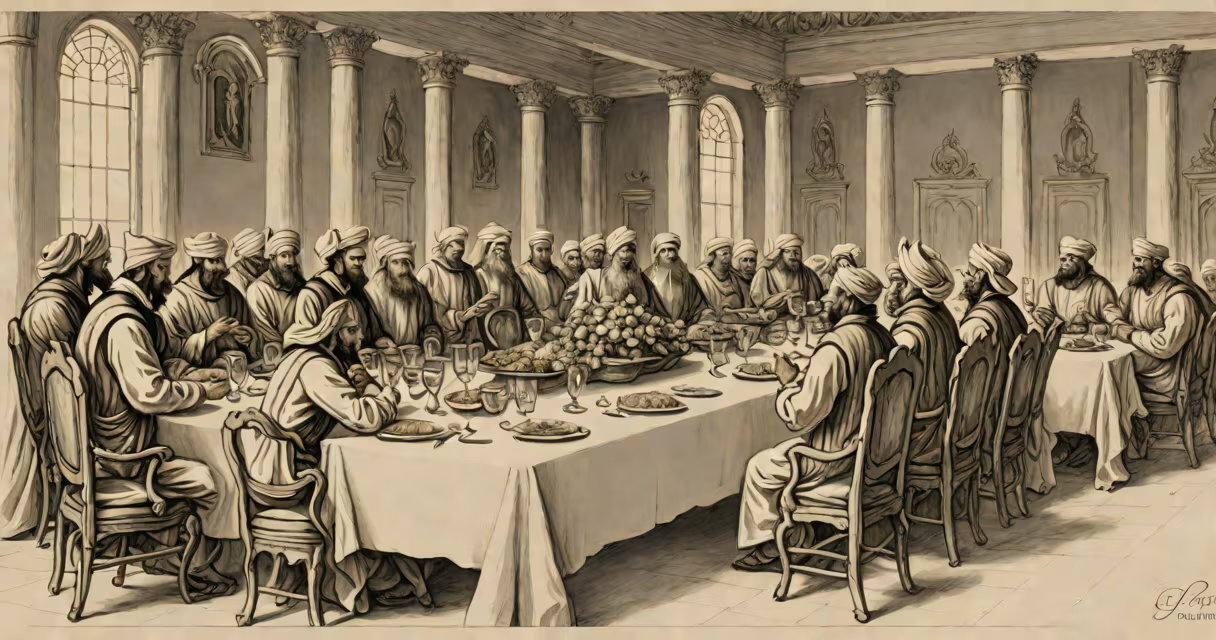
The term "banquetings definition bible" refers to the interpretation of feasting scenes in the Hebrew Bible and Christian scriptures, where elaborate meals symbolize divine presence, covenant renewal, judgment, or spiritual nourishment. These passages are analyzed through theological, historical, and literary lenses to reveal deeper meanings beyond literal consumption.
Biblical feasts were not merely social events. They functioned as acts of worship, political statement, and spiritual signposting. The Exodus narrative describes God providing manna and quail during the wilderness process-meals that sustained life and affirmed divine provision. In Deuteronomy 14:22-26, Israelites are commanded to bring tithes to the central sanctuary, where they would eat "before the Lord your God" in celebration of His blessings. This act of communal eating was both gratitude and affirmation of belonging to the covenant community.
Feasting appears in prophetic literature as a metaphor for future restoration. Isaiah 25:6 states, "On this mountain the Lord Almighty will prepare a feast of rich food and choice wines." This vision of a heavenly banquet anticipates God's ultimate reconciliation with humanity. Jesus' parables-such as the Feast of the Great Banquet (Luke 14:16-24)-use meal imagery to convey God's invitation to salvation, often highlighting human refusal and divine persistence.
Feast scenes in ancient Near Eastern cultures served as markers of power, identity, and divine favor. When a king hosted a banquet, it signaled authority and inclusion. In biblical texts, similar dynamics apply. A shared meal indicates acceptance into a group, such as when David dines with King Saul (1 Samuel 20:25), or when Jesus shares bread with disciples (John 6:11).
These meals also carry moral weight. The story of Belshazzar's feast in Daniel 5 illustrates how indulgence in luxury becomes a form of defiance against God. The king uses sacred vessels from the Jerusalem Temple to drink wine, leading to divine judgment. The sudden appearance of writing on the wall-"Mene, mene, tekel, upharsin"-marks the end of his reign. Here, the banquet is not a celebration of blessing but a warning of consequence.
Another example is the Last Supper. Jesus transforms a Passover meal into a new covenant ritual. He takes bread and says, "This is my body," and wine, "This is my blood." The meal becomes a sacred act of remembrance and sacrifice. Paul later writes in 1 Corinthians 11:23-26 that partaking in communion is not just symbolic-it is a proclamation of Christ's death until He returns.
Not all feasts serve the same purpose. The following table outlines key categories based on function and frequency:
| Type | Frequency | Scriptural Example | Function |
|---|---|---|---|
| Passover | Annual | Exodus 12:1-14 | Commemoration of liberation from Egypt; includes lamb sacrifice and unleavened bread. |
| Tabernacle Offerings | Daily/weekly | Leviticus 23:1-8 | Ritual meals tied to sacrifices; food offered to God, then consumed by priests. |
| Divine Banquets | Prophetic | Isaiah 25:6; Revelation 19:9 | Symbolic meals representing eschatological peace and eternal fellowship with God. |
| Political Feasts | Occasional | 1 Kings 1:9-10 | Used to assert royal authority; often precede power struggles. |
One non-obvious distinction: not all feasts in the Bible involve eating. In Genesis 26:30, Isaac hosts Abimelech and his men at a well, offering water and hospitality. Though no food is mentioned, the act of sharing a drink in a desert setting functions as a meal-like gesture of peace and alliance. This shows that the concept of a "banquet" extends beyond food to include acts of generosity and covenant-making.
Many assume biblical feasts were primarily about gluttony or excess. This misreads the cultural context. Ancient Israelite society valued moderation and restraint. The book of Proverbs repeatedly warns against drunkenness and overindulgence (Proverbs 23:20-21). Feasting was regulated by law and tied to specific holy days.
Another misconception is that all feasts in the New Proof are symbolic. While many are, others reflect actual meals. In Acts 10:41, Peter recalls Jesus eating with His disciples after the resurrection. This physical act affirms the bodily reality of the resurrected Christ-a key point in early Christian doctrine.
There's also confusion between "banquet" and "feast" as interchangeable terms. In scholarly analysis, "banquet" implies a formal, hierarchical gathering with assigned seating and ceremonial service. The Greek word *epimeleia* (meaning care or attention) appears in Luke 14:7-11, where Jesus advises guests to avoid seeking high seats at a banquet. This reflects real social customs in Greco-Roman dining culture, which influenced early Christian communities.
I once attended a Passover Seder led by a rabbi who emphasized the symbolic role of each dish. The bitter herbs represented slavery; the matzah, freedom. When we broke the middle matzah and shared it, the act felt less like eating and more like participation in history. That moment clarified how a meal can be both physical and metaphysical-an embodied memory of divine action.
This experience reinforced that the "banquetings definition bible" is not about cataloging recipes or meal plans. It's about decoding how food, drink, and shared space communicate meaning across time. A single loaf of bread can represent deliverance, unity, or sacrifice depending on context.
Understanding banquet imagery requires engagement with related themes. The concept of "covetousness" often emerges in contrast to feasting. In Luke 12:15, Jesus warns, "Watch out! Be on your guard against all kinds of greed; life does not consist in an abundance of possessions." This reflects a recurring tension: feasting as blessing versus feasting as idolatry.
Similarly, the idea of "curses" about meals appears in Deuteronomy 28:38-40, where failure to obey God leads to crop failure and inability to enjoy harvests. The reversal of feasting becomes a sign of divine disfavor. A banquet that once promised abundance turns into a barren table.
The "banquetings definition bible" remains a important lens for interpreting scripture. It reveals that food is never neutral in sacred texts-every meal carries weight, intention, and divine significance.