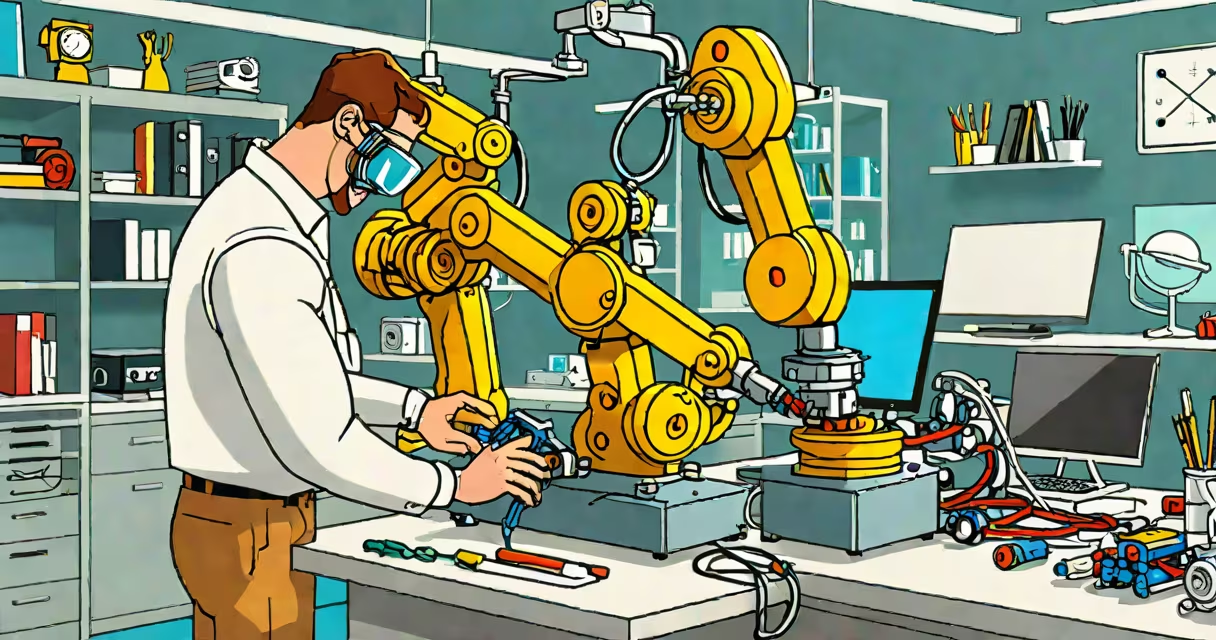
The best master degree for mechanical engineering depends on your career focus-mechatronics, robotics, sustainable systems, or advanced manufacturing. A targeted master's program enhances technical depth and job readiness in high-demand fields.
Master's programs in mechanical engineering build on undergraduate fundamentals with specialized coursework and research. These programs typically last 1.5 to 2 years and require a thesis, capstone project, or complete exam. Admission requires a bachelor's degree in mechanical engineering or a closely related field, along with GRE scores and letters of recommendation.
Programs differ in structure. Some emphasize theory and research-ideal for those pursuing doctoral study or roles in R&D. Others prioritize applied projects and industry collaboration-better suited for careers in product development, automation, or energy systems. The most effective choice aligns with your long-term professional goals.
Most master's programs in mechanical engineering follow a structured curriculum combining core courses, electives, and a culminating project. Core classes cover advanced mechanics, thermodynamics, fluid dynamics, and materials science. Electives allow specialization-such as control systems, finite element analysis, or additive manufacturing.
Projects often involve real-world challenges. For example, a student in a sustainable energy track might design a low-emission engine prototype using computational fluid dynamics software. Another in robotics may develop a control algorithm for a mobile manipulator arm, testing it on a physical platform in a lab setting.
Research-based programs require a thesis. Students work under faculty supervision to investigate a narrow problem-like optimizing heat transfer in microfluidic devices. These programs prepare graduates for roles in innovation labs or academia. Coursework-only tracks offer flexibility for professionals returning to school while employed.
Not all master's degrees in mechanical engineering are equal. The right specialization impacts career trajectory. Below are common tracks and their applications:
| Specialization | Focus Areas | Industry Demand | Example Project |
|---|---|---|---|
| Mechatronics | Control systems, sensors, embedded programming | High-automotive, medical devices, industrial automation | Designing a smart prosthetic limb with real-time feedback |
| Road Vehicle Systems | Powertrain efficiency, lightweight materials, ADAS | High-automotive OEMs, EV startups | Simulating fuel economy gains from aerodynamic body redesign |
| Sustainable Energy Systems | Renewable integration, thermal storage, lifecycle analysis | Growing-utilities, green tech firms | Modeling solar-wind hybrid power systems for remote communities |
| Advanced Manufacturing | Additive manufacturing, CNC optimization, quality control | Strong-defense contractors, aerospace suppliers | Optimizing 3D-printed turbine blade geometry for stress reduction |
Choosing a specialization isn't about popularity-it's about alignment. A student aiming for a role in autonomous vehicle development should prioritize mechatronics or vehicle dynamics over general thermal systems.
Some programs offer dual-degree options. For example, a joint MS in Mechanical Engineering and MBA allows engineers to lead product teams or launch startups. These combinations are increasingly common at institutions like MIT and Stanford.
Graduate degrees in mechanical engineering are essential for roles requiring advanced problem-solving. According to the U.S. Bureau of Labor Statistics, mechanical engineers with master's degrees earn 15% more on average than those with only a bachelor's degree.
Industries such as aerospace, automotive, and renewable energy rely heavily on master's-trained engineers. At General Electric, engineers with advanced degrees lead turbine efficiency improvements. At Tesla, mechanical engineers with expertise in battery thermal management contribute directly to vehicle safety and range.
A key distinction often missed: not all master's programs are created equal. A program with strong industry partnerships-like the University of Michigan's Mechanical Engineering program, which collaborates with Ford and Boeing-offers better access to internships and job placements than one with limited external engagement.
One non-obvious fact: many employers don't require a master's degree for entry-level positions. But they do expect candidates to demonstrate applied skills. A master's program that includes hands-on work with industry partners gives graduates a competitive edge-even if the degree itself isn't mandatory.
Many assume that a master's in mechanical engineering is only for academic careers. This is incorrect. Over 60% of mechanical engineering master's graduates enter industry roles within six months of graduation, according to a 2023 survey by the American Society of Mechanical Engineers (ASME).
Another misconception: all master's programs are the same. They're not. A program focused on computational modeling may lack lab facilities needed for experimental validation. Always review course offerings, faculty research areas, and facility access before applying.
One personal observation: during my time at a regional university, I saw students from a traditional mechanical engineering program struggle to land jobs in robotics because their curriculum lacked programming and sensor integration. A peer who transferred to a mechatronics-focused program secured a position at a drone manufacturer within weeks of graduation.
Also, online programs aren't inherently less rigorous. The best online mechanical engineering masters maintain the same accreditation standards and faculty credentials as on-campus versions. However, success depends on self-discipline and access to simulation tools or lab kits.
The best master degree for mechanical engineering is not a single option-it's a match between your interests, career path, and program strengths. If you aim to innovate in electric vehicles, pursue a track in road vehicle systems. For roles in medical device development, choose mechatronics or biomechanics.
Consider location, funding, and internship access. Programs at public universities like Penn State or UC Berkeley offer lower tuition and strong state-funded research grants. Private institutions like Georgia Tech or Caltech often have deeper industry ties and higher placement rates in elite firms.
The best master degree for mechanical engineering is the one that advances your specific goals-not the most prestigious name. Evaluate programs based on outcomes, not reputation alone.