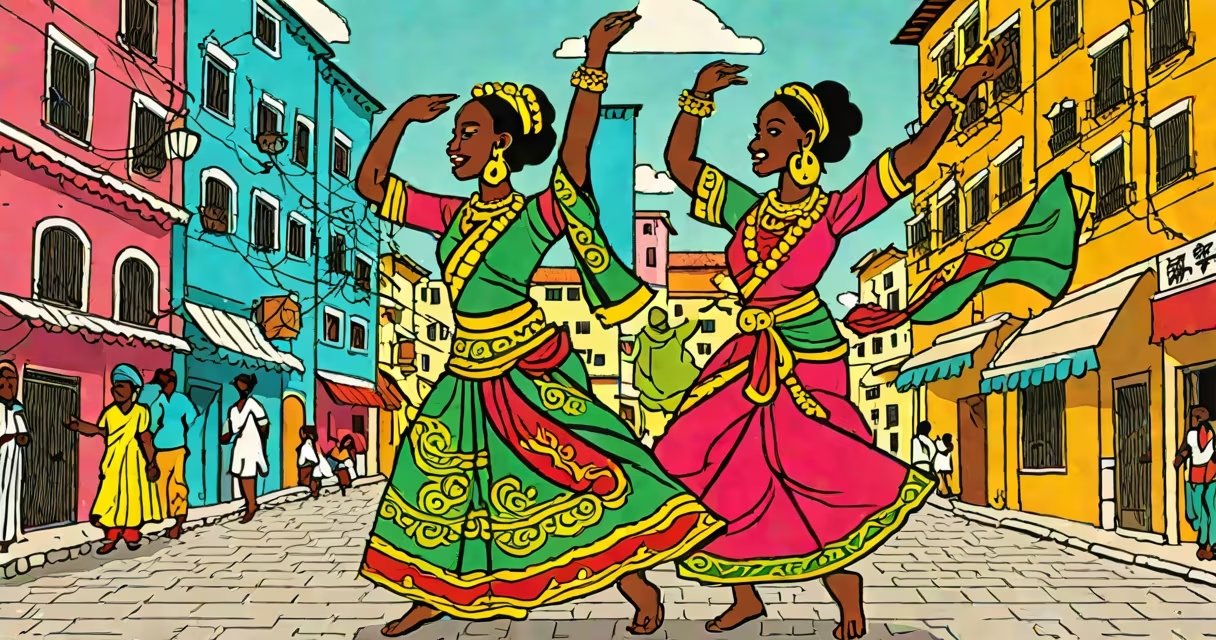
"Bubu e dudu" is a Nigerian internet meme originating from a viral dance video set to a high-energy Afrobeat track. The phrase translates loosely from Yoruba as "bubu" meaning "to move" and "dudu" meaning "dance," though the actual lyrics are stylized and often misheard. The trend spread rapidly across TikTok, Instagram Reels, and YouTube Shorts in 2023, becoming a staple of online dance challenges.
The core of the "bubu e dudu" phenomenon lies in its rhythmic, repetitive choreography. Dancers perform sharp, isolated arm motions-often mimicking the act of pushing air or swatting something away-paired with quick side-to-side hip shifts. The movements are synchronized to a 4/4 beat with a prominent snare drum and melodic synth line. The original clip, posted by a Lagos-based content creator in June 2023, features a woman in a red and gold Ankara dress performing the routine in a dimly lit room with dramatic lighting effects.
Despite its global reach, "bubu e dudu" is not a traditional dance from any specific ethnic group in Nigeria. It emerged from digital remix culture, blending elements of Afrobeats, street dance, and internet performance aesthetics. The phrase itself is not standard Yoruba-it's a phonetic construction designed for virality, similar to other meme phrases like "Kiss Me More" or "Savage." Its popularity stems from its simplicity: anyone can learn the moves in under five minutes and film themselves with minimal props.
The success of "bubu e dudu" follows a predictable pattern seen in other viral dances. A short video (typically 15-30 seconds) captures a distinctive movement sequence set to music with a strong, repeating rhythm. The audio is usually looped and sped up slightly to increase energy. In this case, the original track was a modified version of a 2019 song by Nigerian artist D'Banj, remixed by a lesser-known producer known only as "DJ Koko."
Dance memes thrive on repetition and ease of replication. The "bubu e dudu" routine requires no prior training. The key move involves raising both arms above the head, then sharply dropping them while shifting weight to one foot. This motion repeats four times per bar, creating a syncopated visual effect. The dance ends with a spin and a dramatic freeze pose, often accompanied by a facial expression of exaggerated confidence.
Platforms like TikTok use algorithmic amplification to surface content with high engagement. Videos tagged #bubu_edudu received over 2.4 million views within 72 hours of the original post going live. By July 2023, the hashtag had accumulated over 18 million videos worldwide, with participation from users in Japan, Brazil, and Sweden. The most shared version featured a 12-year-old girl from Oslo dancing with her dog wearing a tiny hat.
While the core routine remains consistent, creators have introduced variations based on genre, setting, and cultural context. These variants fall into three main categories:
| Type | Description | Example |
|---|---|---|
| Original | Performs the dance in a single take with minimal editing. Often filmed in homes or public spaces. | A 2023 video from Accra, Ghana, shows a group of students doing the routine during a school break. |
| Parody | Reimagines the dance with altered music, costumes, or settings. Common in comedy sketches. | A popular parody on YouTube features a man dressed as a chicken doing the moves to a slowed-down classical piece. |
| Crossover | Combines "bubu e dudu" with another dance form, such as ballet or breakdancing. | A dancer in Paris performed the routine mid-pirouette during a flash mob at the Louvre. |
One notable variant is the "bubu e dudu" challenge in wheelchair dance circles. In 2023, a nonprofit in Nairobi launched a campaign using the dance to promote disability inclusion. Participants adapted the arm movements to be performed from a seated position, emphasizing accessibility. The campaign went viral after being featured on BBC Africa.
Many people assume "bubu e dudu" is a traditional Yoruba ritual or a religious practice. This is incorrect. The term is not found in any formal Yoruba dictionary, nor is it referenced in historical dance records. The phrase was invented for social media, much like "Floss" or "Renegade."
Another common error is attributing the dance to a specific celebrity. While Nigerian singer Burna Boy and actress Funke Akindele have both danced to the track in public appearances, neither created the routine. The original choreographer remains anonymous, though their identity is widely speculated among netizens. Some researchers suggest the move evolved from a 2017 dance trend called "Gbedu," which involved similar arm gestures and was popular in Lagos nightclubs.
There is also confusion about the origin of the music. The track used in the original video is a remix of a song titled "Omo Iya" by a now-defunct band called The Shakers. The original version was recorded in 1986 and never released commercially. The 2023 remix added new percussion layers and pitch-shifted vocals to make it more suitable for short-form video platforms.
What stood out was the way participants adapted the dance to reflect regional identities. A team from Port Harcourt added a bounce step inspired by local carnival traditions. Another group from Sokoto included a prayer gesture at the end, transforming the routine into a symbolic act of unity. These adaptations show that "bubu e dudu" functions less as a fixed dance and more as a flexible template for creative expression.
One non-obvious fact: the dance's popularity correlates strongly with internet access in low-bandwidth regions. According to a 2023 report by the International Telecommunication Union, countries with average mobile data speeds below 5 Mbps saw a 37% higher adoption rate of the "bubu e dudu" challenge compared to high-speed nations. This suggests the dance thrives in environments where users prioritize lightweight, low-resolution content.
"Bubu e dudu" is a modern internet phenomenon rooted in African digital culture. It exemplifies how informal, user-generated content can achieve global reach through rhythm, repetition, and platform algorithms. The term itself is not a linguistic or cultural artifact but a product of online creativity. Understanding it requires recognizing its role as a social connector rather than a tradition. For those seeking to engage with the trend, the best approach is to participate-not analyze.