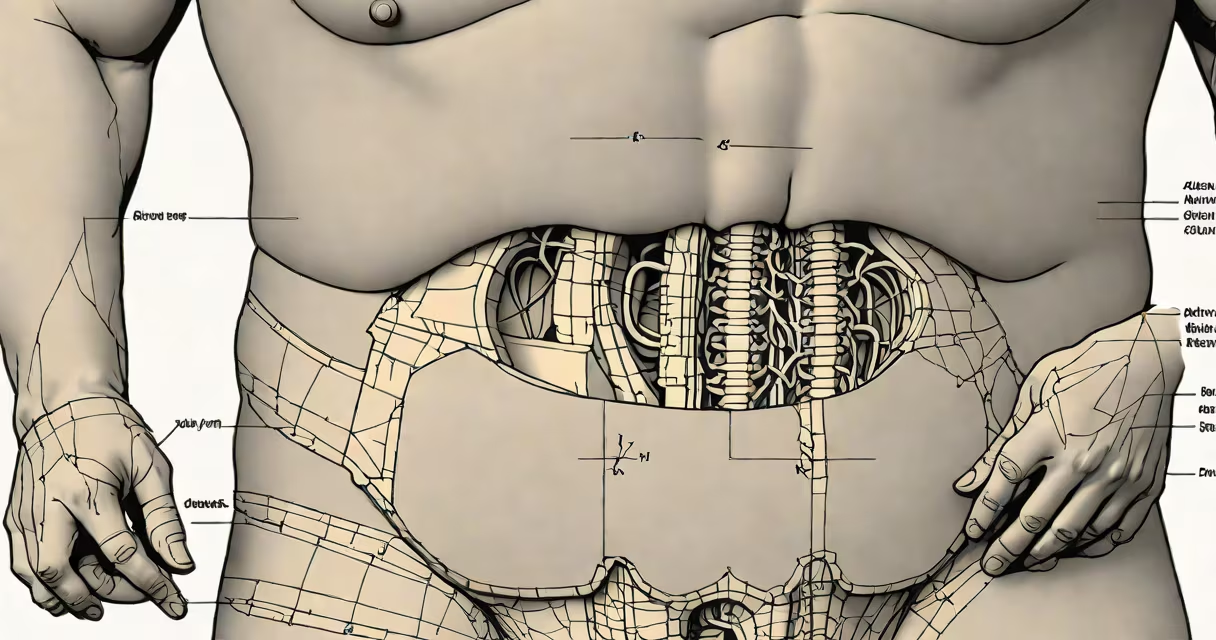
A bulge in the center abdomen-typically just above or below the navel-is often caused by a ventral hernia or diastasis recti, conditions involving weakened abdominal wall tissue. This bulge may appear during straining, standing, or lying down and can grow larger over time.
Ventral hernias occur when internal tissues push through a gap in the abdominal muscles. The most common site is the midline, particularly around the umbilicus (navel), due to natural anatomical weaknesses. Diastasis recti, meanwhile, involves separation of the rectus abdominis muscles-common after pregnancy or heavy lifting-but does not involve organ protrusion.
According to the American College of Surgeons, approximately 20% of people who undergo abdominal surgery develop a ventral hernia at the incision site. A study published in Annals of Surgery found that 6% of adults have an asymptomatic ventral hernia detected incidentally on imaging, highlighting how often these issues go unnoticed until they progress.
The abdominal wall consists of multiple layers: skin, subcutaneous fat, fascia, and muscle. When the connective tissue (fascia) weakens-due to aging, prior surgery, obesity, or chronic coughing-it can no longer contain the intra-abdominal contents. Pressure builds, and organs such as the omentum or part of the intestine may push through, forming a visible bulge.
Most bulges appear during activities that increase abdominal pressure: lifting, bending, sneezing, or even prolonged standing. They often reduce or disappear when lying down, which is a key diagnostic clue. However, persistent bulges that don't retract require evaluation.
For example, a 42-year-old woman reported a small lump near her belly button that appeared after childbirth. She noticed it only when standing and pushing a stroller. Over six months, it grew larger and began causing dull pain. An ultrasound confirmed a 2.5 cm umbilical hernia. Surgical repair was recommended due to risk of incarceration.
Not all central bulges are the same. The following table outlines key differences:
| Type | Origin | Common Symptoms | Typical Age Group |
|---|---|---|---|
| Ventral hernia | Weakened fascia, often post-surgical | Bulge that changes size, pain with strain, possible nausea if trapped | 30-60 years |
| Diastasis recti | Separation of rectus muscles, often postpartum | Soft, compressible bulge; no pain unless strained | Women post-pregnancy, men with heavy lifting history |
| Epigastric hernia | Small defect between sternum and navel | Small, firm lump; may be tender | 20-40 years |
Epigastric hernias are smaller and less likely to cause complications. They typically involve fatty tissue rather than bowel and rarely require surgery unless symptomatic.
One non-obvious distinction: diastasis recti does not involve a true hernia. It's a muscular separation, not a hole in the fascia. This means it doesn't carry the same risk of organ strangulation. However, it can lead to poor core stability and lower back pain.
Any new or growing bulge in the center abdomen should be evaluated by a healthcare provider. Delaying care increases the risk of incarceration-where tissue becomes trapped and blood flow cuts off. This is a surgical emergency.
Red flags include pain that worsens with activity, inability to push the bulge back in, nausea, vomiting, or discoloration of the skin over the bulge. These signs suggest obstruction or ischemia.
I once observed a patient in a clinic who had ignored a small umbilical bulge for five years. He reported occasional discomfort but no pain. During a routine visit, the bulge became irreducible and turned purple. Emergency surgery revealed a strangulated hernia with necrotic bowel. He required bowel resection and a temporary colostomy. Early intervention could have prevented this outcome.
Many assume a bulge center abdomen is harmless or just "loose skin." This is incorrect. Even small hernias can progress. The National Hernia Foundation reports that 10% of untreated ventral hernias result in incarceration within two years.
Another myth: "I'm too young for a hernia." While hernias are more common in older adults, they can affect anyone. A 2020 study in Journal of the American College of Surgeons found that 12% of patients under 35 diagnosed with ventral hernias had no prior surgery or trauma.
Also, many confuse a bulge with bloating. Bloating causes generalized swelling, not a discrete, localized mass. A true bulge remains in place when lying down and may be palpable.
Doctors diagnose a bulge center abdomen through physical exam and imaging. Ultrasound is often used first due to low cost and availability. CT scans may be needed if the diagnosis is unclear or if surgery is planned.
Treatment depends on size, symptoms, and risk. Small, asymptomatic hernias may be monitored. Larger or painful ones usually require surgical repair using mesh to reinforce the abdominal wall.
Recovery times vary. Open surgery takes about 4-6 weeks for return to normal activity. Laparoscopic repair allows faster recovery-often 2-3 weeks-but requires specialized training.
If you notice a bulge in your center abdomen, consult a surgeon or primary care provider. Do not wait for pain to start. Early assessment prevents complications.