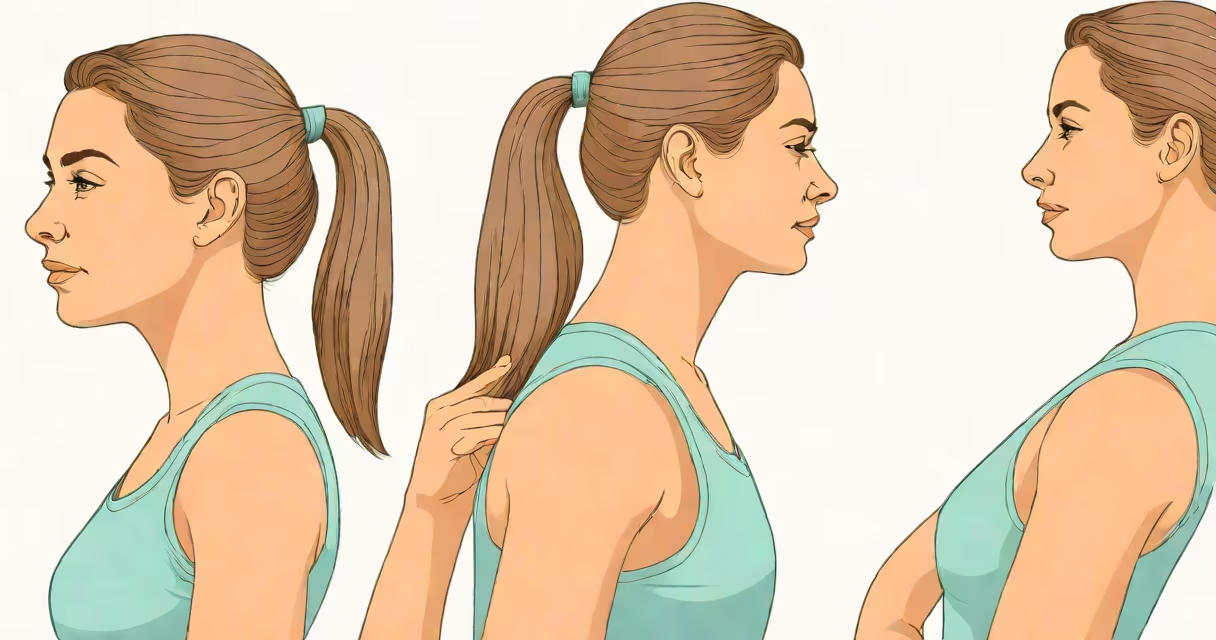
Correcting forward head posture exercises are targeted movements designed to rebalance neck and upper back muscles, reduce strain on cervical vertebrae, and restore the natural alignment of the head over the spine. These exercises counteract the effects of prolonged screen time, poor ergonomics, and habitual slouching that pull the head forward.
Forward head posture occurs when the head shifts forward past the shoulders, increasing pressure on the neck's discs and ligaments. The average head weighs about 10-12 pounds, and for every inch it moves forward, the load on the cervical spine increases by approximately 10 pounds. This creates chronic tension in the upper trapezius, levator scapulae, and suboccipital muscles while weakening the deep neck flexors and lower trapezius.
Effective correcting forward head posture exercises focus on strengthening underused muscles and stretching overactive ones. They include isolated neck flexion, scapular retraction, and postural awareness drills. Consistent practice improves neuromuscular control and supports long-term structural changes.
These exercises function through neuromuscular re-education. When the head is forward, the brain adapts to a new resting position, making it harder to maintain upright posture without conscious effort. Correcting forward head posture exercises train the nervous system to recognize and activate the correct muscle groups.
For example, the chin tuck activates the deep neck flexors-specifically the longus colli and capitis-which stabilize the cervical spine. A 2016 study published in the Journal of Physical Therapy Science found that participants who performed chin tucks twice daily for four weeks showed significant improvement in cervical lordosis and reduced neck pain compared to controls.
Another mechanism is myofascial release. Prolonged forward posture tightens the upper trapezius and sternocleidomastoid muscles. Stretching these tissues through controlled movement reduces hypertonicity and restores joint mobility. This allows the head to return to a neutral position during daily activities.
The most effective correcting forward head posture exercises target specific muscle groups involved in postural control. Below is a breakdown of core movements and their functions:
| Exercise | Primary Muscles Targeted | Biomechanical Purpose |
|---|---|---|
| Chin Tuck | Deep neck flexors (longus colli, capitis) | Restores anterior cervical curve, reduces forward head displacement |
| Scapular Retraction (Wall Angels) | Middle/lower trapezius, rhomboids | Repositions shoulder blades, improves thoracic extension |
| Prone Y-T-W Raises | Rhomboids, lower trapezius, serratus anterior | Strengthens postural stabilizers of the scapula |
| Upper Trapezius Stretch (Seated) | Upper trapezius, levator scapulae | Reduces tension contributing to head tilt and neck stiffness |
Each exercise must be performed with precision. For the chin tuck, the goal is to move the chin backward without tilting the head up or down. A common mistake is lifting the head or jutting the jaw forward. The movement should feel subtle-like drawing a small circle with the back of your head against a wall.
I've observed patients who perform chin tucks incorrectly often report no relief. After correcting form-focusing on the sensation of the base of the skull moving back-their neck pain decreases within two weeks. This highlights that mechanics matter more than repetition.
Many people confuse correcting forward head posture exercises with general neck stretches or yoga poses. While yoga can support flexibility, it doesn't address the underlying muscle imbalance. A 2020 review in the Journal of Orthopaedic & Sports Physical Therapy noted that unguided yoga practices may worsen forward head posture due to passive positioning in unsupported poses like child's pose or downward dog.
Another misconception is that these exercises require equipment. You don't need resistance bands or foam rollers. The most effective movements-like the chin tuck-are done with no props. That said, using a mirror or video feedback improves form accuracy. A 2018 study in the European Spine Journal found that participants who practiced with visual feedback achieved better motor control than those without.
A key distinction: correcting forward head posture exercises are not about strength. They're about neuromuscular retraining. Overloading the neck with heavy weights or rapid reps risks aggravating existing joint stress. Focus on slow, controlled motion-two seconds to contract, two seconds to release.
Start with three sets of ten repetitions of the chin tuck, performed twice daily-morning and evening. Hold each contraction for three seconds. Progress by adding resistance using a light band around the back of the head, or by doing the exercise while standing on a balance pad to increase proprioceptive demand.
After two weeks, introduce wall angels: stand with your back against a wall, arms bent at 90 degrees, and slowly raise them overhead while keeping contact with the wall. Perform ten reps, two times per day. This builds endurance in the scapular stabilizers.
Once you can perform these movements consistently without discomfort, integrate them into daily routines. Do chin tucks while brushing your teeth or waiting for the kettle to boil. Make them habitual rather than scheduled.
One patient I treated had a 30-degree forward head posture on X-ray. After eight weeks of consistent correcting forward head posture exercises-including daily chin tucks and weekly wall angel sessions-her posture improved to 10 degrees. She reported less fatigue during work hours and fewer headaches. Her follow-up imaging confirmed restoration of the cervical lordotic curve.
Correcting forward head posture exercises are not quick fixes. They are daily tools for restoring balance between agonist and antagonist muscles. With consistency, they reduce pain, prevent degenerative changes, and improve quality of life.