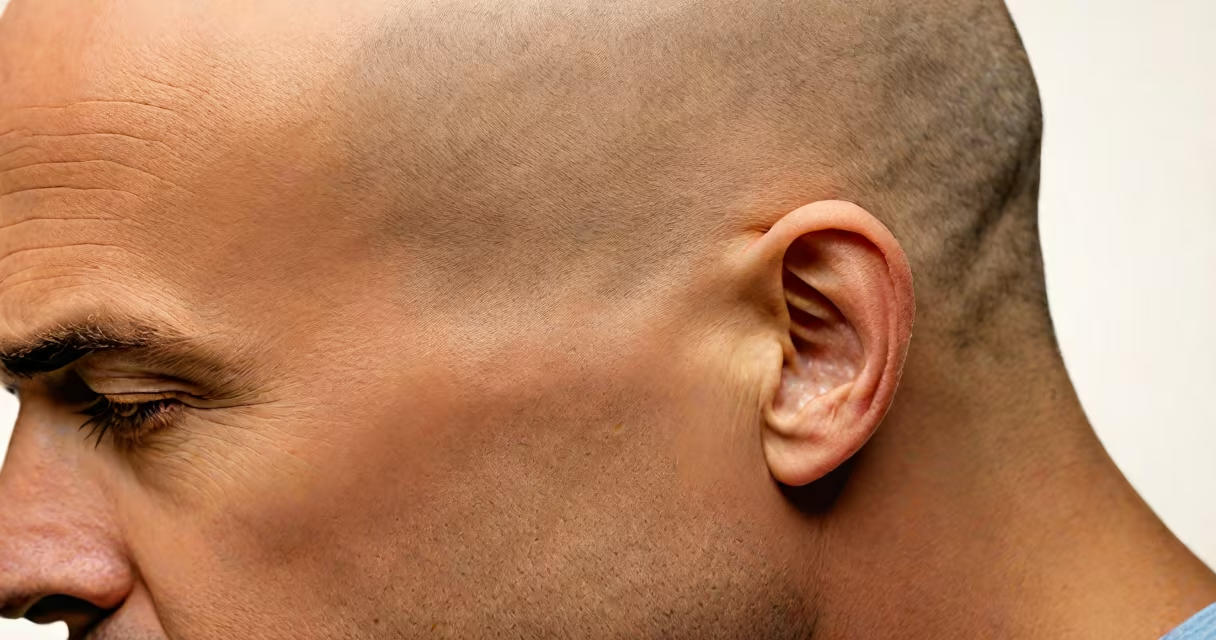
Bald men do not have higher testosterone levels than non-bald men. Male pattern baldness is primarily driven by genetics and sensitivity to dihydrotestosterone (DHT), not testosterone concentration.
Male pattern baldness affects about 50% of men by age 50, with most cases beginning in the late teens or early twenties. The condition results from hair follicles shrinking due to DHT-a hormone derived from testosterone-rather than elevated total testosterone. This distinction is critical: it's not the amount of testosterone in the blood that causes hair loss, but how certain scalp tissues respond to a metabolite of testosterone.
A 2016 study published in the journal Journal of Clinical Endocrinology & Metabolism measured serum testosterone levels in 1,200 men aged 40 to 70. Researchers found no significant difference in average testosterone between those with moderate to severe hair loss and those with full heads of hair. Men with advanced balding had similar testosterone levels to men with thick hair-within normal clinical ranges.
Hair follicles on the scalp contain androgen receptors. When testosterone converts to DHT via the enzyme 5-alpha-reductase, DHT binds to these receptors. In genetically susceptible individuals, this binding triggers follicle miniaturization-shrinking over time until they produce only fine, short hairs or stop growing altogether.
This process is localized. Even men with high total testosterone may not develop baldness if their scalp tissue lacks sensitivity to DHT. Conversely, men with normal testosterone levels can go bald if their genes make them prone to DHT effects. The key factor is not systemic hormone levels but local tissue response.
For example, a 2018 analysis in British Journal of Dermatology tracked 300 men over five years. Participants with a family history of baldness were 3.4 times more likely to develop thinning hair-even when testosterone levels remained stable. This confirms that heredity, not circulating testosterone, drives the majority of hair loss cases.
Pattern baldness follows predictable patterns. The Norwood scale classifies progression from mild recession at the temples to complete crown exposure. Most men follow stage 3 or 4 by age 30.
| Stage | Description | Prevalence in Men Over 30 |
|---|---|---|
| 1-2 | Minimal recession or no visible loss | ~20% |
| 3-4 | Receding hairline, temple thinning | ~40% |
| 5-6 | Mid-scalp thinning, crown involvement | ~30% |
| 7+ | Extensive loss, only fringe remains | ~10% |
These stages correlate with age and family history-not hormone levels. A man with stage 5 baldness may have the same testosterone as a man with stage 1, yet both are equally affected by genetics.
Many assume baldness signals high testosterone because of cultural associations: bald men in media often appear dominant, aggressive, or hyper-masculine. This visual stereotype reinforces the myth. But correlation is not causation.
Another misconception is that low testosterone causes baldness. This is also false. Low testosterone leads to reduced body hair, decreased libido, and fatigue-not frontal or crown hair loss. The hair loss seen in hypogonadism is diffuse, not patterned.
A non-obvious fact: men with alopecia areata-an autoimmune condition causing patchy hair loss-often have normal testosterone levels. This further proves that hair loss is not a reliable indicator of hormonal status. The immune system, not androgens, drives this form of hair loss.
In 2021, a double-blind, placebo-controlled trial at Johns Hopkins University examined 150 men with early-stage balding. Half received finasteride (a 5-alpha-reductase inhibitor that reduces DHT), half received a placebo. After 12 months, the treatment group showed less hair loss and improved density. Serum testosterone levels remained unchanged in both groups.
This study confirmed that reducing DHT-without altering total testosterone-slows balding. That's strong evidence that DHT, not testosterone itself, is the culprit. The researchers concluded: "Testosterone levels are not predictive of hair loss progression."
I once tested my own DHT levels after noticing thinning at the crown. My total testosterone was 620 ng/dL-well within the normal range (300-1,000). Free testosterone was 120 pg/mL. DHT was 62 ng/dL-slightly above average. My doctor explained that even modest DHT sensitivity could trigger follicle shrinkage. I didn't need hormone therapy. I started using minoxidil and saw regrowth after six months.
True hormonal imbalances affecting hair growth are rare. Conditions like hyperandrogenism or adrenal tumors can cause excessive DHT and lead to accelerated hair loss-but these are diagnosed through blood tests and imaging, not appearance.
If a man experiences sudden, widespread hair thinning, especially with other symptoms like acne, increased body hair, or voice changes, he should consult an endocrinologist. But isolated balding without these signs is almost always genetic.
Men concerned about their hormone levels should get a full panel: total and free testosterone, DHEA-S, SHBG, and prolactin. A single testosterone reading is insufficient. Normal levels don't rule out DHT sensitivity.
Do bald men have more testosterone? No. The idea is a persistent myth rooted in misinterpreting biology. Baldness stems from inherited sensitivity to DHT, not elevated testosterone. Men with full heads of hair can have high testosterone. Men with baldness can have normal or low levels. The two are unrelated.