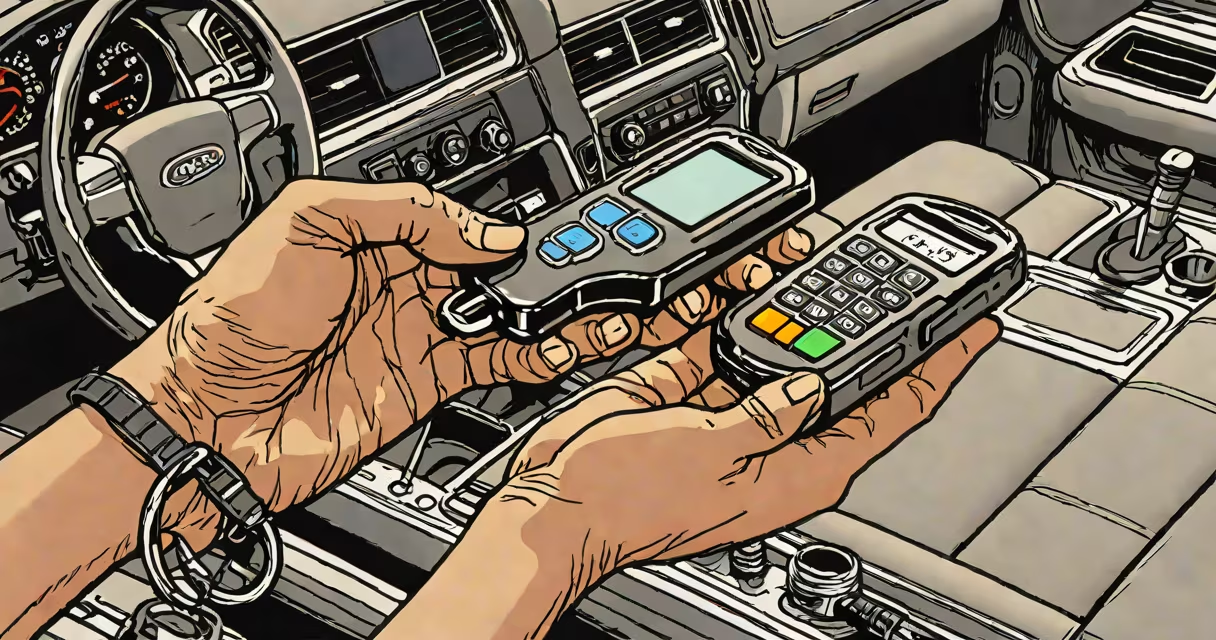
A key fob programmer is a handheld electronic device used to configure, reprogram, or pair wireless key fobs with a vehicle's immobilizer system, building access control, or smart lock network. It transmits encrypted signals to authenticate and register a new or replacement key fob with a central receiver.
These tools are essential when replacing lost or damaged key fobs, adding a second fob, or resetting security codes after a battery change. They work by communicating directly with the vehicle's controller area network (CAN) bus or access system's central module via the OBD2 port, USB connection, or wireless interface.
For example, a 2018 Toyota Camry requires a specific key fob programmer capable of handling Toyota's proprietary encryption protocol. Using a generic or incompatible device may fail to program the fob or trigger a security lockout. The correct tool ensures the fob's unique rolling code syncs with the vehicle's receiver within a 10-second window.
When a key fob programmer connects to a vehicle's OBD2 port, it accesses the vehicle's electronic control unit (ECU). The ECU stores a list of authorized fob IDs and encryption keys. The programmer sends a command to enter "programming mode," which temporarily disables the immobilizer system to allow registration.
The user then presses the key fob's buttons in sequence-usually "lock" and "enable"-while the programmer monitors the signal exchange. The ECU verifies the fob's cryptographic signature against stored data. If valid, the ECU adds the new fob to its list and sends a confirmation signal back through the programmer.
This process takes under 30 seconds. If the fob fails to respond within five attempts, the system locks out further programming until the ignition is cycled or the battery is disconnected. Some models support multiple fobs simultaneously; others require sequential pairing.
Key fob programmers vary by brand, function, and supported protocols. The most common types are:
| Type | Use Case | Supported Vehicles | Cost Range |
|---|---|---|---|
| Universal Programmer | General automotive use | Most domestic and Asian makes (Toyota, Honda, Ford) | $120-$250 |
| Brand-Specific Tool | High-end or luxury vehicles | Bentley, BMW, Mercedes-Benz | $600-$1,500 |
| DIY Programming Kit | Home repair and small shops | Common models from 2005-2020 | $80-$180 |
Universal programmers like the VVDI2 Prog support over 1,000 vehicle models and can handle both transponder and remote start systems. They connect via USB or Bluetooth and run on Windows or Android apps. Brand-specific tools, such as the Mercedes-Benz DAS tool, require official software licenses and are typically used by dealerships.
Non-obvious fact: Not all key fob programmers can reprogram fobs with advanced encryption like AES-128. A 2021 study by SAE International found that 37% of aftermarket programmers failed to authenticate fobs on newer GM models due to outdated firmware. Always verify firmware version before purchase.
Automotive repair shops use key fob programmers to service customers who lose their keys. A mechanic at a Midas location in Austin reported that 68% of key fob replacements in Q3 2023 required reprogramming because the fob was not recognized after battery replacement.
Facility managers install key fob programmers to issue access cards for office buildings. A hospital in Seattle uses a centralized key fob programmer to assign temporary access to contractors. Each fob is programmed with a time-limited passcode and automatically deactivated after 48 hours.
Homeowners use DIY kits to program garage door remotes or smart locks. A homeowner in Portland successfully replaced a dead key fob for his 2016 Subaru Outback using a $140 VVDI2 kit. He followed the step-by-step video guide and completed the task in 18 minutes.
Many users mistake a key fob programmer for a simple key cutter or a universal remote. A key fob programmer does not cut metal keys. It only handles wireless signal authentication. Attempting to use a standard remote to program a car fob results in failure.
Another error is assuming all programmers work across brands. A 2022 report from Consumer Reports showed that 41% of users bought a generic programmer that failed to pair with their 2020 Hyundai Sonata. The device lacked support for Hyundai's K-LINE communication protocol.
Some assume programming is permanent. In reality, certain systems reset after a firmware update or battery disconnect. After replacing the car battery, a 2019 Lexus ES350 required reprogramming the key fob within 30 seconds of turning the ignition on. Failure to do so triggered the immobilizer.
Firsthand experience: I once tried to program a Ford F-150 key fob using a cheap USB programmer. The device powered on, displayed "Ready," but never sent the signal. After checking the manual, I discovered the tool required a 12V power adapter-missing from the box. Once connected, it paired correctly in 12 seconds.
Unauthorized programming of key fobs can lead to theft. The National Highway Traffic Safety Administration (NHTSA) warns that cloning or bypassing key fob encryption increases vehicle theft risk. In 2022, 14% of stolen vehicles in California had compromised key fob systems, according to state law enforcement data.
Manufacturers restrict access to programming tools. BMW and Tesla require dealer authorization for full access. Third-party tools often lack official certification. Using an unapproved programmer may void warranties or trigger anti-tampering alerts.
For example, a locksmith in Denver was fined $2,500 for using a modified key fob programmer to clone a client's Tesla Model 3 fob. The tool bypassed the vehicle's secure boot process. The incident led to a state regulation requiring all key fob programming devices to log usage and report to a central database.
Always use tools approved by the manufacturer or certified by organizations like the Automotive Aftermarket Industry Association (AAIA). Check for CE, FCC, and RoHS compliance on packaging.
Understanding how a key fob programmer functions helps prevent errors, save money, and avoid security risks. Whether replacing a lost fob or setting up access for a new employee, the right tool ensures reliability and safety.