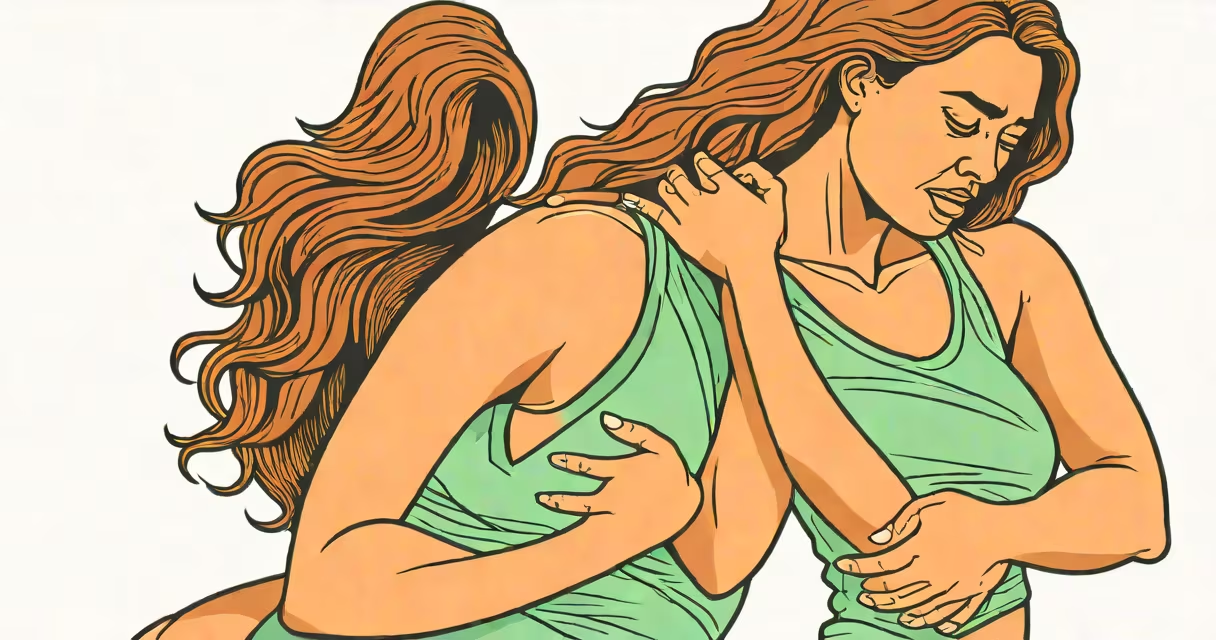
Gallbladder pain can feel similar to a pulled muscle in the right upper abdomen, especially when sharp or cramping, but it typically occurs after eating fatty meals and may radiate to the shoulder blade. Unlike muscular strain, it doesn't improve with rest or stretching.
Both conditions cause localized pain in the right upper quadrant, leading many to assume they're dealing with a strained muscle. However, gallbladder pain arises from inflammation or blockage in the gallbladder, not from physical trauma to muscles. The similarity lies in the sensation-sharp, stabbing, or cramp-like-but the triggers and patterns differ.
Understanding the distinction matters because misdiagnosing gallbladder issues as muscle strain delays treatment. Left untreated, gallstones can lead to cholecystitis, requiring surgery. A single episode of pain after a greasy meal, especially with nausea or vomiting, points strongly to gallbladder involvement rather than musculoskeletal strain.
Gallbladder pain usually begins suddenly, often within 30 minutes of eating a high-fat meal. It's concentrated in the right upper quadrant, just under the ribcage, and may spread to the back between the shoulder blades or the right shoulder. The pain lasts 30 minutes to several hours and rarely resolves quickly.
It's not movement-related. You won't feel relief by lying still or changing positions. Instead, pain worsens with deep breaths or pressure on the area. Nausea, vomiting, and bloating frequently accompany it. Some people report a dull ache that intensifies over time, while others describe sudden, severe cramping.
A 2021 study in Frontiers in Medicine found that 68% of patients with symptomatic gallstones reported pain triggered by food, particularly fried or fatty dishes. This pattern is absent in musculoskeletal injuries, which respond to activity modification and rest.
Pulled muscle pain results from overstretching or tearing a muscle fiber, most commonly during physical exertion. It appears after lifting, twisting, or sudden motion. The pain is localized, often worsening with movement and improving with rest.
It typically develops gradually over hours or days, not instantly. For example, a person who lifts heavy boxes might feel tightness in the right abdominal wall the next morning. The pain is sharp at first, then becomes achy and tender to touch. Stretching or gentle movement often reduces discomfort.
Unlike gallbladder attacks, pulled muscle pain doesn't follow meals. It doesn't wake you at night. It doesn't come with fever, jaundice, or digestive upset. If you've had recent physical activity and the pain improves with rest, a muscle strain is more likely.
| Feature | Gallbladder Pain | Pulled Muscle |
|---|---|---|
| Onset | Sudden, often after a meal | Gradual, after physical strain |
| Location | Right upper abdomen, may radiate to back/shoulder | Localized to specific muscle group |
| Triggers | Fatty foods, large meals | Movement, lifting, twisting |
| Relief | None from rest or position changes | Improves with rest and heat |
| Associated Symptoms | Nausea, vomiting, bloating, fever, jaundice | Swelling, bruising, weakness |
One non-obvious distinction: gallbladder pain often causes referred pain to the right shoulder. This happens because the phrenic nerve, which supplies the diaphragm, shares sensory pathways with the gallbladder. When inflamed, signals travel along this route, making the shoulder hurt even though the issue is in the abdomen.
This phenomenon is documented in Journal of Clinical Gastroenterology (2019), where 12% of patients with acute cholecystitis reported shoulder pain without any injury to the shoulder itself. A pulled muscle never causes referred pain to distant areas unless there's nerve compression, which is rare.
If pain lasts longer than four hours, recurs daily, or includes fever, yellowing of the skin (jaundice), or dark urine, seek care immediately. These signs suggest complications like bile duct obstruction or infection.
I once saw a patient who thought he'd pulled his abdominal muscle after doing sit-ups. He had persistent pain, nausea, and a low-grade fever. An ultrasound revealed multiple gallstones and a thickened gallbladder wall-diagnostic of acute cholecystitis. He was admitted for antibiotics and surgery. His initial assumption delayed diagnosis by five days.
Doctors use imaging to confirm. Ultrasound detects gallstones with 95% accuracy, according to the American College of Radiology. CT scans and MRIs are used if complications are suspected. Blood tests check for elevated bilirubin or liver enzymes, which indicate bile flow disruption.
Many people mistake gallbladder pain for a pulled muscle because both involve sudden, sharp pain in the right side. But the absence of a physical trigger-like exercise or lifting-is a major clue. If you didn't do anything strenuous and the pain hits after dinner, consider gallbladder disease.
Another red flag: pain that wakes you at night. Gallbladder attacks often occur after midnight, especially following late dinners. Muscular pain doesn't typically disrupt sleep unless it's severe or chronic.
Testicular pain from a pulled muscle is rare and usually linked to groin strain. If pain radiates to the testicle without trauma, consider referred pain from the abdomen or spine. This condition is uncommon and requires specialist evaluation.
When in doubt, don't rely on symptom matching alone. Persistent or worsening pain demands imaging and lab work. Misidentifying gallbladder pain as a pulled muscle risks missing a treatable condition.
Knowing whether gallbladder pain feels like a pulled muscle helps guide early action. While both can cause sharp, localized discomfort, the context-timing, triggers, associated symptoms-reveals the true cause. Always prioritize medical evaluation over self-diagnosis.