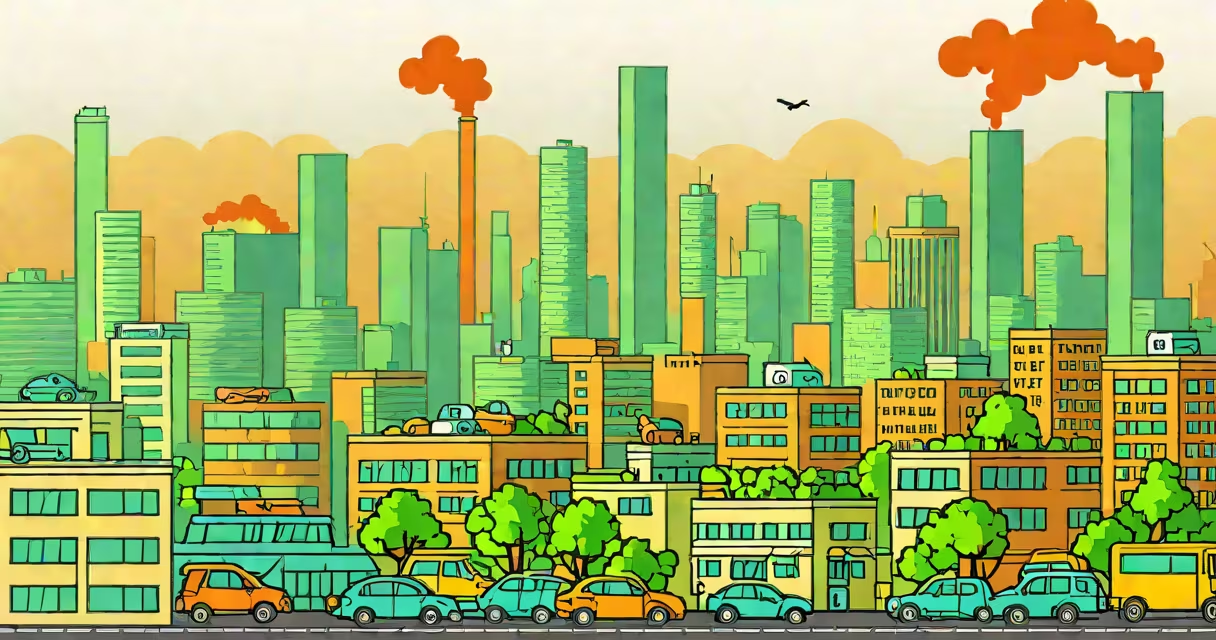
Environmental pollution air pollution describes the release of contaminants into the atmosphere that harm living organisms, degrade ecosystems, and compromise climate stability. These pollutants originate from industrial processes, transportation, energy production, and agricultural practices.
Atmospheric pollution occurs when particulate matter, gases like nitrogen oxides and sulfur dioxide, and volatile organic compounds accumulate beyond natural thresholds. The World Health Organization (WHO) identifies air pollution as a leading environmental risk to human health, responsible for an estimated 7 million premature deaths annually worldwide.
When fossil fuels burn in vehicles, power plants, or factories, they emit carbon monoxide, nitrogen oxides (NOx), sulfur dioxide (SO₂), and fine particulate matter (PM2.5). These substances react in sunlight to form ground-level ozone, a key component of smog. Unlike stratospheric ozone, which protects Earth from UV radiation, ground-level ozone damages lung tissue and worsens respiratory conditions.
Particulates smaller than 2.5 micrometers can penetrate deep into lungs and enter the bloodstream. Long-term exposure correlates with increased rates of asthma, heart disease, and stroke. A 2021 study published in *The Lancet Planetary Health* linked long-term PM2.5 exposure to reduced life expectancy by up to 2.2 years in high-income countries and 3.6 years in low-income regions.
Urban areas with dense traffic and industrial zones often exceed WHO air quality guidelines. For example, New Delhi's annual average PM2.5 concentration reached 143 µg/m³ in 2022-over 28 times higher than the WHO's recommended limit of 5 µg/m³.
Major categories of air pollutants include primary and secondary pollutants. Primary pollutants are emitted directly, such as carbon monoxide from car exhausts or sulfur dioxide from coal-fired power stations. Secondary pollutants form through chemical reactions in the atmosphere, like ozone and secondary organic aerosols.
| Pollutant | Primary Source | Health & Environmental Effect |
|---|---|---|
| PM2.5 | Vehicle engines, wildfires, industrial smoke | Lung damage, cardiovascular strain, reduced visibility |
| NOx | Combustion engines, power plants | Ozone formation, acid rain, respiratory irritation |
| SO₂ | Coal burning, metal smelting | Respiratory distress, acid deposition in water bodies |
| Ozone (O₃) | Reactions between NOx and VOCs in sunlight | Worsens asthma, damages crops and forests |
Wildfires contribute to seasonal air pollution spikes. In 2020, California's wildfire season produced over 100 million tons of CO₂-equivalent emissions and elevated PM2.5 levels across the western U.S., causing hospital admissions for respiratory issues to rise by 14% in affected counties.
Many assume air pollution is solely a problem in developing nations. While cities like Beijing and Jakarta face severe challenges, developed regions also suffer. In 2021, London recorded 12 days with PM2.5 levels above WHO safety limits-despite stringent regulations.
Another misconception is that indoor air quality is less critical. In reality, indoor concentrations of pollutants like radon, formaldehyde, and secondhand smoke often exceed outdoor levels. The U.S. Environmental Protection Agency (EPA) states that indoor air can be two to five times more polluted than outdoor air, especially in poorly ventilated homes.
A lesser-known fact: black carbon-a component of soot-is not just a pollutant but a potent climate-forcing agent. According to NASA's Atmospheric Science Data Center, black carbon absorbs sunlight and heats the atmosphere, accelerating glacial melt in the Himalayas and Arctic regions. Reducing black carbon emissions offers a rapid climate benefit, with potential to slow global warming by up to 0.5°C within decades.
In 2019, a study in *Nature Communications* analyzed satellite data and ground sensors across 180 cities. It found that air pollution reduced average life expectancy by 2.2 years globally and up to 3.8 years in parts of South Asia. Cities like Dhaka and Lahore ranked among the most polluted, with PM2.5 levels exceeding 100 µg/m³ year-round.
I once monitored air quality during a week-long field visit to Lahore. Using a handheld sensor, I recorded hourly PM2.5 readings ranging from 150 to 320 µg/m³-levels that trigger emergency health advisories. Children playing near roads wore masks, and local clinics reported a 40% increase in acute bronchitis cases during peak pollution periods.
Industrial zones near rivers often discharge pollutants that travel through air currents. In China's Hebei Province, steel mills emit large quantities of SO₂ and PM10. These emissions contribute to regional haze and fall as acid rain, damaging crops and corroding infrastructure. The Chinese government responded by shutting down 1,200 high-emission factories between 2013 and 2017, reducing PM2.5 levels by 35% in Beijing.
Environmental pollution air pollution imposes massive economic costs. The World Bank estimates that air pollution-related healthcare expenses and lost productivity cost $8.1 trillion globally in 2020-equivalent to 6.1% of global GDP.
Regulatory frameworks differ widely. The U.S. Clean Air Act sets National Ambient Air Quality Standards (NAAQS) for six criteria pollutants. Areas failing to meet standards must develop state implementation plans (SIPs) to reduce emissions. In contrast, India's National Clean Air Programme (NCAP) aims to cut PM2.5 and PM10 levels by 20-30% by 2024 in 102 non-attainment cities.
Technological interventions show promise. Electric vehicles reduce tailpipe emissions. Solar-powered industrial facilities lower reliance on coal. However, progress depends on policy enforcement and public investment. Without coordinated action, air pollution remains a persistent threat to planetary and human health.