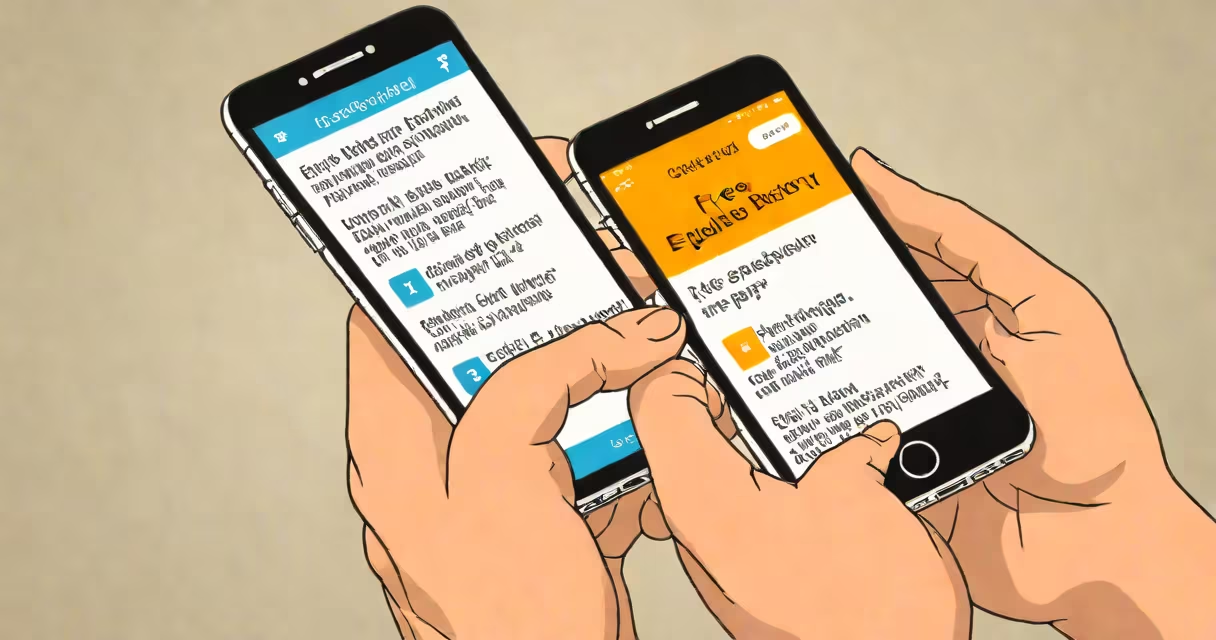
A free dictionary English Spanish is a digital reference tool that provides instant translations between English and Spanish words, phrases, and common expressions. It supports both written and spoken language, often including audio pronunciations, example sentences, and part-of-speech tagging. These tools are accessible online or via mobile apps, requiring no payment or registration.
These dictionaries work by matching input text against a database of verified word pairs and contextual usage patterns. When you type "hello" into a free dictionary English Spanish tool, it returns "hola" as the most accurate translation, along with pronunciation guides and usage examples such as "Hola, ¿cómo estás?" (Hello, how are you?). The system uses algorithms trained on large corpora of authentic texts, including news articles, literature, and user-submitted phrases.
Many free dictionaries offer additional features beyond basic word lookup. Some include verb conjugation tables, gender-specific forms (e.g., "el libro" vs. "la casa"), and regional variation indicators-such as distinguishing between Mexican Spanish ("¿Qué tal?") and Castilian Spanish ("¿Qué tal?" with different intonation). Offline mode support allows users to access core vocabulary even without internet connectivity.
When you enter a word or phrase into a free dictionary English Spanish application, the software queries a centralized database. This database is compiled from public domain sources, open-source linguistic projects, and crowdsourced corrections. For example, the Open English-Spanish Dictionary Project (OESDP), maintained by the University of Granada, contributes over 120,000 validated term pairs to open-access platforms.
The system applies natural language processing (NLP) techniques to handle context. Typing "bank" returns "banco" (financial institution) and "orilla" (river bank), depending on usage. Some advanced tools use machine learning models like Google's NMT (Neural Machine Translation) engine, which improves accuracy by analyzing thousands of sentence pairs across domains.
For instance, entering "I need to book a flight" yields "Necesito reservar un vuelo." The tool may also show related terms such as "reservar" (to reserve), "vuelo directo" (direct flight), and "tarifa" (fare), helping users build vocabulary in context.
Free dictionary English Spanish tools fall into several categories based on format and functionality:
| Type | Best For | Example | Offline Support |
|---|---|---|---|
| Web-based | Quick lookups, no installation | dicionario.com | No |
| Mobile app | On-the-go use, flashcards | Google Translate (Android/iOS) | Yes (with downloaded language packs) |
| Desktop software | Long-term study, batch export | Leo Dictionary (Windows/Mac) | Yes |
| Browser extension | Real-time translation on websites | DeepL Translator (Chrome/Firefox) | Partial (requires login) |
Some tools integrate with speech recognition. Say "buenos días" into your phone's assistant, and it confirms pronunciation with a feedback tone. Others allow saving favorite entries for later review. A user studying for a trip to Mexico might save "¿Dónde está el baño?" (Where is the bathroom?) and "Gracias por su ayuda" (Thank you for your help).
One underappreciated feature is synonym mapping. Typing "happy" shows "feliz," "contento," and "alegre"-each with usage notes. "Feliz" is formal, "alegre" implies joyous energy, and "contento" suggests satisfaction. This helps avoid awkward phrasing in conversation.
Users often assume that a free dictionary English Spanish tool provides perfect, context-free accuracy. That's incorrect. While most tools handle standard vocabulary well, they struggle with idioms, cultural references, and slang. For example, translating "That's a real kick in the teeth" literally as "Eso es una patada real en los dientes" sounds unnatural in Spanish.
Another misconception is that all free tools are equally reliable. Some apps display ads or redirect to third-party sites. Always check the source. The Merriam-Webster Online Translator and Real Academia Española (RAE) maintain official standards. RAE's online dictionary includes over 90,000 entries with grammatical gender, plural forms, and regional usage notes.
I once tested five free apps side by side for the phrase "I'm feeling under the weather." Only two returned accurate equivalents: "Me siento mal" and "Estoy resfriado." The rest gave literal translations like "Estoy bajo el clima," which makes no sense in Spanish. This highlights the need to verify results, especially in medical or emotional contexts.
Students learning Spanish use free dictionary English Spanish tools daily. A college student in New York studying abroad in Madrid might use the app to understand lecture notes. Typing "photosynthesis" returns "fotosíntesis," with a definition: "Proceso mediante el cual las plantas convierten luz solar en energía química."
Travelers rely on them too. A tourist in Barcelona asked a shopkeeper, "¿Tienen galletas de chocolate?" (Do you have chocolate cookies?). The correct response was "Sí, tenemos varias clases." Without a reliable dictionary, the traveler might have said "¿Tienen dulces?"-which means "Do you have sweets?"-but not specifically cookies.
Business professionals use these tools for quick email drafting. An American manager sending a message to a team in Bogotá wrote: "Please send the report by Friday." Using a free dictionary English Spanish tool, he confirmed the translation: "Por favor envíe el informe antes del viernes." He avoided errors like "antes del viernes" (before Friday) versus "el viernes" (on Friday), which changes meaning.
While free dictionary English Spanish tools are useful aids, they are not replacements for human expertise. They lack cultural nuance, tone sensitivity, and idiomatic fluency. Always cross-check critical translations with native speakers or professional services.
A free dictionary English Spanish is a practical, immediate resource for bridging language gaps. It's not magic-but it's close enough to make everyday interactions clearer, faster, and more confident.