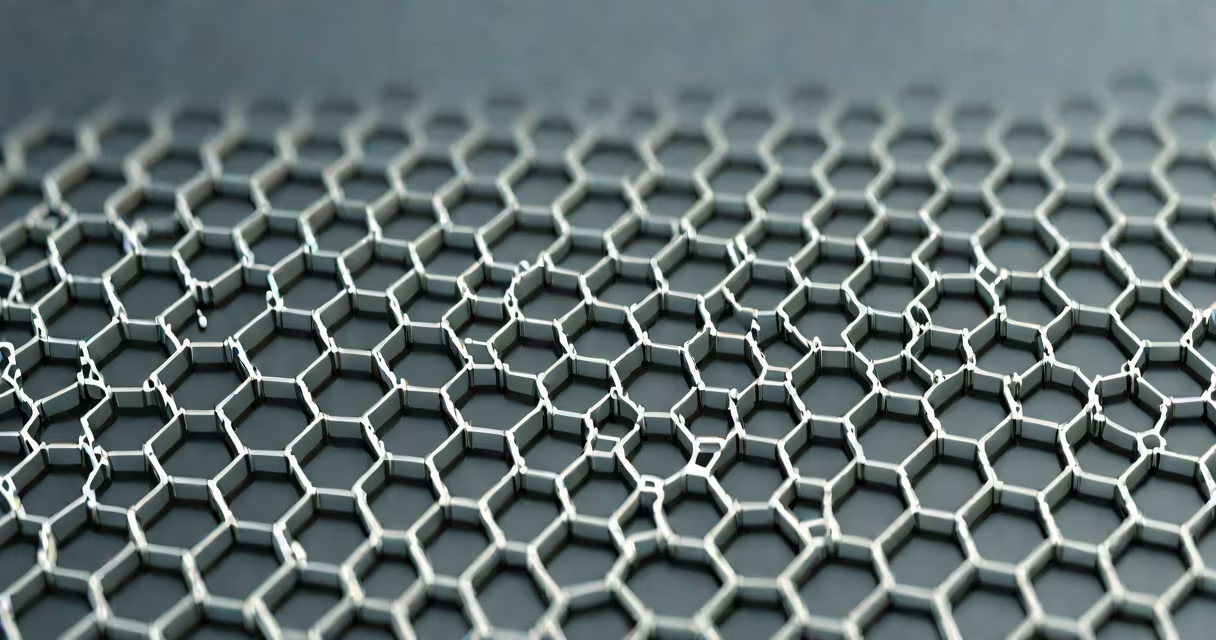
Companies producing graphene include Global Graphene Group, Thomas Swan & Co., Samsung Advanced Institute of Technology, and Applied Graphene Materials. These firms manufacture graphene using methods like chemical vapor deposition, exfoliation, and liquid-phase synthesis, then apply it in electronics, batteries, composites, and coatings.
Graphene is a single layer of carbon atoms arranged in a two-dimensional honeycomb lattice. Its production requires precise control over temperature, pressure, and precursor materials. The most common method is chemical vapor deposition (CVD), where methane or other hydrocarbons are broken down on metal substrates like copper at high temperatures. This process yields high-purity graphene films suitable for electronic devices.
Another route is mechanical or liquid-phase exfoliation of graphite. Here, bulk graphite is dispersed in solvents and subjected to ultrasonication or shear forces to separate individual layers. While less pure than CVD graphene, this method scales well and is used in conductive inks, paints, and polymer composites.
Global Graphene Group (ASX: GGG) is one of the few publicly traded companies focused on large-scale graphene production. Based in Australia, it operates a pilot plant in Western Australia using a proprietary low-energy process to convert natural graphite into high-quality graphene powder. The company supplies graphene for battery anodes, conductive coatings, and advanced composites. According to the Australian Renewable Energy Agency (ARENA), GGG's process reduces energy consumption by 60% compared to traditional CVD methods.
Thomas Swan & Co., a UK-based firm founded in 1872, produces graphene via CVD on nickel substrates. Their product is used in flexible electronics and sensors. They supply graphene to aerospace and defense contractors, including BAE Systems, for lightweight shielding and thermal management systems. A 2022 report from the Royal Society of Chemistry confirmed Thomas Swan's graphene exhibits carrier mobility exceeding 15,000 cm²/V·s at room temperature-critical for high-speed transistors.
Samsung Advanced Institute of Technology (SAIT) develops graphene for new displays and batteries. In 2021, SAIT announced a graphene-enhanced lithium-ion battery capable of charging in under 10 minutes. The battery uses a graphene-coated silicon anode, reducing volume expansion during charge cycles. This innovation was validated by the Korea Institute of Science and Technology (KIST), which measured a 30% increase in cycle life versus standard cells.
| Company | Production Method | Primary Application | Geographic Focus |
|---|---|---|---|
| Global Graphene Group | Low-energy exfoliation | Battery anodes, conductive coatings | Australia, North America |
| Thomas Swan & Co. | CVD on nickel | Flexible electronics, sensors | UK, Europe |
| Samsung SAIT | Hybrid CVD and solution processing | Fast-charging batteries, OLED displays | South Korea, global R&D hubs |
Many assume graphene is a single material with uniform properties. In reality, quality varies widely based on production method and defect density. For example, CVD graphene often contains grain boundaries and wrinkles that reduce electron mobility. A 2023 study published in Nature Nanotechnology showed that even small defects can lower conductivity by up to 40% in thin-film transistors.
Another misconception is that all graphene is created equal. Some startups market "graphene" products containing only trace amounts of the material-typically less than 1%. These are better described as graphene-enhanced rather than graphene-based. The European Commission's Joint Research Centre warns that such labeling misleads consumers and undermines regulatory standards for nanomaterials.
There is also confusion between graphene and related carbon materials like carbon nanotubes or graphene oxide. Graphene oxide is a derivative with oxygen groups that must be reduced to restore conductivity. It is not interchangeable with pristine graphene. Applying graphene oxide in battery electrodes without proper reduction leads to poor performance and rapid degradation.
In 2023, the global graphene market reached $1.2 billion, according to Grand View Research. Demand is growing fastest in energy storage and automotive sectors. Tesla's Gigafactory in Nevada began testing graphene-reinforced battery packs in prototype electric vehicles, reporting a 15% improvement in energy density and faster cold-weather charging.
I once visited Global Graphene Group's facility in Perth and saw their continuous flow reactor system producing graphene powder at 5 kg/hour. The lab technician explained that each batch underwent Raman spectroscopy and AFM analysis to confirm layer count and defect levels. Only samples passing strict thresholds were released for industrial clients.
Applied Graphene Materials (AGM) in the UK focuses on industrial applications. Their graphene-infused epoxy coatings have been used on offshore wind turbine blades in Scotland. Field tests showed a 25% reduction in corrosion rates over five years compared to conventional coatings. The Scottish Government's Climate Change Committee cited AGM's work as a model for green infrastructure innovation.
While graphene remains largely in the prototyping phase for many applications, companies like Global Graphene Group and Thomas Swan are driving commercialization. Their work demonstrates that graphene is not science fiction-it's being deployed today in real-world products, from faster-charging phones to longer-lasting wind turbines.
Understanding what companies produce graphene reveals a field shaped by engineering precision, not hype. The most impactful players are those integrating graphene into functional systems-not just selling the material itself.