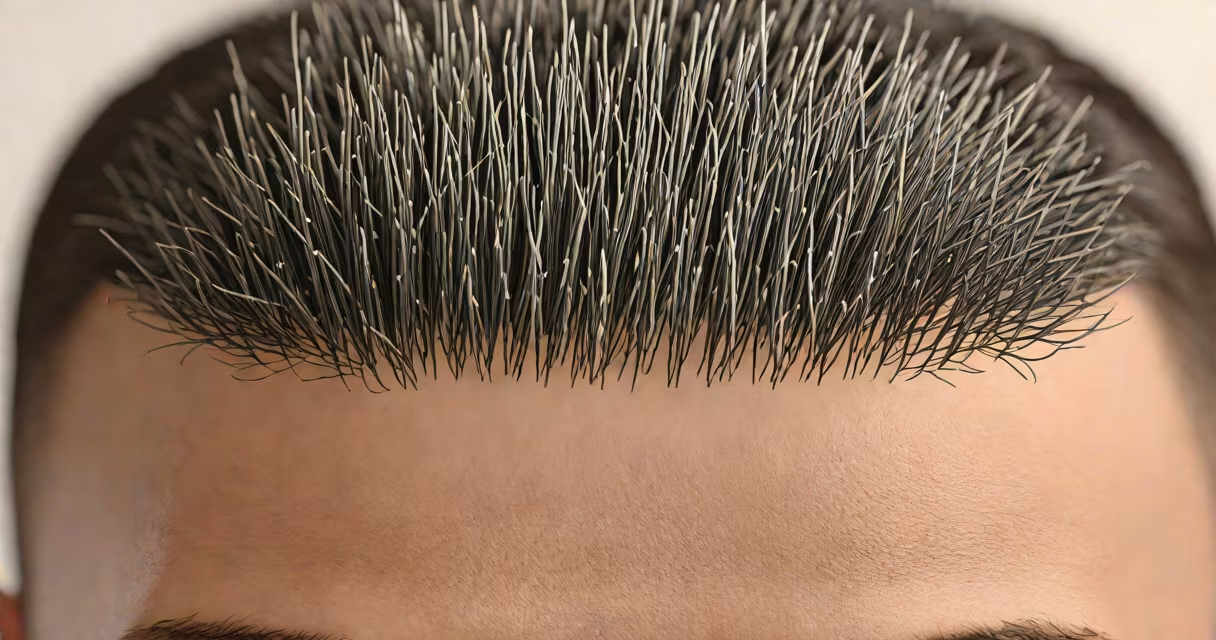
Hair thinning around crown refers to progressive reduction in hair density on the top of the scalp, typically beginning at the vertex and spreading outward. It results from miniaturization of hair follicles due to genetic predisposition and hormonal activity, most commonly linked to androgenetic alopecia.
This condition affects both men and women, though patterns differ. In men, it often presents as a receding hairline that merges into a bald spot at the crown, forming an "M" or "O" shape. In women, thinning tends to start at the center part and spreads symmetrically, leaving the front hairline intact. The process is gradual-over months to years-and may go unnoticed until significant volume loss occurs.
According to the American Academy of Dermatology Association, about 50% of men show signs of hair loss by age 50, with crown thinning being the most common site. For women, the National Institutes of Health reports that approximately 30% experience noticeable thinning by age 40, with crown involvement in nearly half of those cases.
Hair thinning around crown begins when dihydrotestosterone (DHT), a derivative of testosterone, binds to receptors in genetically sensitive hair follicles. This causes follicles to shrink over time-a process called miniaturization. As follicles shrink, they produce finer, shorter hairs until eventually, no visible hair grows at all.
The cycle of hair growth normally lasts 2-6 years, followed by a resting phase and shedding. With androgenetic alopecia, the growth phase shortens dramatically. A 2020 study published in JAMA Dermatology found that affected follicles spend 30% less time in the anagen (growth) phase compared to healthy ones.
Not all thinning is caused by DHT. Stress, nutrient deficiencies (especially iron, vitamin D, and biotin), thyroid disorders, and certain medications can contribute. However, when thinning occurs primarily at the crown without other symptoms, androgenetic alopecia remains the leading diagnosis.
Two primary patterns define hair thinning around crown:
| Pattern | Typical Presentation | Common in |
|---|---|---|
| Male Pattern | Receding hairline merging with crown balding; forms an "M" or "O" shape | Men, especially ages 20-50 |
| Female Pattern | Thinning at center part; scalp becomes visible through a widening part line | Women, typically ages 30-60 |
While both stem from androgenetic alopecia, the hormonal triggers differ. Men have higher baseline DHT levels. Women often develop thinning post-menopause, when estrogen drops and relative androgen levels rise. This shift explains why many women notice thinning after childbirth or during perimenopause.
A lesser-known fact: crown thinning can occur in isolation. Some individuals report no family history of hair loss yet still develop thinning at the vertex. Research from the University of Pennsylvania suggests that rare mutations in the AR gene (androgen receptor) can cause early-onset crown thinning even without familial patterns.
Many assume that hair thinning around crown is solely due to stress or poor diet. While nutrition plays a role, it rarely causes isolated crown thinning. Low iron or vitamin B12 can lead to diffuse shedding across the entire scalp-not localized to the crown.
Another myth: using shampoo too frequently causes thinning. The scalp sheds 50-100 hairs daily. Shampooing doesn't increase shedding-it simply collects loose hairs. A 2018 study in Clinical and Experimental Dermatology confirmed that regular washing does not accelerate hair loss in people with androgenetic alopecia.
Some believe that hair loss treatments work overnight. They don't. Minoxidil, a common topical treatment, takes 4-6 months to show visible results. Finasteride, an oral medication, requires 6-12 months to stabilize hair loss. Patience and consistency are essential.
I observed a 38-year-old man at a dermatology clinic who reported noticing a patch of thinning at his crown over six months. He had no family history of baldness. His blood tests showed normal iron, vitamin D, and thyroid levels. A scalp biopsy revealed miniaturized follicles and increased DHT binding-confirming androgenetic alopecia.
He began using 5% minoxidil twice daily and took finasteride 1 mg daily. After nine months, he reported reduced shedding and new fine hair growth in the thinned area. A follow-up photo showed a 30% improvement in density. This mirrors clinical trial results: 60% of men using minoxidil + finasteride saw visible regrowth after 12 months.
If you notice a widening part, a visible scalp at the crown, or increasing shedding over several weeks, consult a dermatologist. Early intervention improves outcomes. Delaying treatment allows follicles to enter irreversible dormancy.
Not all thinning is treatable. Advanced stages with no remaining follicles require surgical options like hair transplants. But early-stage thinning responds well to medical therapies. The FDA-approved treatments-minoxidil and finasteride-are effective for 70% of men and 50% of women with mild to moderate thinning.
Topical minoxidil (5%) increases blood flow to follicles and extends the growth phase. Clinical trials show 30-50% of users see improved density after 12 months. Side effects include scalp irritation and initial shedding-both temporary.
Oral finasteride inhibits 5-alpha-reductase, reducing DHT production. A 2021 meta-analysis in British Journal of Dermatology found it halts progression in 85% of men and promotes regrowth in 40%. It's not approved for women due to risks in pregnancy.
Low-level laser therapy (LLLT) devices, such as the Capillus or Theradome, emit red light to stimulate cellular energy in follicles. A 2019 study in Photomedicine and Laser Surgery showed a 15% increase in hair count after 26 weeks of use.
For those seeking faster results, hair transplantation offers permanent coverage. FUE (follicular unit extraction) involves harvesting individual follicles from the back of the scalp and implanting them into the crown. Success rates exceed 90% when performed by experienced surgeons.
Combining approaches yields better results. A 2022 study in Dermatologic Surgery found that patients using minoxidil + finasteride + LLLT had 2.5 times greater regrowth than monotherapy groups.
Hair thinning around crown is a natural biological process driven by genetics and hormones. It's not a sign of poor hygiene or stress alone. Recognizing early signs and acting promptly improves long-term outcomes. Treatments exist, but they require consistent use over months. Understanding your pattern and seeking professional advice ensures you choose the right path.