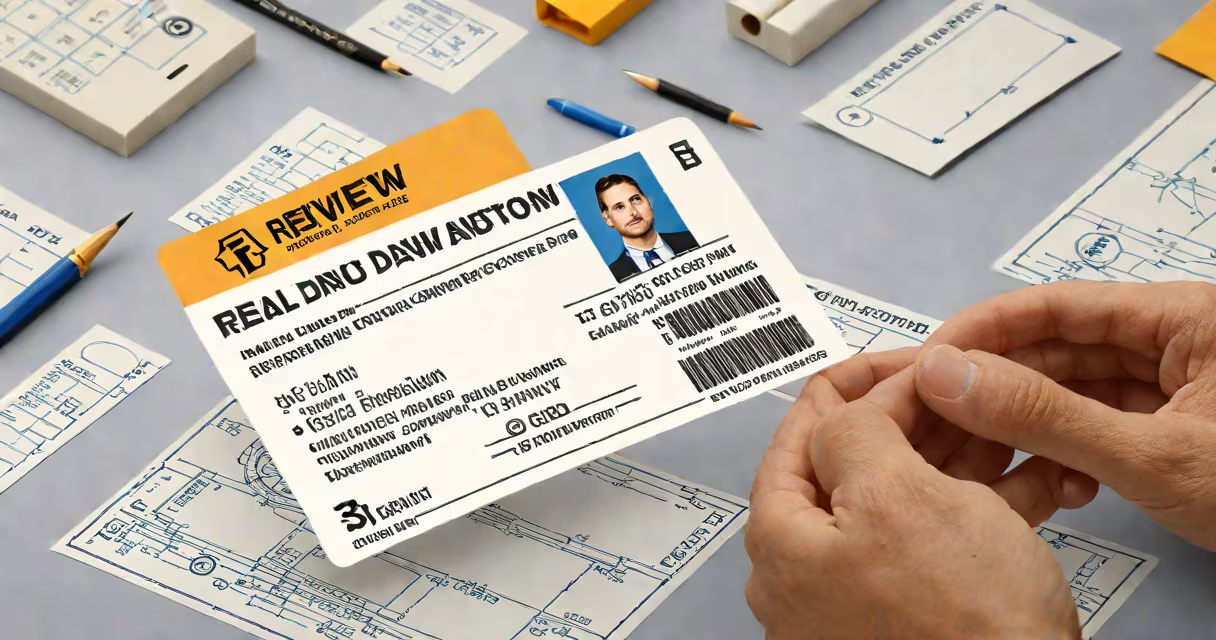
To renew your Real ID, you must provide proof of identity, proof of lawful U.S. status, and proof of your current U.S. residential address. These documents must meet federal standards set by the Department of Homeland Security's REAL ID Act.
The Real ID Act, enacted in 2005 and implemented in phases, requires states to verify identity through specific document types. The U.S. Department of Homeland Security mandates that all federally issued IDs-such as driver's licenses and state-issued identification cards-meet minimum security standards by May 7, 2025. After that date, travelers must present a Real ID or another federally accepted form of identification to board domestic flights or enter federal facilities.
Each state administers its own Real ID program, but all must follow the same federal guidelines. Some states issue Real ID cards automatically during renewal; others require a separate application. You cannot renew your Real ID online or by mail-most states require an in-person visit to a DMV or equivalent office.
You must bring three categories of documents: proof of identity, proof of lawful presence, and proof of current U.S. residential address. The specific documents accepted vary slightly by state, but the federal structure remains consistent.
For proof of identity, you typically need a government-issued birth certificate, a valid U.S. passport, or a certified U.S. birth record. A Social Security card may be used as supplementary evidence but is not sufficient on its own. States may reject documents with missing details, such as a name variation between a birth certificate and a passport.
Proof of lawful presence includes a U.S. passport, a permanent resident card (green card), or a valid employment authorization document (EAD). Non-citizens must show documentation that confirms their legal right to reside in the United States. The U.S. Citizenship and Immigration Services (USCIS) website outlines acceptable forms of lawful presence under the REAL ID Act.
| Document Type | Examples | Notes |
|---|---|---|
| Proof of Identity | Birth certificate, U.S. passport, certified adoption decree | Must match name on application. No photocopies accepted. |
| Proof of Lawful Presence | Green card, visa, EAD, refugee travel document | Must be unexpired and issued by a U.S. government authority. |
| Proof of Address | Utility bill, bank statement, lease agreement (dated within last 6 months) | Must list your full name and current physical address. |
Some states accept a combination of documents. For example, California allows a marriage license and a utility bill if you've changed your name. Texas requires two documents for address verification, one of which must be a recent bank statement or mortgage statement.
A common mistake is assuming that a driver's license from another state counts as proof of identity. It does not. The Real ID process requires original or certified copies of documents. Photocopies, screenshots, or digital images are not accepted unless they are officially certified.
While federal standards apply uniformly, implementation varies. New York requires a secondary photo ID (like a library card or employee badge) if your primary ID doesn't have a photo. Florida accepts a school transcript as address proof if it shows your name and current address.
One frequently overlooked requirement is the need for a current photograph. Most states take a new photo on-site, but some require you to bring a recent headshot (taken within the past six months) that meets specific size and lighting standards. Failure to comply results in a delayed appointment or rejected application.
During my visit to the Virginia DMV in 2023, I brought a certified birth certificate and a green card. The agent rejected my utility bill because it was dated two years prior. I had to return the next day with a newer statement. This highlights how strict states are about document freshness-even minor lapses cause delays.
Another frequent error is submitting documents with inconsistent names. If your name appears as "John A. Smith" on your birth certificate but "J. Smith" on your passport, the discrepancy must be explained. Some states allow a name change affidavit, but others deny applications outright.
Real ID renewal must be done in person at a state-issued DMV or equivalent office. You cannot apply online or by mail. Appointments are often required-check your state's DMV website to schedule one. Wait times vary widely: California averages 3-5 days; New Jersey reports wait times of up to 10 business days during peak seasons.
Bring all documents in original form or certified copies. Digital files are not valid. If you're applying in a state where you don't live, you may need to prove residency through additional paperwork, such as a rental contract or tax return.
After submission, processing takes 5-10 business days. Some states offer expedited service for an extra fee. Once approved, you'll receive your new Real ID card by mail or in person. The old card becomes invalid upon issuance of the new one.
There is no federal Real ID database. Your information is stored locally by your state's DMV. This means that renewing in one state does not transfer your Real ID status to another. If you move, you must reapply in your new state.
Contrary to popular belief, a Real ID is not a national ID card. It does not contain a biometric identifier or a unique national number. It is a state-issued credential that complies with federal standards for identification purposes.
Finally, the Real ID is not required for driving. It is only needed for boarding domestic flights and accessing federal buildings. If you don't fly regularly or visit secure federal sites, you may choose not to renew. However, by May 7, 2025, you will need a Real ID or alternative such as a U.S. passport, military ID, or trusted traveler program card to board domestic flights.