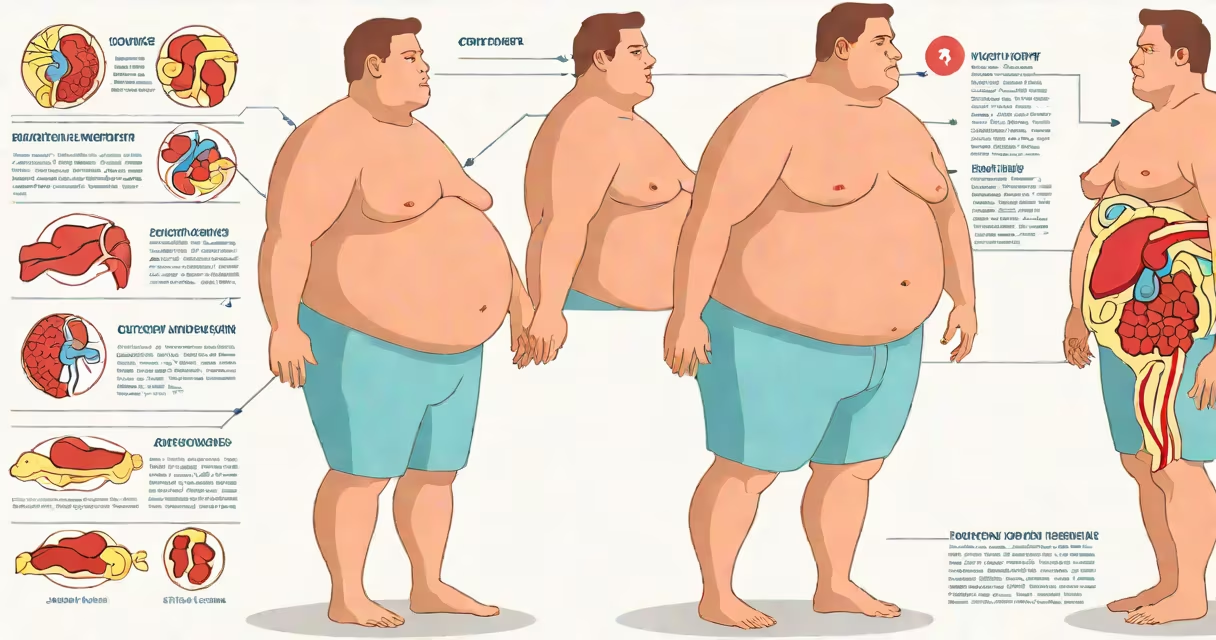
Obesity causes systemic dysfunction by overloading metabolic, cardiovascular, and musculoskeletal systems with excess adipose tissue, leading to insulin resistance, hypertension, joint degeneration, and increased cancer risk. This condition alters cellular signaling, promotes chronic inflammation, and strains important organs.
Body fat is not inert storage-it actively secretes hormones and inflammatory molecules. When fat accumulates beyond healthy thresholds, especially visceral fat around the abdomen, it disrupts normal physiology. Adipocytes release cytokines like interleukin-6 and tumor necrosis factor-alpha, which trigger low-grade inflammation throughout the body. This state impairs insulin sensitivity, increases blood pressure, and damages blood vessels over time.
The American Heart Association reports that obesity raises the risk of coronary artery disease by 50% compared to individuals with normal BMI. Excess fat also compresses the diaphragm, reducing lung capacity and contributing to sleep apnea. These changes create a cascade of secondary complications affecting nearly every organ system.
Obesity impacts multiple interconnected systems through distinct pathways:
| System | Primary Impact | Common Condition |
|---|---|---|
| Metabolic | Insulin resistance, altered lipid metabolism | Type 2 diabetes, fatty liver disease |
| Cardiovascular | Increased blood pressure, arterial stiffness | Hypertension, stroke, heart attack |
| Musculoskeletal | Joint compression, cartilage degradation | Osteoarthritis, back pain |
| Respiratory | Reduced lung volume, airway obstruction | Obstructive sleep apnea, hypoventilation |
A 2021 study published in Cell Metabolism found that visceral fat produces more pro-inflammatory mediators than subcutaneous fat. Participants with high visceral-to-subcutaneous fat ratios had higher levels of CRP (C-reactive protein), a marker of systemic inflammation linked to atherosclerosis and insulin resistance.
Many assume obesity only affects appearance or mobility. In reality, it alters gene expression and cellular aging. Telomeres-the protective caps on chromosomes-shorten faster in obese individuals, accelerating biological aging. A 2019 analysis in JAMA Network Open showed that obesity correlates with telomere lengths equivalent to those seen in people 10 years older.
Another misconception is that weight loss reverses all damage. While improvements occur, some structural changes persist. For example, patients who lose weight after bariatric surgery still face higher rates of kidney disease than matched controls with normal weight, suggesting early organ damage may be irreversible.
Obesity is not simply a result of poor diet or lack of exercise. Genetic factors account for 40-70% of variation in body mass index, according to the National Institutes of Health. Some individuals have mutations in the MC4R receptor gene that disrupt satiety signaling, making them prone to overeating even with adequate food intake.
Consider a 45-year-old adult with a BMI of 38, diagnosed with prediabetes. Over two years, they gain 25 pounds. Their fasting glucose rises from 100 mg/dL to 140 mg/dL. A biopsy reveals ectopic fat deposition in the liver and pancreas-fat stored in organs not designed for fat storage.
This ectopic fat interferes with insulin signaling. The liver releases excess glucose despite high insulin levels. Pancreatic beta cells become exhausted trying to compensate. By year three, the patient develops overt type 2 diabetes, requiring medication.
Without intervention, this progression leads to microvascular complications: retinopathy, neuropathy, and nephropathy. The American Diabetes Association notes that 80% of new type 2 diabetes cases are associated with overweight or obesity.
Obesity is often mistaken for metabolic syndrome-a cluster of conditions including central obesity, high triglycerides, low HDL cholesterol, high blood pressure, and elevated fasting glucose. However, metabolic syndrome requires meeting at least three of five criteria. Not all obese individuals meet these thresholds, and some lean people do.
Some confuse obesity with lipodystrophy, a rare disorder where fat is lost from certain areas (like limbs) and accumulates abnormally in others (abdomen, neck). Lipodystrophy causes severe insulin resistance but results from genetic or autoimmune causes, not caloric surplus.
I once observed a patient with a BMI of 32 who was misdiagnosed with hyperthyroidism due to rapid weight gain and palpitations. Blood tests revealed normal thyroid function. Further evaluation confirmed obesity-related cardiomyopathy with preserved ejection fraction, a condition where the heart muscle thickens due to long-term strain.
Obesity affects the body through direct mechanical strain, hormonal disruption, and chronic inflammation. It alters organ function, accelerates aging, and increases risk for life-threatening diseases. Early intervention reduces progression, but reversal of existing damage remains limited. Recognizing the systemic nature of obesity is essential for effective prevention and management.