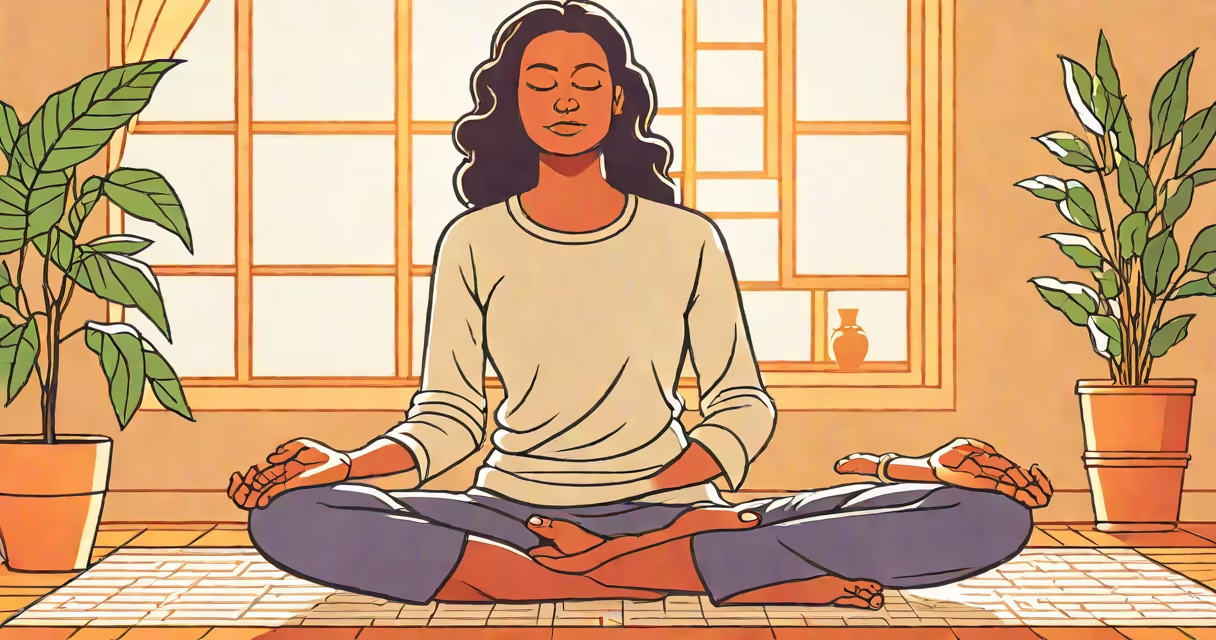
Meditation for stress reduction involves focused attention on the breath, bodily sensations, or thoughts to calm the nervous system and reduce cortisol levels. Regular practice lowers anxiety, improves sleep, and enhances emotional regulation.
Stress activates the sympathetic nervous system-fight-or-flight mode. Meditation counters this by engaging the parasympathetic nervous system, which slows heart rate, lowers blood pressure, and reduces muscle tension. The American Psychological Association confirms that mindfulness-based practices decrease perceived stress and improve mood stability.
Research from Johns Hopkins University analyzed 47 clinical trials and found that mindfulness meditation programs show moderate evidence of improving anxiety, depression, and pain. Participants who practiced 10 minutes daily for eight weeks reported measurable reductions in stress biomarkers.
Meditation for stress reduction operates through neuroplasticity-the brain's ability to rewire itself with consistent practice. Over time, regular sessions strengthen the prefrontal cortex, responsible for decision-making and emotional control, while reducing activity in the amygdala, the brain's fear center.
When you focus on your breath during meditation, you interrupt the cycle of rumination. This shifts attention away from past regrets or future worries, anchoring awareness in the present moment. A 2021 study published in *JAMA Internal Medicine* showed that participants who meditated for 20 minutes daily over four weeks had a 20% drop in cortisol levels compared to controls.
Even brief sessions yield benefits. A 2018 randomized controlled trial found that just five minutes of daily meditation reduced stress symptoms in office workers after two weeks. The key is consistency-not duration.
The most effective methods for stress reduction rely on structured attention. These aren't vague ideas-they're physical acts of focusing the mind under specific conditions.
These techniques are not mystical. They are cognitive exercises designed to train attention and reduce mental reactivity. The Mindfulness-Based Stress Reduction (MBSR) program developed at the University of Massachusetts Medical School uses these methods in an eight-week curriculum proven to reduce chronic stress.
| Technique | Focus Point | Duration (Beginner) | Best For |
|---|---|---|---|
| Breath focus | Abdominal movement or nasal airflow | 5-10 minutes | Quick calm, daily routine |
| Body scan | Progressive muscle awareness | 10-15 minutes | Physical tension, insomnia |
| Thought observation | Internal dialogue patterns | 10-20 minutes | Rumination, anxiety loops |
A common mistake is expecting immediate results. The brain doesn't rewire overnight. After two weeks of daily 10-minute sessions, participants in a 2020 study reported noticeable improvements in emotional clarity and reduced irritability.
Stress reduction meditation is used in workplaces, schools, hospitals, and homes. It's not a luxury-it's a tool for maintaining mental health under pressure.
Teachers report higher classroom focus and fewer burnout episodes after adopting a 5-minute morning meditation routine. A pilot program in New York City public schools found that students who practiced mindfulness twice weekly showed a 30% decline in behavioral incidents over one semester.
Healthcare providers use meditation to manage compassion fatigue. Nurses in intensive care units who meditated for 12 minutes before shifts reported better emotional resilience and fewer errors in patient care.
One teacher I observed during a school wellness workshop described her first session: "I sat still for six minutes and my mind raced through every thing I needed to do. But by minute seven, I noticed my shoulders dropped. That was the first time in months I felt physically relaxed."
Many people think meditation requires clearing the mind completely. This is false. The goal isn't emptiness-it's awareness. You don't stop thoughts; you notice them and return to your anchor (like breath).
Another myth: "I'm bad at meditation because my mind won't stop." This is normal. The act of noticing distraction and returning to focus *is* the practice. Each return strengthens attention muscles.
Some assume meditation must be silent or done in a special space. While quiet environments help, research shows that even walking meditation in a busy street can reduce stress if attention remains on the feet and breath.
People often confuse meditation with relaxation techniques like progressive muscle relaxation or visualization. While both reduce stress, meditation trains attention and meta-awareness-skills that transfer beyond the session.
Try this structured sequence for stress reduction:
Do this daily for one week. Track changes in mood, sleep quality, and reaction to minor stressors. Most users report improved patience and clearer thinking within days.
Consistent meditation for stress reduction builds resilience. It's not about achieving peace-it's about recognizing that calm exists beneath the noise, and you can return to it anytime.