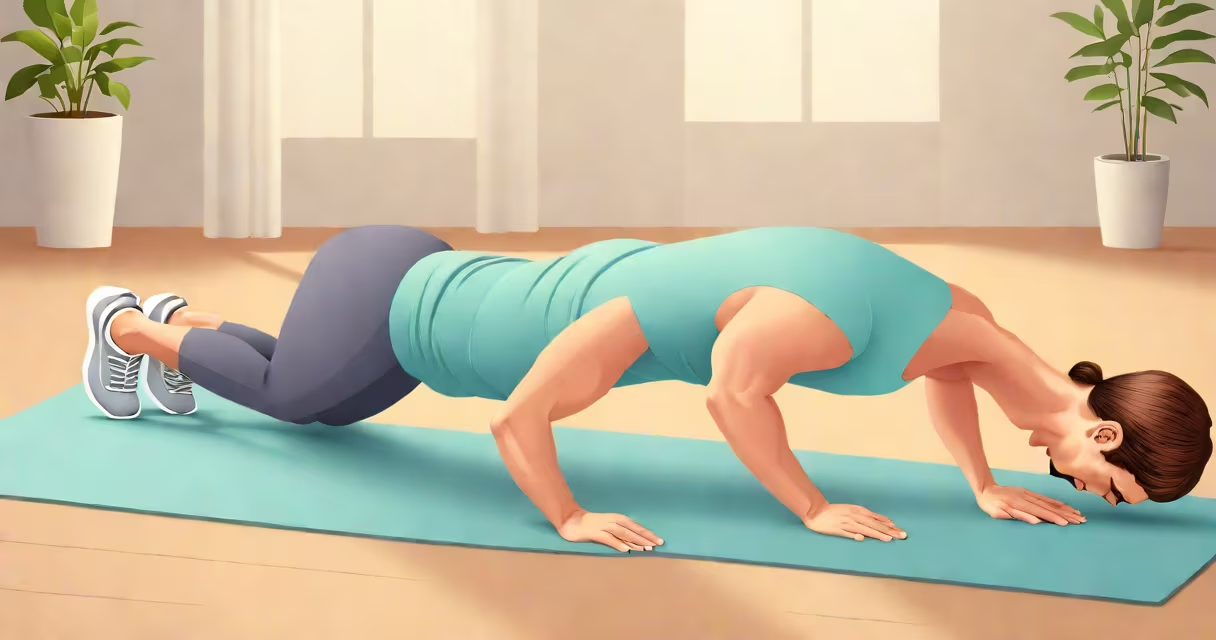
Toning a fat stomach requires reducing visceral fat through consistent resistance training, cardiovascular exercise, and dietary control. Spot reduction is impossible; fat loss occurs systemically. Visible abdominal definition emerges when body fat percentage drops below 16% for women and 12% for men.
Visceral fat surrounds internal organs and contributes to metabolic risk. Unlike subcutaneous fat under the skin, it's metabolically active and linked to insulin resistance. Reducing it improves long-term health and reveals muscle tone beneath.
Research shows that combining resistance training with moderate-intensity cardio reduces abdominal fat more effectively than either alone. A 2021 study published in Obesity found participants who performed 30 minutes of brisk walking five days a week lost 1.5 cm more waist circumference than those who only did strength training over 12 weeks.
Fat doesn't disappear from one area when you exercise it. When you burn calories, your body draws energy from stored triglycerides throughout the adipose tissue network. The abdomen often stores fat last during weight loss due to hormonal regulation.
Abdominal muscles-rectus abdominis, transverse abdominis, and obliques-are activated during compound movements like deadlifts, squats, and push-ups. These exercises increase metabolic rate and promote lean mass retention during fat loss.
A 2019 review in Journal of Strength and Conditioning Research confirmed that progressive resistance training increased resting metabolic rate by 7% over 10 weeks, leading to greater fat oxidation even at rest.
Effective toning combines three pillars: nutrition, resistance training, and aerobic activity. Nutrition accounts for 70% of fat loss outcomes. Diets high in whole foods, fiber, and protein support satiety and reduce visceral fat accumulation.
Resistance training should include multi-joint lifts 3 times per week. Focus on form and progressive overload-adding weight or reps over time. For example, start with bodyweight squats, then progress to goblet squats with a dumbbell.
| Training Type | Frequency | Duration | Example Exercises |
|---|---|---|---|
| Resistance Training | 3x/week | 45 min | Deadlifts, push-ups, rows, lunges |
| Cardiovascular Exercise | 5x/week | 30 min | Brisk walking, cycling, swimming |
| Core-Specific Workouts | 2-3x/week | 15-20 min | Planks, hollow holds, leg raises |
Core-specific work is not the primary driver of fat loss. However, it strengthens the transverse abdominis-the deepest layer-which supports posture and reduces lower back strain during full-body movements.
Many assume crunches alone will reveal abs. This is incorrect. Crunches isolate the rectus abdominis but don't reduce abdominal fat. They may even contribute to neck strain if performed with poor form.
Another myth is that "belly fat burns faster." In reality, fat loss follows individual metabolic patterns. Women tend to lose fat from hips and thighs first; men from the trunk. Abdominal fat is often the last to go, especially in individuals with high cortisol levels due to chronic stress.
One non-obvious fact: High-intensity interval training (HIIT) increases post-exercise oxygen consumption (EPOC), meaning your body continues burning calories for up to 24 hours after a session. A 2020 study in Metabolism showed HIIT led to 2.3 times greater visceral fat reduction compared to steady-state cardio over 16 weeks.
A 38-year-old woman with a 92 cm waist began a structured program. She ate 1,600 kcal/day with 120g protein, 200g carbs, and 50g fat. Her routine included:
After 12 weeks, her waist reduced to 84 cm. Body fat dropped from 32% to 26%. She reported improved sleep and energy levels. Her abdominal muscles became visible during standing poses.
She didn't do 100 crunches daily. She prioritized consistency, nutrition, and full-body movement.
People mistake a flatter stomach for toned muscles. A flat stomach can result from dehydration, bloating, or low body fat-but not necessarily muscle development. True toning includes both reduced fat and increased muscle density.
Another confusion: thinking that supplements like green tea extract or conjugated linoleic acid (CLA) accelerate fat loss. While CLA shows modest effects in some trials, a 2022 meta-analysis in Nutrients found no significant difference in belly fat reduction between supplement users and placebo groups when diet and exercise were controlled.
Finally, many believe they can target fat loss in one area. The American Council on Exercise confirms that spot reduction is physiologically impossible. Fat cells shrink uniformly across the body when caloric deficit is sustained.
I trained a client who had tried 10 different ab routines over six months. His waist remained unchanged. We shifted focus: he cut added sugars, increased protein intake, and replaced daily crunches with deadlifts and farmer's carries. After eight weeks, his waist decreased by 5 cm. He reported feeling stronger during daily tasks.
The key insight: muscle tone appears when fat is reduced. You cannot build visible abs by working the abs alone.
how to tone fat stomach is not about quick fixes. It's about sustainable habits that reduce visceral fat and strengthen the core. Success comes from consistency, not intensity.