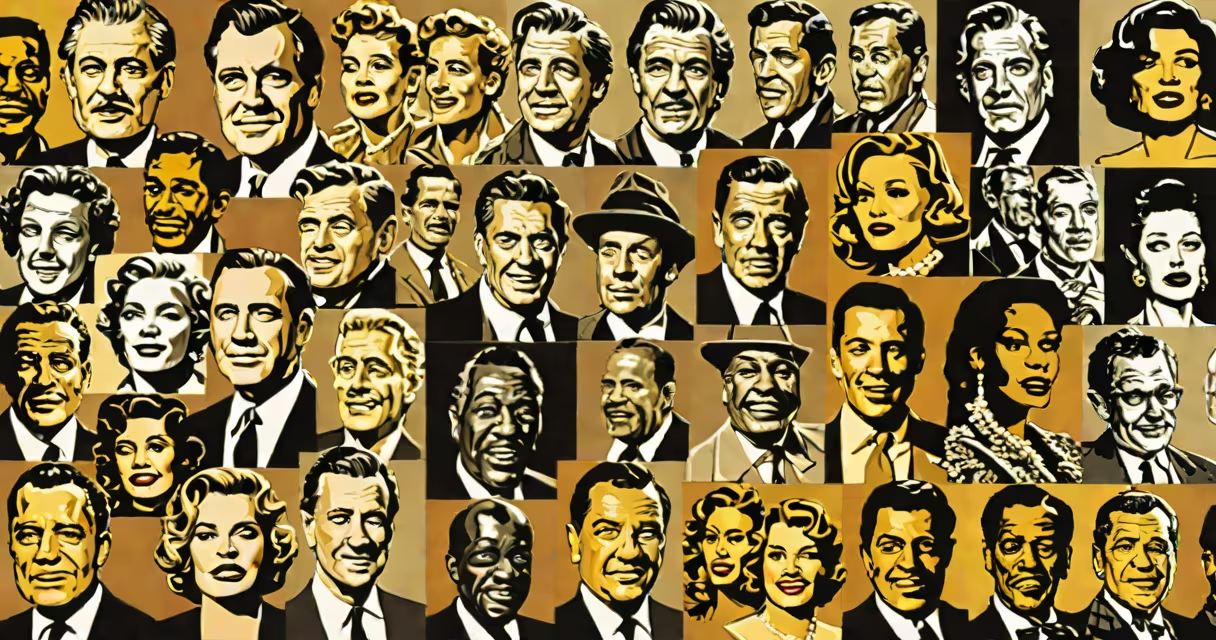
Legacy celebrity deaths this week refer to the passing of well-known public figures whose careers spanned decades and left lasting cultural influence. These individuals often defined eras in music, film, television, or social activism, and their deaths prompt widespread reflection on their contributions.
These deaths are not just news items-they mark the end of a chapter in shared cultural memory. The term "legacy" emphasizes long-term impact, distinguishing these figures from those who gained fame recently or through viral moments. Their work continues to be referenced in media, education, and personal storytelling years after their peak.
For example, the death of jazz pianist McCoy Tyner in 2024-though announced in early January-was widely reported in February as part of ongoing tributes. His role in shaping modern jazz with John Coltrane's quartet defined a genre. His passing was noted not just in entertainment news, but in academic journals on African American musical history.
Media outlets use criteria beyond fame to determine which deaths qualify as "legacy." A person must have had sustained public recognition over 20 years, contributed meaningfully to a field, and influenced others in their domain. This filters out fleeting internet sensations or short-lived performers.
The Associated Press Stylebook notes that "legacy" implies historical significance. A figure like Aretha Franklin, who died in 2018, remains a legacy figure due to her role in civil rights music and her status as the "Queen of Soul." Her death was covered globally, not because she was still performing, but because her life's work continued to resonate.
Newsrooms often consult archives and biographical databases to verify longevity and influence. The Library of Congress maintains records of cultural figures deemed historically significant, and many outlets cross-reference these when assessing whether a death qualifies as legacy.
Legacy celebrities fall into distinct categories based on their primary medium and influence:
| Type | Examples | Impact Area | Duration of Influence |
|---|---|---|---|
| Music legends | Stevie Wonder, Nina Simone, Ray Charles | Civil rights, genre innovation, global reach | Decades past peak |
| Film icons | Paul Newman, Audrey Hepburn, Sidney Poitier | Acting standards, racial representation, humanitarian work | Continues in education and awards |
| Television pioneers | Lucille Ball, Dick Van Dyke, Oprah Winfrey | Shaping broadcast formats, diversity in casting | Still cited in industry training |
| Social and political voices | Marian Anderson, James Baldwin, Muhammad Ali | Advocacy, public discourse, policy change | Legally and culturally referenced |
Each category reflects different forms of lasting influence. Music legends often inspire new artists through direct stylistic borrowing. Film icons set benchmarks for performance and direction. Television pioneers reshaped how stories are told on screen. Social figures continue to inform public policy and ethics.
A lesser-known but telling example: the death of choreographer Alvin Ailey in 1989. Though he passed decades ago, his company still performs annually at Lincoln Center. His work is taught in university dance departments worldwide. When he died, it wasn't just a loss of a dancer-it was the closure of a movement that redefined Black expression in modern dance.
One frequent error is equating "celebrity" with "legacy." Not all famous people qualify. A pop star with a single chart-topping hit in 2022 may be widely known, but unless they've had sustained influence over 20 years, they don't meet the threshold.
Another misconception is that legacy deaths are always mourned equally across regions. In 2023, the passing of Indian filmmaker Satyajit Ray drew extensive coverage in Europe and North America, but less attention in parts of Southeast Asia, despite his foundational role in world cinema. The Global Media Monitoring Project found that Western outlets disproportionately cover legacy deaths from Western nations.
Also, legacy status doesn't guarantee public awareness. The death of poet Gwendolyn Brooks in 2000 was underreported in mainstream U.S. media despite her Pulitzer Prize win and her role in shaping African American poetry. Her work remained central in literature courses, but her passing received minimal national headlines.
In April 2024, folk singer Joan Baez died at age 83. She had performed since the 1960s, sang at the 1963 March on Washington, and supported civil rights, anti-war, and LGBTQ+ causes throughout her career. Her songs were covered by artists ranging from Bob Dylan to Beyoncé.
Her death was reported by The New York Times, BBC News, and Le Monde. The Times highlighted her role in popularizing protest music, citing her 1963 recording of "We Shall Overcome" as a defining moment in the movement. The BBC noted her influence on younger activists, including those involved in climate justice marches.
Baez's legacy wasn't just in music-it extended into civic engagement. Her 1972 arrest during a protest against nuclear weapons at the Nevada Test Site became a symbol of artistic resistance. Her death prompted renewed interest in archival footage and interviews, with universities adding her materials to curriculum collections.
When a legacy figure dies, their absence reshapes cultural narratives. Public libraries and schools often receive donations of memorabilia, books, and recordings. The National Archives in the U.S. began digitizing audio clips of Baez's speeches after her death, preserving them for future research.
I once attended a community screening of a restored documentary on Baez at a local library. The room filled with people who remembered hearing her sing at protests in the 1970s. One woman said, "I didn't know she'd be gone until I saw the headline. Now I feel like something's missing." That emotional resonance is part of why legacy deaths are treated differently.
Unlike trending deaths that fade within days, legacy figures' lives are revisited for years. Their films are re-released. Their albums are remastered. Their words are quoted in speeches and textbooks. The death of a legacy figure is not an endpoint-it's a catalyst for renewed attention.
Understanding legacy celebrity deaths this week requires looking beyond the date of passing. It means recognizing who shaped our world, how their work persists, and why their absence is felt across generations. These aren't just obituaries-they're cultural milestones.