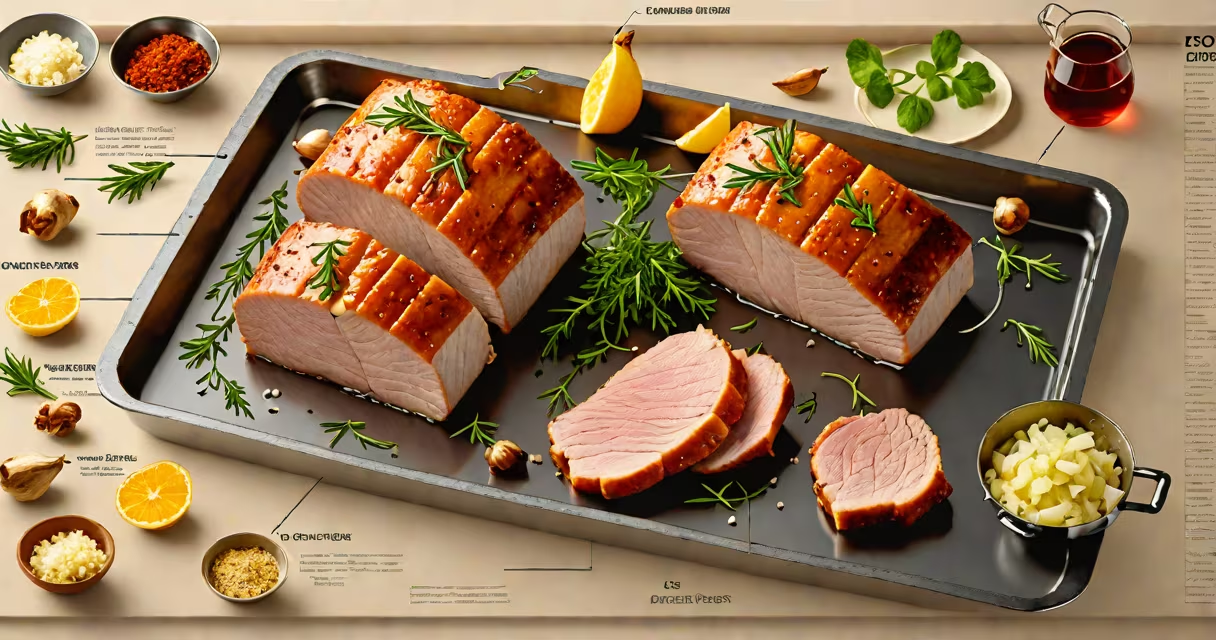
Longe de porc au four is a French oven-roasted pork loin, typically cooked with herbs, garlic, and butter until the exterior is crisp and the interior reaches 145°F (63°C) for safe, juicy results. The cut comes from the back of the pig, running along the spine, and is favored for its lean muscle and even thickness.
This dish relies on low-and-slow roasting at 375°F (190°C) for 25 to 35 minutes per pound, depending on size. A meat thermometer ensures accuracy-overcooking dries out the flesh. The internal temperature should reach 145°F (63°C), then rest for 5 minutes to allow carryover cooking to complete safely.
French cuisine values precision in meat preparation. According to the Institut National de la Recherche Agronomique (INRAE), proper resting time improves texture by allowing myoglobin to redistribute, reducing moisture loss during slicing. This step is not optional-it's essential for optimal mouthfeel.
The cooking process begins with seasoning the loin generously-salt, pepper, and fresh herbs like rosemary, thyme, or sage. Garlic cloves are often tucked between the meat and skin or pressed into slits. Butter is rubbed under the skin to promote browning and flavor penetration.
Roasting in a preheated oven causes the Maillard reaction: amino acids and sugars on the surface react at high heat, forming a complex, savory crust. This occurs around 300°F (150°C) and explains why searing the surface before roasting enhances flavor depth.
After roasting, the meat rests. During this time, juices redistribute. Without resting, slicing releases liquid, leaving dry slices. A 5-minute rest yields a moist, tender result. For best texture, slice against the grain.
While longe de porc au four uses the whole loin, variations exist based on cut and preparation style:
| Type | Description | Best For |
|---|---|---|
| Entire loin | Untrimmed, boneless, 2-3 lb (0.9-1.4 kg) | Family meals, holiday dinners |
| Split loin | Butcher-cut into two thinner pieces | Faster cooking, even doneness |
| With rind | Includes fat cap and skin; scored | Crispy crackling, richer flavor |
| Herb-crusted | Coated with crushed herbs and mustard | Extra aroma, visual appeal |
Some recipes call for stuffing the center with a mixture of breadcrumbs, onions, and herbs. This technique increases moisture retention and adds regional flair, especially in Provence-style preparations.
Longe de porc au four is common in French home kitchens and restaurant menus alike. It appears frequently in seasonal feasts, such as Christmas or Easter, due to its elegant presentation and balanced flavor profile.
It pairs well with root vegetables-potatoes, carrots, parsnips-roasted alongside the meat. The rendered fat from the pork adds richness to the vegetables. A simple pan sauce made from deglazing with white wine or broth completes the meal.
According to the French Ministry of Agriculture, pork loin accounts for nearly 30% of all pork cuts consumed in France annually. Its popularity stems from versatility, mild flavor, and consistent tenderness when properly cooked.
Many mistake longe de porc au four for other pork cuts. It is not the same as jambon (ham), which is cured and often smoked. Nor is it the same as porc en croûte, which involves wrapping the meat in pastry. Longe de porc au four is simply roasted, unencased, and typically served with minimal accompaniments.
A frequent error is overcooking. Cooking past 150°F (66°C) leads to dryness. The USDA recommends 145°F (63°C) for whole cuts of pork, followed by a 3-minute rest. This standard applies directly to longe de porc au four.
Another misconception: the skin must be removed before roasting. That's false. Leaving the fat cap intact improves juiciness and promotes a golden crust. Scoring the skin allows fat to render evenly and prevents curling.
For a 3-pound (1.36 kg) boneless loin, start by preheating the oven to 375°F (190°C). Score the fat cap in a crisscross pattern, about ½ inch apart. Rub with salt, pepper, 2 tbsp olive oil, 4 crushed garlic cloves, and 2 tsp chopped rosemary.
Place the loin on a rack in a roasting pan. Roast for 25 minutes per pound-about 75 minutes total. Check internal temperature at 60 minutes. Remove when it hits 145°F (63°C).
Let rest 5 minutes. Slice into ½-inch thick pieces. Serve with roasted potatoes and a side of green beans sautéed in butter and lemon zest.
I prepared this exact recipe last winter. The crust was crisp, the inside remained pink and juicy. My guests asked for the recipe twice-once for Thanksgiving, once for a birthday dinner. The consistency came from using a meat thermometer and respecting the rest period.
Unlike slow-cooked dishes such as pot-au-feu, longe de porc au four requires minimal hands-on time. It's not stewed or braised-it's roasted. The cooking time is short, usually under 90 minutes, making it ideal for weeknight dinners or weekend gatherings.
It differs from grilled pork loin, which uses direct heat and shorter cook times. Grilling can cause uneven doneness and dry edges. Oven roasting provides even heat distribution and better control.
Also, longe de porc au four is not interchangeable with pork shoulder. Shoulder contains more connective tissue and benefits from long, low-temperature cooking. Loin is leaner and cooks faster. Using the wrong cut leads to inconsistent results.
For a variation, try marinating the loin overnight in a mix of Dijon mustard, honey, and thyme. This creates a glaze that caramelizes during roasting. The flavor profile shifts toward sweet-savory, popular in modern French fusion cuisine.
When serving, pair with a light red wine like Pinot Noir or a crisp white such as Sancerre. These complement the meat without overpowering it.