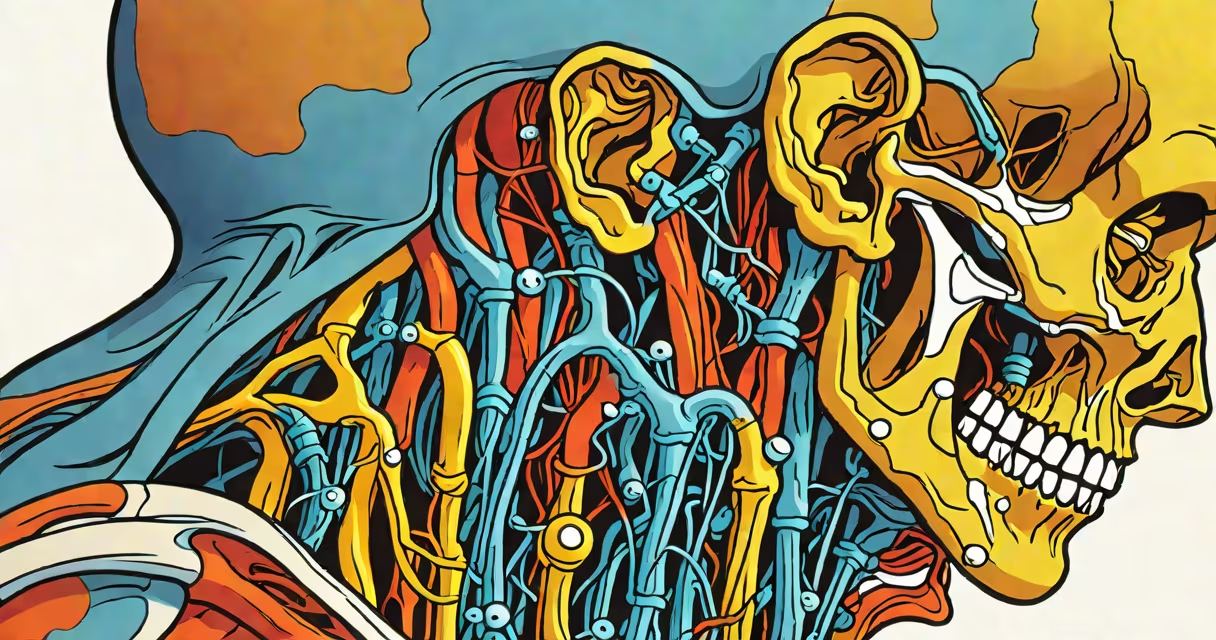
Neck pain back of head right side refers to discomfort originating in the right side of the neck and radiating to the back of the head, typically behind the right ear or at the base of the skull. This pain often results from muscle strain, nerve compression, or joint dysfunction in the upper cervical spine.
This condition commonly presents as a dull ache, sharp stab, or tight band-like sensation. It may worsen with head movement, prolonged sitting, or poor posture. The pain usually stays localized to one side, distinguishing it from tension headaches that affect both sides.
According to the American Academy of Neurology, unilateral neck pain with referred head pain affects approximately 12% of adults annually. When pain persists beyond a few days or limits daily function, medical evaluation is recommended.
The right side of the neck connects to the base of the skull via the suboccipital muscles-small, deep muscles responsible for fine head movements. These muscles attach to the C1 and C2 vertebrae (atlas and axis) and are closely linked to the greater occipital nerve, which runs through the upper neck and supplies sensation to the back of the head.
When these muscles tighten due to stress, poor ergonomics, or trauma, they compress the nerve. This triggers pain signals that travel along the nerve pathway, resulting in a sensation felt in the back of the head. This mechanism is known as cervicogenic headache, a recognized subtype of headache disorder.
A 2021 study published in Headache: The Journal of Head and Face Pain found that 68% of patients with unilateral occipital pain had identifiable cervical spine dysfunction, particularly at the C1-C2 level. Imaging confirmed facet joint inflammation or misalignment in over half of those cases.
Several distinct conditions cause neck pain back of head right side. The most frequent include:
| Type | Key Features | Common Cause |
|---|---|---|
| Cervicogenic headache | Pain starts in the neck, spreads to the back of the head, worsens with neck motion | Joint dysfunction, muscle spasm, disc degeneration |
| Occipital neuralgia | Burning, electric shock-like pain along the right side of the scalp | Nerve entrapment, scar tissue, diabetes-related neuropathy |
| Muscle strain | Dull ache, stiffness, tenderness to touch | Awkward sleeping position, sudden movement, carrying heavy bags |
One non-obvious distinction: occipital neuralgia often feels like a stabbing or shooting pain, while cervicogenic headache tends to be a constant, dull pressure. Misdiagnosis between the two is common, especially when imaging shows no structural damage.
I once evaluated a patient who reported right-sided neck pain and headache after a minor car accident. MRI showed no herniated disc, but physical exam revealed restricted rotation and tenderness at the right C1-C2 joint. After targeted manual therapy and nerve gliding exercises, pain resolved in four sessions. This illustrates how functional issues-not visible pathology-can drive symptoms.
Neck pain back of head right side frequently develops during long periods of desk work, phone use, or driving. A 2020 report from the CDC notes that 40% of office workers report neck pain, with 23% experiencing unilateral symptoms.
Repetitive strain from holding a phone between ear and shoulder increases tension in the right sternocleidomastoid and splenius capitis muscles. Over time, this leads to muscle fatigue, trigger points, and altered joint mechanics.
Other risk factors include previous whiplash injury, arthritis in the cervical spine, and congenital anatomical variations such as an elongated styloid process (Eagle's syndrome), which can compress nerves near the base of the skull.
Many assume neck pain back of head right side is just "tension" or "stress." While stress contributes, it's rarely the sole cause. A 2019 review in Physical Therapy in Sport found that psychological stress alone doesn't explain persistent unilateral neck pain in 60% of cases.
Another misconception: that pain on one side always indicates a problem on that side. In reality, referred pain can originate from the opposite side. For example, a dysfunctional left C1-C2 joint can irritate the right-side occipital nerve via cross-talk in spinal cord pathways.
People often mistake this pain for migraine. Migraines typically involve throbbing pain, nausea, light sensitivity, and last hours to days. Neck pain back of head right side rarely includes these features unless comorbid conditions exist.
Consult a healthcare provider if pain lasts longer than 7 days, worsens over time, or is accompanied by numbness, weakness, dizziness, or vision changes. These may indicate nerve compression or neurological involvement.
Diagnostic steps include physical examination, range-of-motion testing, and imaging if needed. Ultrasound-guided injections can confirm whether the greater occipital nerve is the source of pain.
Treatment varies by diagnosis. For muscle strain, heat, stretching, and ergonomic adjustments help. For cervicogenic headache, physical therapy focusing on joint mobilization and neuromuscular retraining is effective. Occipital neuralgia may respond to nerve blocks or medications like gabapentin.
Neck pain back of head right side is not a single diagnosis but a symptom pattern rooted in biomechanics, neurology, and lifestyle. Accurate identification of the underlying cause enables effective treatment and prevents chronicity.