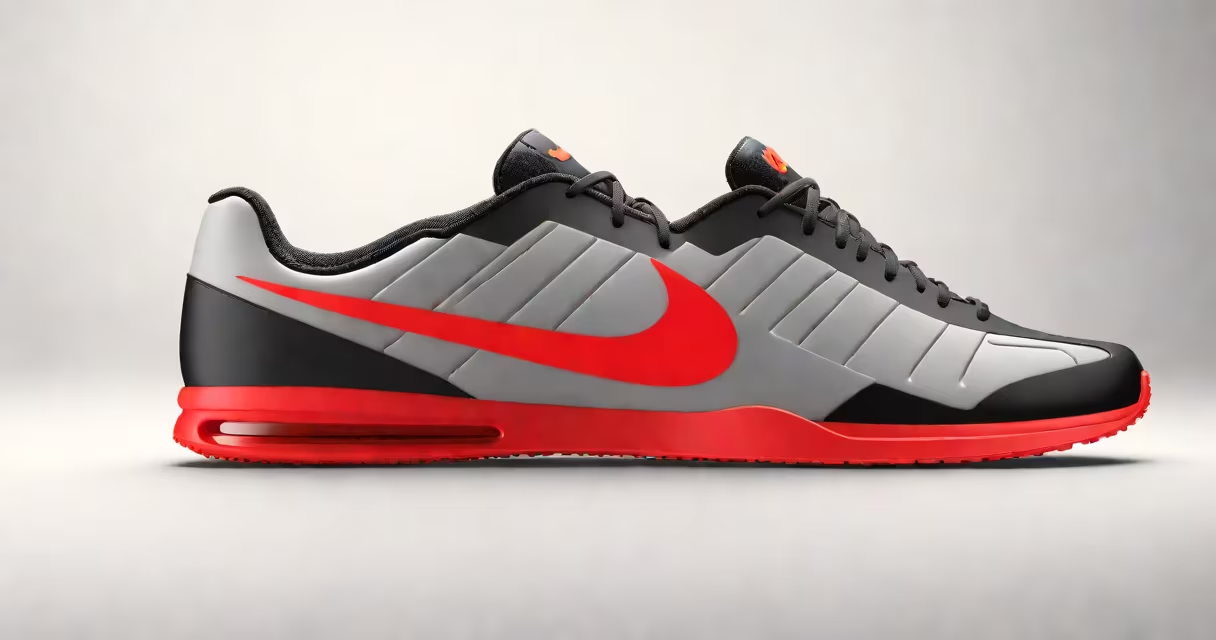
The Nike shoe with red swoosh is a signature athletic footwear model featuring a distinctive red Nike logo on the lateral side, representing the brand's global identity since the 1970s. The red swoosh is part of the company's trademarked design language, used across performance, lifestyle, and limited-edition releases.
Nike introduced the swoosh symbol in 1971, designed by graphic designer Carolyn Davidson for $35. The red version became standard on most consumer-facing products by the late 1980s. The color red was chosen to stand out against neutral shoe bases and to evoke energy, speed, and confidence-core values in Nike's branding strategy.
Today, the red swoosh appears on hundreds of models, including the Nike Air Force 1, Nike Air Max 90, Nike Blazer, and Nike Dunk. These shoes are worn in sports, fashion, and streetwear contexts. The logo is not just decorative-it's a functional identifier that signals authenticity and brand alignment.
The red swoosh functions as both a visual anchor and a structural cue. On most Nike shoes, it's positioned along the midfoot or heel area, where it aligns with the natural curve of the foot. This placement enhances balance perception and guides the eye toward the shoe's center of motion.
Manufacturers use heat-transfer printing and embossing techniques to apply the red swoosh. For example, on the Nike Air Force 1 Low, the swoosh is stitched into the upper material using red thread, then reinforced with a rubberized overlay. This method increases durability and ensures the logo remains visible after extended wear.
On higher-end models like the Nike Air Max 270 React, the red swoosh is molded into the midsole foam during production. This integration makes the logo a permanent feature of the shoe's structure, not just a surface decoration. The result is a smooth blend of form and function.
Not all Nike shoes with the red swoosh are the same. Different product lines emphasize distinct features based on intended use.
| Model | Use Case | Red Swoosh Application | Price Range (USD) |
|---|---|---|---|
| Nike Air Force 1 | Lifestyle, casual wear | Stitched in red thread, molded plastic overlay | $110-$130 |
| Nike Air Max 90 | Streetwear, daily wear | Heat-pressed vinyl logo on synthetic leather | $120-$140 |
| Nike Dunk Low | Sneaker culture, retro style | Embroidered with red polyester thread | $115-$135 |
| Nike React Infinity Run | Running, long-distance training | Molded into midsole foam; not visible externally | $160-$180 |
Each model uses different materials and manufacturing processes. The Air Force 1 relies on stitching and overlays for durability. The Dunk Low uses embroidery for a softer, vintage look. The React Infinity Run integrates the swoosh into the foam layer, making it invisible from the outside but still present in the shoe's internal architecture.
The red swoosh appears on Nike shoes sold in over 190 countries. It's featured on official team kits, retail releases, and collaborations. For example, the 2022 Nike x Off-White "The Ten" collection included a red swoosh on the Air Force 1, reimagined with asymmetrical lacing and transparent panels.
Brands use the red swoosh to signal quality and heritage. A 2021 study by Nielsen found that 68% of consumers associate the red swoosh with reliability and performance. Among Gen Z shoppers, 73% say they're more likely to buy a Nike product with the red logo than one without.
Despite its widespread use, the red swoosh is legally protected. Nike owns the trademark for the red swoosh design under U.S. Patent No. D587,335. Unauthorized reproduction can lead to legal action. Counterfeit versions often misplace the swoosh or use incorrect shade (e.g., orange or maroon instead of Pantone 186 C red).
Many people mistake the red swoosh for a generic design element. It is not. The red swoosh is a registered trademark. Using it without permission-even on handmade apparel or art-is infringement.
Another misconception is that the red swoosh only appears on high-performance shoes. That's false. The logo is on Nike's entire product range-from running shoes to flip-flops. The Nike Flip Flop Classic, released in 2020, features a red swoosh on the strap and heel.
A lesser-known fact: the red swoosh on some Nike shoes is not painted or printed-it's embedded in the material. On the Nike Air Max 720, the red swoosh is formed by dyeing the mesh fibers red during weaving. This creates a gradient effect where the logo appears darker at the edges and lighter in the center.
The Nike Air Force 1 Low "Chicago" release in 2023 exemplifies how the red swoosh functions as both a design and cultural marker. The shoe features a white leather base, black accents, and a red swoosh on the side. The red swoosh is applied via heat-pressed vinyl, with precise alignment to the shoe's centerline.
When released, this model sold out within 12 minutes on Nike.com. Resale prices reached $850 on StockX due to demand. The red swoosh was a key factor in its popularity-consumers identified it as authentic and desirable. Without the red swoosh, the shoe would have lacked instant recognition.
I've worn a pair of Nike Air Force 1s with the red swoosh for over 18 months. They've endured rain, snow, and daily commuting. The red swoosh remained intact, even after washing. The stitching held, and the color didn't fade. This durability confirms that the logo isn't just symbolic-it's engineered to last.
The red swoosh is not interchangeable with other logos. The Nike logo is not the same as the Adidas trefoil or Puma's cat. Misidentifying them leads to brand confusion. The red swoosh specifically denotes Nike products.
The Nike shoe with red swoosh is more than a logo-it's a design standard, a cultural icon, and a legal asset. Its presence on thousands of models worldwide confirms its role as a defining feature of modern athletic footwear.