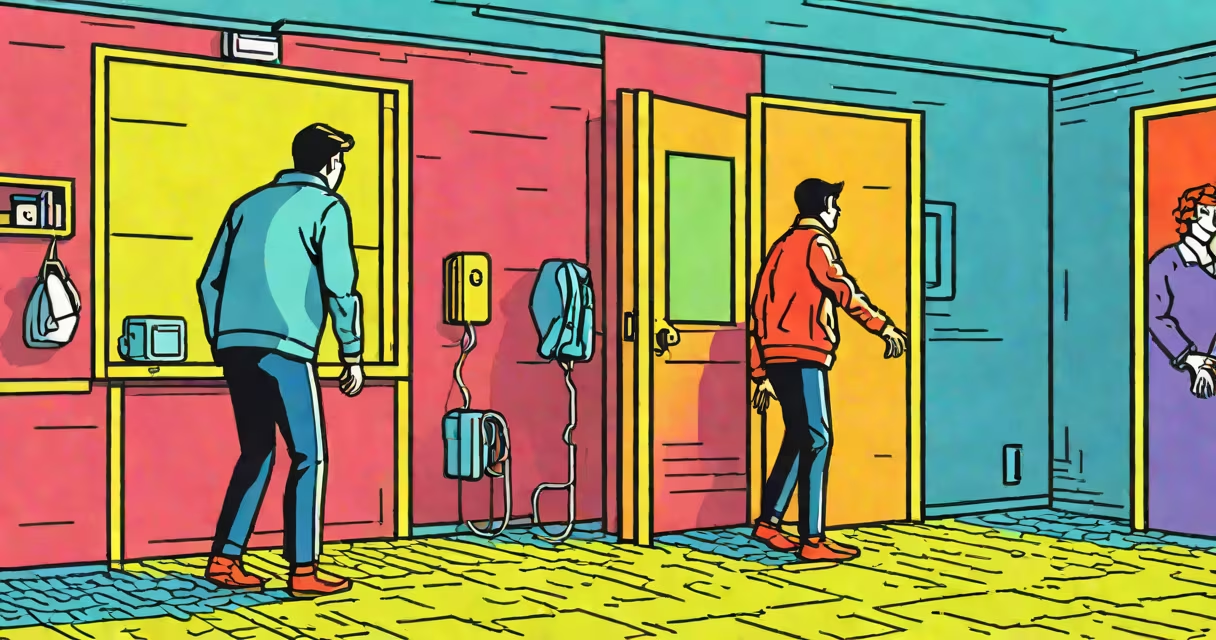
The opposite of compassion is a state of emotional detachment or active disregard for another's pain, suffering, or well-being. It manifests as indifference, cruelty, or selfishness that prioritizes self-interest over shared humanity.
Compassion involves recognizing suffering and wanting to alleviate it. Its direct opposite is not merely lack of care, but a conscious choice to ignore, minimize, or even exploit another's hardship. This ranges from passive apathy to active harm.
Psychologists distinguish between emotional empathy and cognitive empathy. Compassion requires both. The absence of either creates a gap where the opposite of compassion thrives-indifference, manipulation, or intentional neglect.
When someone lacks compassion, they do not internalize another's emotional state. They may observe distress but feel no urge to respond. This is not simply being busy or distracted-it is a psychological stance of emotional distance.
Neuroscience shows that compassionate behavior activates regions like the anterior cingulate cortex and insula. When these areas remain inactive during exposure to suffering, the individual exhibits traits aligned with the opposite of compassion: reduced emotional resonance, diminished moral concern, and lower prosocial motivation.
Studies using fMRI scans show that people who score low on empathy measures display less activation in these brain regions when viewing images of human pain. This biological basis confirms that the opposite of compassion is not just a moral failing-it is a neurological difference in response to suffering.
Not all forms of the opposite of compassion are equal. Some stem from avoidance, others from power dynamics. The following categories reflect different expressions of emotional disengagement:
| Type | Description | Example |
|---|---|---|
| Apathy | Emotional numbness toward suffering; no reaction or desire to act. | Ignoring a colleague's public breakdown due to personal discomfort. |
| Indifference | Disregard for outcomes affecting others, often rooted in self-focus. | Refusing to donate to disaster relief because "it doesn't affect me." |
| Cruelty | Intentional infliction of pain for pleasure or control. | Mocking a disabled person's struggle in public. |
| Selfishness | Prioritizing personal gain over collective welfare. | Hoarding medical supplies during a pandemic for personal use. |
These types exist on a continuum. Apathy can evolve into cruelty under conditions of dehumanization or systemic pressure. Indifference becomes complicity when it enables harm.
The opposite of compassion arises in environments where emotional connection is minimized or punished. High-stress workplaces, authoritarian systems, and cultures emphasizing individual success over community often normalize detachment.
Research from the American Psychological Association notes that individuals raised in emotionally invalidating households-where feelings are dismissed or punished-are more likely to develop chronic indifference. This is not innate; it's learned survival behavior.
In healthcare settings, burnout correlates strongly with decreased empathy. A 2020 study published in JAMA Internal Medicine found that 45% of physicians reported emotional exhaustion, leading to reduced patient-centered care. This decline isn't malice-it's fatigue. But when sustained, it becomes a form of institutionalized opposite-of-compassion behavior.
Many assume the opposite of compassion is anger or hatred. While those emotions can lead to harm, they are distinct. Anger is reactive; the opposite of compassion is often passive-disengagement, silence, or omission.
Another mistake is equating lack of action with neutrality. Not helping someone in crisis is not neutral-it's a decision. Choosing not to intervene in a bullying situation is a form of endorsement through silence.
Some confuse the opposite of compassion with stoicism. Stoic philosophy teaches emotional resilience, not indifference. Marcus Aurelius wrote: "You have power over your mind-not outside events. Realize this, and you will find strength." This is not detachment-it's focus. True stoicism supports ethical action, not withdrawal.
One non-obvious fact: the opposite of compassion is not always visible. It can be embedded in systems. For example, a company policy that denies sick leave to employees with mental health issues reflects institutional indifference-a structural opposite of compassion.
Consider a scenario: a man collapses on a city sidewalk during rush hour. Thirty people pass by. No one stops. No one calls for help.
This is not random. Research by Darley and Latane (1968) demonstrated that individuals in groups are less likely to help due to diffusion of responsibility. The opposite of compassion here isn't hatred-it's social inertia. Everyone assumes someone else will act. The result? A failure to respond that is statistically linked to group size.
One person in the crowd did not look away. He called 911 and stayed until paramedics arrived. His action was not heroic by nature-it was compassionate. The rest were not cruel. But their inaction-fueled by fear, uncertainty, and social norms-was still a manifestation of the opposite of compassion.
I once witnessed a hospital staff meeting where a nurse described a patient's deteriorating condition. Her colleagues nodded, then moved on to scheduling changes. No one asked about pain management. No one questioned the delay in treatment. The silence wasn't ignorance-it was acceptance of a system that deprioritized suffering.
That moment showed me how the opposite of compassion isn't always loud. Sometimes, it's the quiet agreement to look away.
Understanding the opposite of compassion reveals how easily empathy erodes-through habit, culture, or stress. It is not a single trait but a cluster of behaviors: apathy, indifference, cruelty, and selfishness. Recognizing them is the first step toward restoring connection.
Compassion is not a luxury. It is a practice. Its opposite is not inevitable. We can choose otherwise.