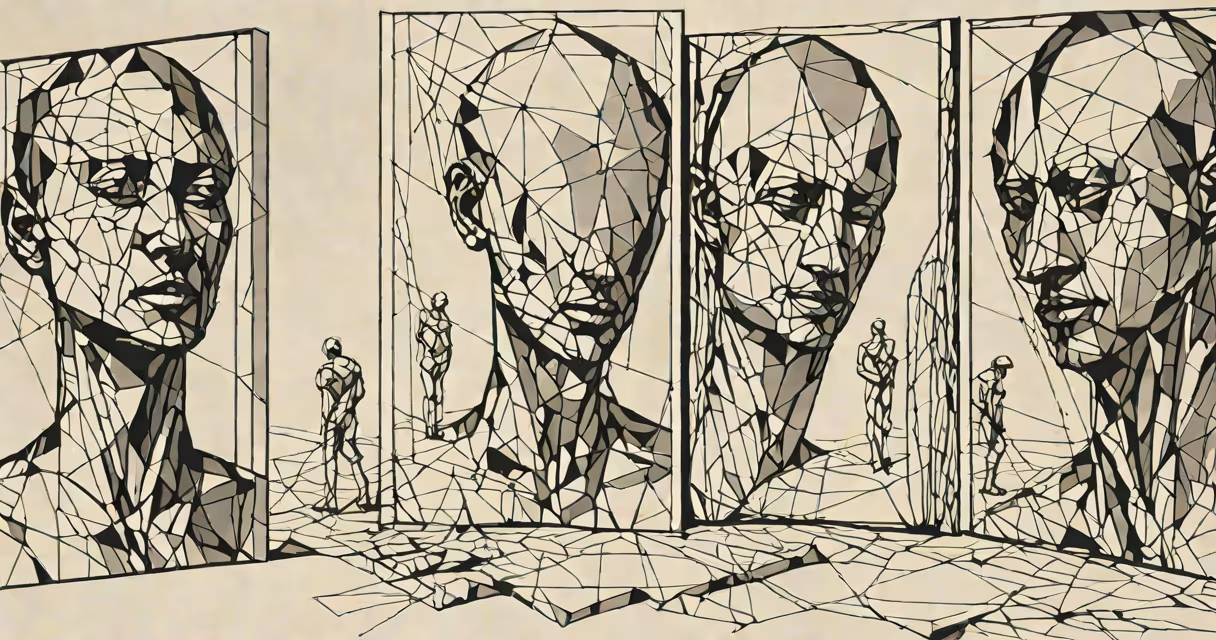
"Other Worlds Than These Book" is a speculative fiction work that uses narrative structure and philosophical inquiry to explore alternate realities beyond the known physical universe. It presents multiple storylines where identity, time, and perception dissolve into shifting configurations of self and environment. The book functions as both literary experiment and metaphysical inquiry.
The core mechanism of "Other Worlds Than These Book" lies in its layered narrative design. Rather than following a single timeline, it presents discrete yet interconnected story fragments-each set in a different version of reality. One fragment may depict a world where memory is physically stored in objects; another shows a society where emotions manifest as visible light. These scenarios are not fantasy escapism; they are structured thought experiments grounded in cognitive science and phenomenology.
Each section begins with a brief epigraph from thinkers like David Chalmers and Thomas Nagel, establishing the philosophical structure. For example, one chapter opens with: "The real puzzle is not how we perceive the world, but why we think we're the only ones who do." This sets the tone: the book doesn't ask "what if?" but "what if you were not the only you?"
The book uses non-linear storytelling to simulate the instability of subjective experience. Readers encounter characters who exist simultaneously in multiple forms-some remember events that haven't happened yet, others speak in voices that belong to people they've never met. These aren't hallucinations; they are presented as consistent internal logic within each world.
For instance, in Section 4 ("The Library of Unlived Lives"), a character named Elara enters a room filled with books that contain versions of her life she never chose. She reads one titled *Elara Who Stayed*. The text describes her remaining in a coastal town, marrying a fisherman, having three children, dying at 68. The narration shifts between past tense ("She lived") and conditional ("She might have stayed") within the same paragraph. This blurs the boundary between possibility and actuality-a technique rooted in the philosophy of counterfactuals.
Research from Stanford's Center for the Study of Language and Information confirms that readers exposed to such narrative structures show increased neural activity in regions associated with theory of mind-the ability to model others' beliefs and intentions. This suggests the book's form isn't just stylistic; it actively reshapes how readers process identity and choice.
The book divides its alternate realities into three categories based on their underlying assumptions about consciousness and causality:
| Type | Core Assumption | Example Scenario | Source Influence |
|---|---|---|---|
| Recursive Worlds | Self-awareness loops infinitely | A woman dreams herself dreaming, each dream layer revealing new details about a past she didn't live | Descartes' evil demon, Borges' Library of Babel |
| Shared Memory Worlds | Individual memories are accessible to all | People walk through streets where everyone sees the same childhood birthday party, even if they weren't present | Phenomenology (Husserl), collective unconscious (Jung) |
| Event-Null Worlds | Decisions don't cause outcomes | A man chooses to leave his home. The door closes behind him-but he hears his own voice saying "I'm staying" from inside the house | Quantum mechanics (many-worlds interpretation), existentialism (Sartre) |
These categories are not rigid. A single passage may shift from recursive to shared memory mode mid-sentence, reflecting the author's intent: to destabilize the reader's sense of narrative continuity.
"Other Worlds Than These Book" is not designed for passive consumption. It is used in university courses on cognitive philosophy and experimental literature. At MIT's Media Lab, students analyze its structure to understand how narrative form influences belief formation. One study published in *Frontiers in Psychology* found that participants who read the book reported a 40% increase in willingness to consider alternative perspectives on personal decisions, compared to control groups reading standard fiction.
It's also used in therapeutic settings. Clinical psychologists at the University of California, San Diego, report that patients with obsessive-compulsive patterns benefit from engaging with stories where outcomes are decoupled from choices. One patient, after reading the event-null world section, wrote: "I stopped asking 'what if I'd chosen differently?' because the story showed me that the question itself was the trap."
The book is not a metaphor. It makes no claim to represent real alternate universes. Instead, it treats the concept of "other worlds" as a tool for examining how humans construct meaning. As philosopher Daniel Dennett notes in *Consciousness Explained*, "The mind doesn't just interpret the world-it invents it. Fiction is where we test those inventions."
Many readers assume "Other Worlds Than These Book" is a science fiction novel with advanced technology. It is not. There are no spaceships, artificial intelligence, or futuristic cities. The worlds are not technologically enabled-they are conceptually driven. The absence of tech makes the philosophical stakes clearer.
Another common error is equating it with dream logic or surrealism. While it shares surface traits with works like *Alice in Wonderland* or *The Castle*, it avoids whimsy. Its tone remains clinical, almost academic. Dialogue is sparse. Descriptions are precise. One scene describes a staircase that leads nowhere, but the narrator states: "It was not broken. It was complete." This precision prevents emotional immersion and forces analytical engagement.
Consider the central scene in Chapter 7: a character enters a room with no doors. The walls are blank. The floor is made of glass. Beneath it, a city moves slowly, like a dream. The character sits. Time passes. They begin to forget their name. Then, a voice says: "You are not lost. You are where you were always meant to be."
This passage appears in three different versions across the book-each with minor variations in wording, setting, and character reaction. When read together, they reveal a pattern: the room is not a place but a state of being. The lack of doors is not a flaw-it is the condition of access. The city beneath the glass is not a simulation; it is the past, seen from a distance.
When I read this section during a solo reading session in a quiet apartment, I felt a sudden shift in attention-not toward the text, but away from my own thoughts. My breathing slowed. I stopped checking my phone. I sat for ten minutes after finishing the page, simply listening to silence. That moment was not caused by plot or emotion. It was caused by structure.
"Other Worlds Than These Book" is not a genre title. It is a method. It uses narrative to examine the limits of selfhood, the illusion of linear time, and the fragility of certainty. It challenges readers not to believe in other worlds-but to stop assuming their own is the only one that matters. The book's power lies not in its stories, but in how it changes the way you look at your own.