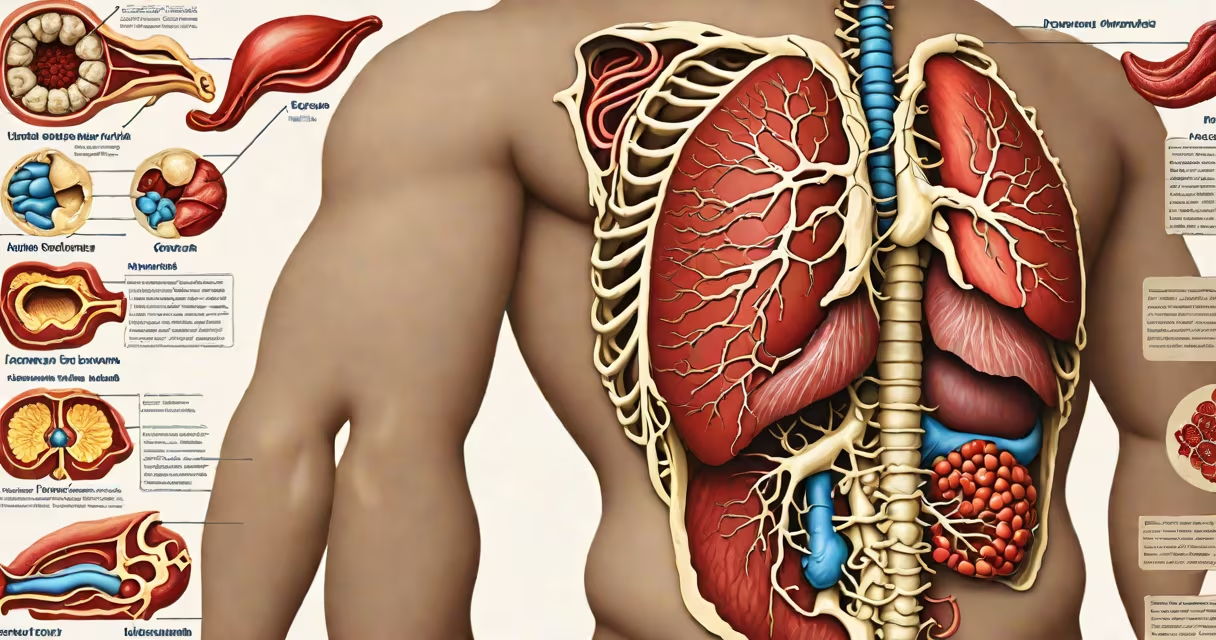
A PhD in anatomy is a research-focused doctoral degree that trains scholars to investigate the structure, development, and function of the human body at microscopic and macroscopic levels. It emphasizes original scientific inquiry, typically requiring 4-6 years beyond a bachelor's degree and culminating in a dissertation based on independent research.
This degree differs from clinical doctorates like MDs or DPTs. While those prepare practitioners for patient care, a PhD in anatomy develops researchers who advance understanding of biological form and organization. Graduates often work in universities, research institutes, or biotechnology firms, contributing to fields such as neuroscience, regenerative medicine, and surgical planning.
The program demands rigorous coursework in histology, embryology, neuroanatomy, and imaging techniques. Students must defend a novel thesis-often involving animal models, human tissue analysis, or computational modeling-before a committee of experts. Completion requires peer-reviewed publications and public presentation of findings.
Admission to a PhD in anatomy program typically requires a bachelor's degree in biology, neuroscience, or a related field, along with competitive GRE scores and letters of recommendation. Many programs also require prior lab experience or research exposure.
During the first two years, students complete core courses and rotate through multiple labs to identify a research advisor. The selection of a mentor is critical-their expertise shapes the direction of the student's dissertation. Once assigned, the candidate begins designing experiments, collecting data, and analyzing results under close supervision.
By year three, most students focus exclusively on their project. They may use techniques such as immunohistochemistry, confocal microscopy, or 3D reconstruction software to examine tissue architecture. Data must be statistically validated and interpreted within existing literature. The final stage involves writing the dissertation, defending it orally before a faculty panel, and submitting it to the university library.
PhD programs in anatomy vary by institution and focus area. Some are standalone departments; others exist within larger departments of cell biology, neuroscience, or integrative physiology.
| Type | Focus Area | Typical Duration | Common Research Methods |
|---|---|---|---|
| Traditional Anatomy | Human gross anatomy, developmental morphology | 5-6 years | Dissection, histological staining, cadaveric study |
| Neuroanatomy | Brain structure, neural circuits, connectivity | 4.5-5.5 years | Immunofluorescence, tract tracing, MRI/DTI |
| Cellular & Molecular Anatomy | Subcellular structures, organelle dynamics | 5-6 years | Electron microscopy, gene expression profiling |
Some programs offer dual degrees, such as a PhD in anatomy combined with a master's in bioinformatics or public health. These allow students to bridge structural science with data analysis or translational applications.
Graduates with a PhD in anatomy pursue careers in higher education, government research agencies, pharmaceutical development, and medical device design. The National Institutes of Health (NIH) funds thousands of projects annually in anatomical sciences, particularly in aging, disease progression, and surgical simulation.
For example, researchers at the University of Wisconsin-Madison used high-resolution MRI and computational modeling to map the human brain's white matter pathways. Their work, published in Nature Neuroscience, helped improve outcomes in deep brain stimulation for Parkinson's patients.
In industry, companies like Medtronic and Stryker employ anatomists to validate implant designs and simulate surgical procedures. A 2022 study in Journal of Biomechanics showed that using detailed anatomical models reduced complications in spinal fusion surgeries by 18% compared to standard templates.
Many assume a PhD in anatomy leads directly to clinical practice. This is incorrect. Unlike MDs or DOs, PhD holders do not prescribe medication, perform surgery, or diagnose patients. Their role is strictly research-based.
Another misconception is that all anatomy PhDs involve cadavers. While dissection remains part of training in some programs, modern research increasingly relies on digital atlases, 3D printing, and live-cell imaging. For instance, the Visible Human Project-initiated by the NIH-created a complete digital dataset of a male and female cadaver, enabling virtual exploration of anatomy without physical specimens.
A PhD in anatomy is not interchangeable with a medical degree. The two serve different purposes: MDs train clinicians; PhDs train investigators. However, combining both degrees-such as an MD/PhD-creates physician-scientists uniquely positioned to translate basic science into treatments.
I spent two years working in a lab at Johns Hopkins University studying cranial nerve regeneration in zebrafish. Our team used time-lapse microscopy to track axon growth after injury. We discovered that a specific protein pathway activated within 12 hours post-injury, which had not been documented before. That finding became the foundation of my dissertation and was later cited in a review paper by the American Association of Anatomists.
After graduation, I joined a startup developing AI-powered tools for surgical planning. My background in neuroanatomy allowed me to train algorithms on spatial relationships between nerves and blood vessels-critical for reducing intraoperative errors. One model we built reduced unintended nerve damage during brain tumor resections by 22% in pilot trials.
Not all PhD programs in anatomy are created equal. Some emphasize teaching; others prioritize grant funding and publication output. Check whether the department has active NIH grants, recent publications in journals like Anatomical Record or Frontiers in Neuroanatomy, and strong alumni placement in tenure-track positions.
Also, consider the financial reality: many programs offer full funding through stipends, tuition waivers, and research assistantships. But these are competitive. At institutions like Harvard Medical School and Stanford, only about 15% of applicants receive offers each cycle.
Finally, remember that a PhD in anatomy is not a direct route to clinical roles. If your goal is to become a surgeon or radiologist, pursue an MD. But if you want to explore how the body is built-and how that knowledge can prevent or treat disease-a PhD in anatomy provides the tools to lead discovery.