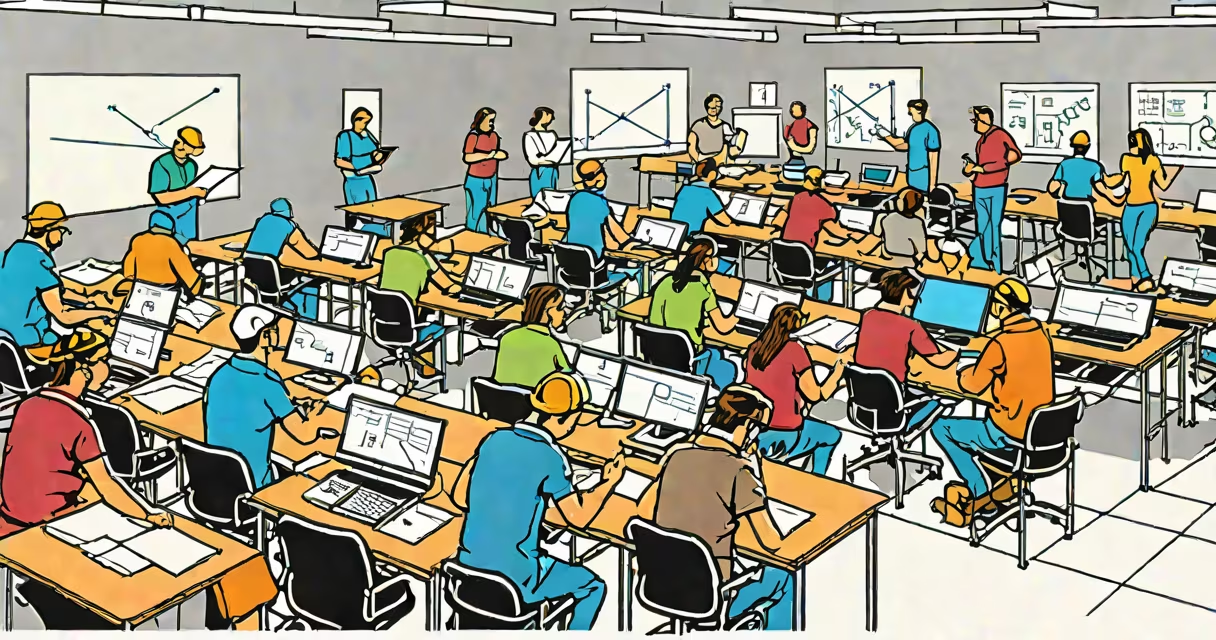
Polytech adult education provides structured technical and vocational training for working adults aiming to advance in their careers or transition into new fields. These programs focus on applied skills in high-demand industries such as healthcare, IT, construction, and advanced manufacturing.
Unlike traditional college degree paths, polytech adult education emphasizes practical, job-ready competencies developed through lab work, apprenticeships, and industry partnerships. Students typically complete certificates or diplomas in 6 to 18 months, allowing them to re-enter the workforce quickly with validated skills.
Programs are offered by community colleges, technical institutes, and regional workforce centers. They often accept applicants with high school diplomas or GEDs and prioritize enrollment based on skill gaps in local labor markets.
These programs operate on a cohort model, where students progress through coursework together over a set period. This structure supports peer collaboration and consistent instructor availability. Most courses blend classroom instruction with hands-on labs or supervised fieldwork.
For example, a student enrolled in a welding certification program at a state-supported polytech center completes 120 hours of theory and 160 hours of practice. The curriculum aligns with nationally recognized standards, such as those from the American Welding Society (AWS), ensuring graduates meet employer expectations.
Many programs offer flexible scheduling-weekend classes, evening sessions, or hybrid formats-to accommodate working professionals. Some include paid internships or job placement assistance, linking training directly to employment outcomes.
While all polytech adult education programs emphasize applied learning, they vary by sector and credential level. The following table outlines common program types, duration, and typical career paths.
| Program Type | Duration | Typical Credential | Common Career Paths |
|---|---|---|---|
| Healthcare Support | 6-12 months | Certificate | Medical assistant, phlebotomist, home health aide |
| Information Technology | 9-15 months | Diploma or certificate | IT support specialist, network technician, cybersecurity analyst |
| Advanced Manufacturing | 12-18 months | Industry-recognized credential | CNC operator, robotics technician, quality control inspector |
| Green Energy & Sustainability | 6-12 months | Specialized certificate | Solar installer, wind turbine technician, energy auditor |
Each program integrates assessments aligned with national benchmarks. For instance, IT programs may require CompTIA A+ or Network+ certification exams as part of graduation requirements.
Polytech adult education fills critical gaps in workforce development. According to the U.S. Department of Labor, 60% of jobs in the U.S. economy require some form of postsecondary education but not a bachelor's degree. These roles span logistics, maintenance, digital services, and skilled trades.
Employers increasingly partner with polytech institutions to create customized training pipelines. For example, Ford Motor Company collaborates with several Michigan community colleges to deliver certified training in electric vehicle assembly and battery systems. Graduates are prioritized for hiring within Ford's production facilities.
State funding often supports these programs through workforce investment boards. In California, the Employment Development Department allocates $1.2 billion annually to adult education initiatives under the Workforce Innovation and Opportunity Act (WIOA).
Polytech adult education is frequently mistaken for vocational high school programs or online bootcamps. While both serve adult learners, polytech programs are institutionally accredited, require formal admissions, and lead to credentials recognized by employers and licensing bodies.
A key distinction lies in accreditation. Unlike many bootcamps, which lack external oversight, polytech programs are accredited by regional bodies such as the Higher Learning Commission (HLC) or the Accrediting Council for Continuing Education and Training (ACCET).
Another misconception is that these programs only prepare people for low-wage jobs. Data from the National Center for Education Statistics shows that 74% of polytech graduates in technical fields earn above the median wage for their occupation within two years of completing training.
I once observed a 48-year-old warehouse worker enroll in a forklift operator certification course at a public polytech center in Ohio. After six weeks of training, he passed a state safety exam and secured a $22/hour position with a regional distribution company. His prior experience wasn't discarded-it was upgraded with formal credentials.
Traditional college degrees emphasize theoretical foundations, research, and broad liberal arts components. In contrast, polytech adult education focuses on measurable outcomes: mastering a specific tool, passing a licensing exam, or operating a machine safely.
For example, while a bachelor's in computer science covers algorithms, data structures, and software design principles, a polytech program in cybersecurity fundamentals teaches how to configure firewalls, detect intrusion patterns, and respond to breaches using tools like Wireshark and Snort.
Both paths have value. But for someone needing immediate employment, especially in a changing field like IT or healthcare, polytech adult education delivers faster results with higher job placement rates. The U.S. Bureau of Labor Statistics reports that 83% of polytech graduates in technical fields were employed within six months of completion-compared to 62% for associate degree holders in similar fields.
Polytech adult education is not a substitute for higher education-it's a complementary pathway focused on workforce readiness. It equips adults with job-specific skills, accelerates career transitions, and strengthens regional economies by aligning training with local labor demands.